Why Small Galleries Matter More Than Museums
Museums confirm art history; small galleries write it. The work that museums will show in twenty years is usually in a small gallery, or an artist's flat, today.
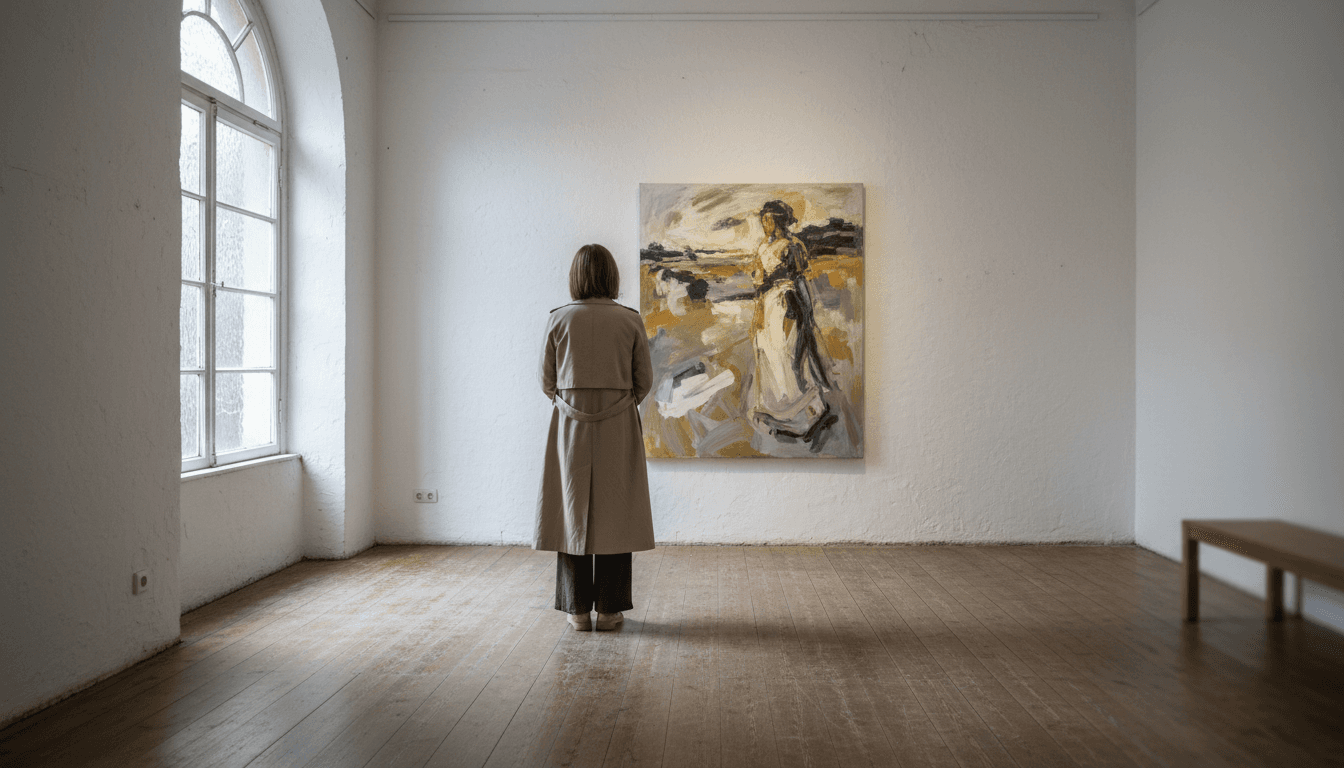
Museums get the wall labels and the gift-shop postcards. Small galleries get the artist first — often ten or twenty years earlier, in a room with bad lighting and no guarantee anyone would ever hear of the person showing there. By the time a museum hangs the work, the discovery has already happened somewhere much smaller.
At a glance
| Museums | Small galleries | |
|---|---|---|
| Role | Preserve and confirm the canon | Discover and take on risk |
| Funding | Public, institutional, endowments | Sales, grants, self-funding |
| Financial risk | Low | High |
| Audience | Broad, general public | Small and specifically committed |
| Timeframe | Looks backward | Works in the present and the near future |
The division of labour
A museum's job is to collect, conserve, and interpret work that has already been vetted by someone else — usually, at some point, by a small gallery. That mandate makes museums structurally cautious: acquisitions committees, trustees, and a permanent collection all pull toward consensus rather than risk.
A small gallery has no such ballast. It can't compete with a museum on prestige or collection depth, so the only thing left to compete on is risk: showing work and artists that don't have a market yet, in shows that might genuinely fail. That's not a lesser version of what museums do — it's the stage that has to happen before a museum has anything to acquire.
How a townhouse living room became the center of the art world
The clearest illustration of this isn't hypothetical. In 1957, the dealer Leo Castelli opened a gallery in the converted living room of his townhouse on East 77th Street in Manhattan — a single room, no institutional backing, no track record. Later that year he went to see the painter Robert Rauschenberg's studio about a possible group show; Rauschenberg's studio happened to share a building on Pearl Street with a then-unknown painter named Jasper Johns, and insisted Castelli see his work too.
Castelli gave Johns his first solo exhibition in January 1958. Over the following decade, working out of that same small operation, he gave early shows to Andy Warhol, Roy Lichtenstein, Cy Twombly, Donald Judd, Dan Flavin, Robert Morris, Bruce Nauman, and Richard Serra — a list that amounts to Pop Art, Minimalism, and Conceptual Art arriving in New York more or less through one small gallery's front door. None of that happened at a museum first. It happened in a living room, because someone was willing to go look at an unknown artist's studio on a tip from another artist.
The economics of staying small
Commercial galleries typically split sale proceeds close to 50/50 with the artist, and that split has to cover rent, staff, shipping, insurance, and the cost of mounting each show — which means a gallery that sells poorly for even a year or two is a gallery in real trouble. Artist-run and nonprofit spaces work differently: funded by members, grants, or the artists themselves, they can show work that has no realistic buyer at all, because the space isn't depending on that sale to survive the month. That freedom is the entire point, and someone is quietly paying for it.
Advertisement
When artists build the space themselves
The artist-run space is usually the rawest version of this model, and one of the most consequential examples in American art started in a former rag-picking factory. In October 1970, the artist Jeffrey Lew opened 112 Greene Street in SoHo — no heat, crumbling walls, minimal lighting — with Gordon Matta-Clark and Alan Saret, and let artists curate their own shows with essentially no formal committee. Richard Serra, Vito Acconci, and Matta-Clark himself all showed there in its first years. It later evolved into White Columns, which is still operating today and describes itself as New York's oldest alternative art space.
Spaces like this rarely last in their original form. They depend on a handful of specific, exhausted people, and when those people move on, the space usually closes or transforms into something else — which is exactly what happened here. The closure isn't a failure; it's closer to the natural life cycle of the model.
Why galleries cluster, and why the cluster eventually moves
Small galleries rarely spread out evenly across a city — they cluster, because cheap rent in one neighbourhood draws in several spaces at once, and the cluster itself becomes a destination that draws more. SoHo is the clearest case: artists moved into its abandoned cast-iron loft buildings in the 1960s and 70s because the rent was close to nothing and the space was enormous, and the galleries followed the artists. Not every scene builds around a famous cluster like SoHo, either — plenty of the most interesting programming in the US happens in gallery districts well outside the major art-market cities, following exactly the same cheap-rent-and-risk logic on a smaller scale.
The catch is that a thriving cluster raises its own rent. SoHo's galleries mostly relocated to Chelsea by the late 1990s and early 2000s as the neighbourhood gentrified, and Chelsea itself now faces the same pressure that pushes newer, smaller spaces further out again. The pattern isn't a one-off; it's closer to a permanent cycle, and it means the "hot" gallery neighbourhood of any given decade is rarely the same one ten years later.
Why they close
Small galleries close for the same three reasons, almost every time: rent rises faster than sales, grant funding runs out, or the people running the place burn out after years of unpaid or underpaid labour. The fragility is the flip side of the independence — a gallery answerable to nobody can also fold with nobody stopping it.
The loss is mostly invisible outside the immediate scene. A show that never got reviewed, at a gallery that closed two years later, can still have been the first time a curator or a collector ever saw an artist's work — the closure erases the space, not necessarily its effect.
How the pipeline actually works
Institutional curators scout small galleries as a matter of routine, because that's where unrepresented, unreviewed work still surfaces. A studio visit or a small-gallery show today can be the reason a biennial or a museum survey includes that artist five or ten years later — the Castelli story above is simply the most famous version of a pattern that repeats, in smaller and less mythologized form, in every city with an active gallery scene.
What a small gallery is actually selling
Individual sales keep the lights on, but the thing a small gallery is really building, show after show, is a track record of judgment. A programme that consistently shows work worth seeing before anyone else has noticed it is itself an asset — it's the reason a collector, a curator, or a journalist starts checking that specific gallery's calendar rather than waiting for a museum to tell them what matters. That reputation takes years to build and can be undone by a handful of bad shows, which is part of why the good ones tend to be run by people who are unusually stubborn about what they choose to hang.
How to actually support one
- Show up. Physical attendance is the most basic vote a small gallery gets, and attendance numbers matter to funders and landlords — and actually engaging with what's on the walls, rather than just walking through, is what makes that visit worth the gallery's time as much as yours.
- Buy something, even small. A single sale can matter disproportionately more to a small gallery's month than it ever will to a museum's endowment.
- Talk about specific shows, not just "galleries are important." Word of mouth is most of how these spaces get discovered at all.
- Take the work as seriously as you would in a museum. The setting is smaller; the seriousness owed to the work isn't.
The bottom line
A museum's collection is a record of bets that already paid off. A small gallery is where those bets are still being placed, often by people working for very little money in a room with bad lighting. If you want to know what a museum will be showing in twenty years, that's still the more useful place to look — and if you're an artist rather than a visitor, that's also where the actual approach happens.
Advertisement
FAQ
Why do small galleries matter more than museums for new art?
Museums generally show work that has already been vetted and recognized; small galleries are where unrecognized, unproven work gets its first audience at all.
What's the difference between a commercial gallery and an artist-run space?
A commercial gallery sells work and typically splits proceeds close to 50/50 with the artist; an artist-run space is usually funded by grants, members, or the artists themselves, and can show work with no expectation of a sale.
Why do small galleries close so often?
Almost always some combination of rising rent, expired grant funding, and the burnout of the small number of people running the space unpaid or underpaid.
How can I actually help a small gallery?
Show up to openings, buy work when you can even modestly, and talk specifically about the shows you see — small galleries depend on word of mouth more than any marketing budget.
Is there a real example of a small gallery leading to major artists' careers?
Leo Castelli's gallery, which opened in a converted townhouse living room in 1957, gave early shows to Jasper Johns, Andy Warhol, Roy Lichtenstein, and several other artists who came to define Pop Art and Minimalism.