Black in Art Is Not the Absence of Color
Black is not one colour and not the absence of colour. It is a family of pigments with different temperatures and behaviours — and painters argue about it constantly.
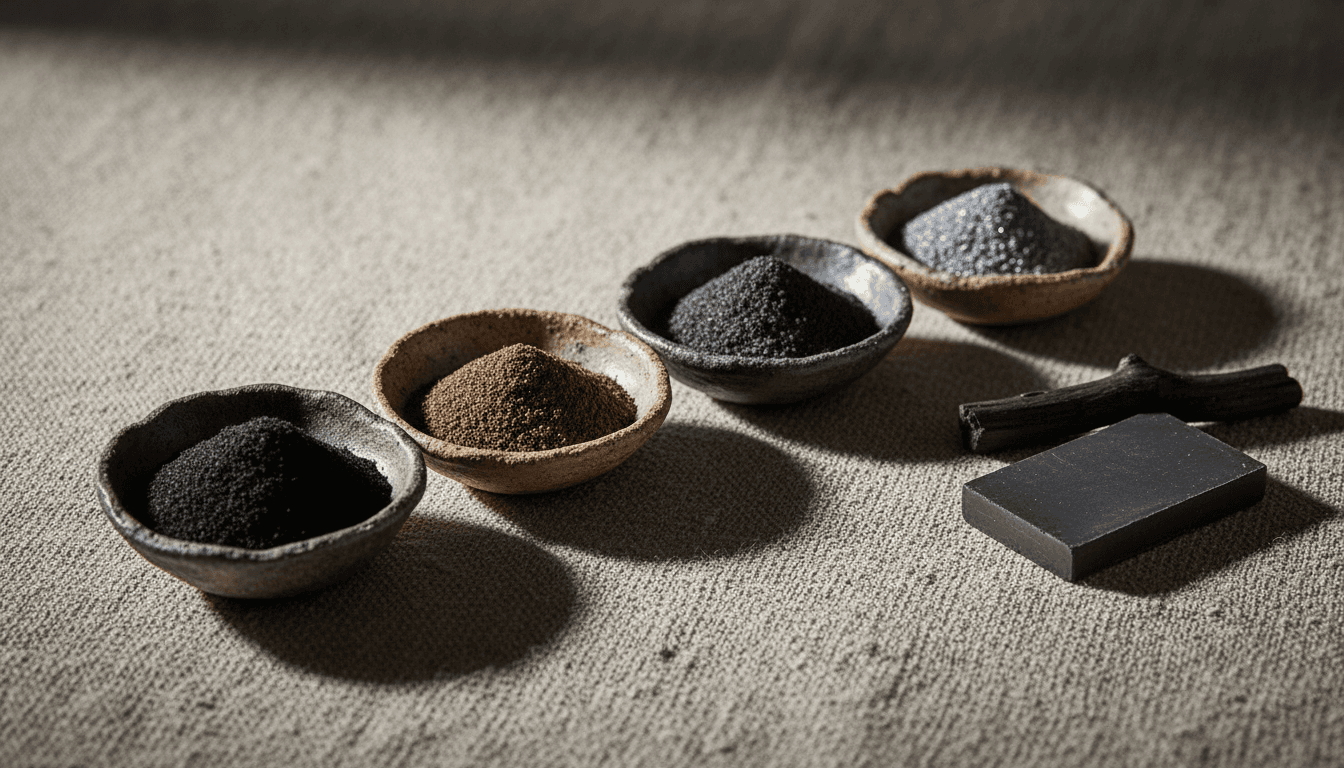
Black gets treated as the absence of colour — the one entry on the wheel that isn't really a colour at all, just what's left when everything else is subtracted. On an actual palette, black is nothing of the sort. It's a family of pigments with different sources, different temperatures, and different behaviour, and painters have argued for over a century about whether it belongs in a shadow at all — a disagreement that sits right alongside the debate over why some colours can't be mixed from primaries in the list of things every beginner palette gets told too simply.
At a glance
| Black | Made from | Temperature |
|---|---|---|
| Ivory black | charred bone | warm |
| Lamp black | soot | cool |
| Vine black | charred plant matter | cool |
| Mars black | synthetic iron oxide | warm, opaque |
| Carbon black | soot or gas, industrial | neutral, very strong |
Why "black" was never one colour
Physically, a black surface absorbs most visible light rather than reflecting it back — but almost no real-world black pigment does this completely. Each one reflects a little of something, which is where the family's temperatures come from: ivory black leans brown, lamp black leans blue, mars black sits warm and dense. A painter mixing a "neutral" black from several pigments together can control that undertone deliberately; a painter squeezing a single tube of black gets whatever undertone that particular pigment happens to carry, whether they intended it or not.
The argument that never quite settled
The classical objection to using black at all came from the Impressionists, who pointed out — correctly — that shadows outdoors are not grey, they're coloured, shifting with the light and the surroundings around them. Mix a shadow with pure black and the painting goes dead, flattened into a value the eye never actually sees in nature. The counter-case is just as old: black is one of the fastest ways to lower a value and the single strongest tool for graphic force on a canvas, which is exactly why painters from Manet to the German Expressionists kept reaching for it deliberately rather than by accident. The disagreement was never really about black's existence. It was about what a painter is actually trying to do — describe the coloured truth of a shadow, or make the strongest possible mark on a surface.
The tradition that made black the whole palette
The Impressionist debate assumes black is a supporting colour deployed alongside others — but East Asian ink painting built an entire tradition on the opposite premise. Chinese painting theory holds that ink, through dilution and brush pressure alone, divides into what's traditionally described as five or six distinct tones — 墨分五色, "ink divided into five colours" — running from a near-transparent grey wash to a dense, saturated black, all from a single stick of soot and animal-glue ink ground on a stone. In that tradition black isn't the colour painters worry about deadening a shadow with; it's the entire palette, and its range is a discipline in its own right rather than a problem to be managed around.
Advertisement
Black as structure, not colour
Outside painting, black does a different kind of work: it defines rather than describes. In printing, black is added as a fourth ink alongside cyan, magenta, and yellow specifically because the three subtractive colour inks alone cannot produce a true, deep black — CMYK's "K" exists to do a job the other three can't. In photography, the black point of an image sets its contrast, and an image with a genuinely deep black reads as having depth in a way a washed-out one never can. In drawing and composition generally, black is the edge — the line that separates one form from another — which is why black is the oldest pigment humans reached for at all: the charcoal and soot of Palaeolithic cave paintings did the same structural job, tens of thousands of years before anyone argued about shadows.
The blackest black anyone can (mostly) never buy
Black's newest chapter is a genuine art-world feud. In 2016, the British sculptor Anish Kapoor secured exclusive artistic rights to Vantablack, a material developed by the British company Surrey NanoSystems that absorbs roughly 99.96% of visible light — a black so total it renders three-dimensional surfaces as flat voids. No other artist was permitted to use it. Fellow British artist Stuart Semple responded by releasing his own ultra-pigmented "pinkest pink," available to any artist in the world except Kapoor, who was named explicitly in the product's terms of sale. Kapoor got hold of a jar anyway through an intermediary and posted a photo of himself giving the camera a pink-dipped middle finger. Semple has since released his own competing super-blacks — Black 2.0 and Black 3.0 — open to everyone but Kapoor by name. It's the clearest modern proof that black, of all colours, is still valuable enough to fight over.
The bottom line
Black is not the absence of colour on a palette, any more than white is simply an empty canvas waiting for paint; it's a set of pigments with real temperatures, real opinions, and a hundred-year argument attached to how they should be used. The question a painter actually faces isn't whether to use black — it's whether a given shadow wants to read as coloured and alive, or as a flat, deliberate graphic statement, and only one of those calls for the tube marked "black."
FAQ
Is black a colour or the absence of one?
In light, black is the absence of light; in pigment, it's a material that absorbs most visible light while still reflecting a little — which is why black pigments have distinct warm or cool undertones rather than being perfectly neutral.
Why do some painters avoid using black in shadows?
Because natural shadows are coloured rather than neutral grey, and mixing them with black flattens that colour into a dead, uniform value — an objection the Impressionists raised specifically against the practice.
What is the warmest black pigment?
Ivory black and mars black both lean warm; lamp black and vine black lean cool.
Why does printing use a separate black ink?
Because cyan, magenta, and yellow inks together still can't produce a true, deep black — CMYK's black channel exists specifically to cover that gap.
Can anyone buy Vantablack?
Not for art. Surrey NanoSystems developed it, but sculptor Anish Kapoor holds exclusive artistic rights, which is why other artists use rival super-blacks like Stuart Semple's Black 3.0 instead.