Collaborating With Musicians When You're a Visual Artist
Musicians think temporally. Visual artists think spatially. Successful collaboration requires understanding both practices, communicating clearly without micromanaging, and building relationships where sound and visuals genuinely integrate.
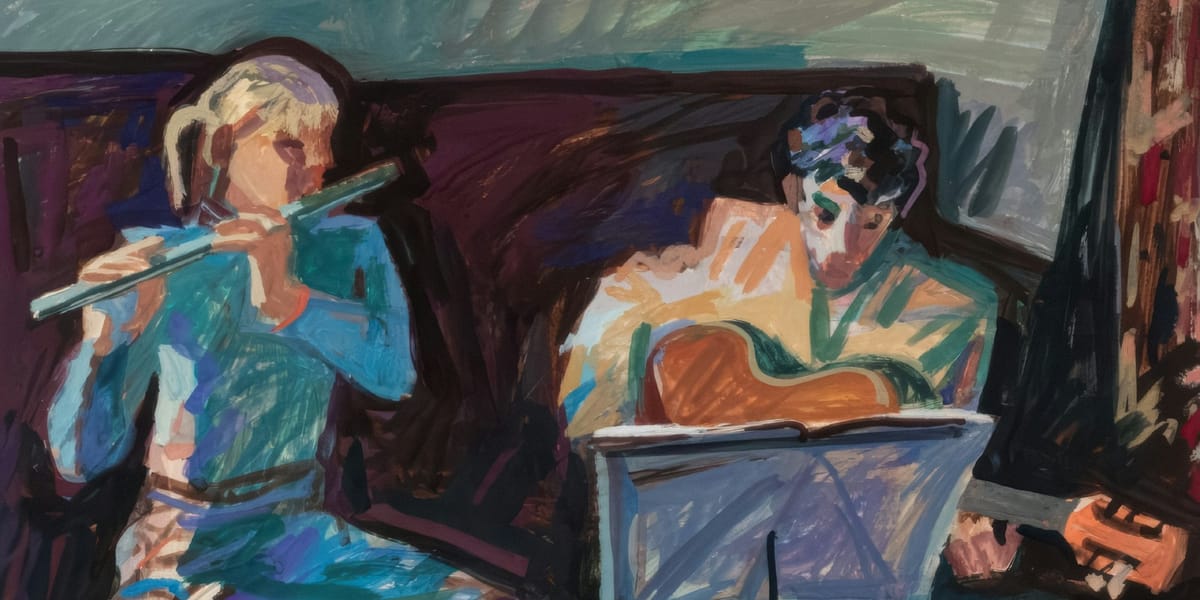
You want sound in your installation. Not background music, not audio pulled from the internet, but original composition that serves your concept and integrates with the visual work. You could hire someone to provide a soundtrack. Or you could actually collaborate with a musician, bringing together two distinct practices in ways that create something neither of you could make alone.
The difference between hiring and collaborating is the difference between commissioning a service and building something together. Hiring means you know what you want and you're paying someone to execute it. Collaborating means you're exploring together, discovering what's possible through the combination of your different skills, perspectives, and ways of working.
Collaboration with musicians goes wrong constantly. Visual artists expect musicians to just make whatever the artist envisions without contributing ideas. Musicians want complete creative control over the sonic domain without considering visual elements. Timelines don't align, vocabularies don't match, egos clash, and the work suffers. The final piece feels like music pasted onto visual work or visuals illustrating music rather than genuine integration.
Successful collaboration requires understanding how musicians think and work, communicating clearly about what you want without dictating how to achieve it, respecting their expertise while maintaining your artistic vision, and building working relationships where both practices strengthen the final work. Getting this right transforms what you can make.
Understanding How Musicians Actually Work
Musicians approach making differently than visual artists in ways that affect collaboration fundamentally.
Temporal thinking dominates musical practice. Musicians organize material across time, thinking in durations, sequences, rhythms, pacing. Visual artists think primarily spatially, organizing material across surfaces or in three dimensions. These different primary orientations create communication challenges.
When you tell a musician about your installation, they're probably thinking about duration first. How long does it run? Does it loop? What's the temporal structure? You might be thinking about how viewers move through space. Both perspectives are valid but you're starting from different assumptions.
Making this explicit helps. Explain your spatial thinking. Ask how they think temporally about work. Finding ways your spatial logic and their temporal logic can inform each other generates better collaboration than assuming you're thinking the same way.
Notation and systems thinking are central to much musical training. Musicians learn to read and write notation, to think systematically about pitch relationships, harmonic progressions, rhythmic structures. They often work conceptually before making sound, planning compositional structures before executing them.
This systematic approach can seem overly theoretical to visual artists used to more intuitive, experimental making. But it's how many musicians think through problems and develop ideas. Respecting this even when it differs from your approach builds productive collaboration.
Some musicians work more intuitively, particularly improvisers or experimental composers. These artists might share your preference for exploration and experimentation over systematic planning. Finding collaborators whose working methods align with yours helps.
Technical facility matters enormously to musicians in ways it might not to all visual artists. Years of practice develop instrumental technique. This investment in skill affects how musicians think about their practice and what they value in making.
Understand that suggesting they use sounds or techniques that bypass their technical training might feel like dismissing years of work. Some musicians embrace non-traditional approaches. Others find them insulting. Reading the person matters.
Performance orientation means many musicians think in terms of playing, presenting, demonstrating skill through execution. Installation work that removes performance might feel empty to musicians who define their practice through playing.
Other musicians, particularly electronic or experimental composers, don't center performance. They compose for recorded media or create installation work naturally. Understanding your collaborator's relationship to performance prevents mismatched expectations.
Musical training emphasizes certain values: precision, practice, mastery of craft, attention to detail, theoretical understanding. These aren't universal to all musicians but they're common enough that expecting them helps you understand what your collaborator brings.
Visual art training often emphasizes different values: conceptual thinking, cultural awareness, critical theory, experimentation. Again, not universal, but common enough to create different starting assumptions about what matters in making work.
Establishing Clear Roles and Expectations
Failed collaborations often happen because roles and authority weren't clarified at the start, leading to conflict when decisions need to be made.
Define who has final say on what decisions. In some collaborations, visual artist maintains overall creative direction while musician has authority over sonic elements. In others, both artists have equal say. In still others, musician leads with visual artist supporting.
None of these models is inherently better, but not establishing clear authority structure leads to conflict. When you disagree about something fundamental, who decides? Answer this before starting work.
Discuss credit and authorship explicitly. Is this your installation with sound by another artist? A collaboration where both are equally credited? A musician's work with visual elements you provided? How work is credited affects how it's perceived and what opportunities it generates for each artist.
Don't assume credit arrangements are obvious. What seems fair to you might not to your collaborator. Have the awkward conversation early rather than fighting about it later.
Establish timelines and deadlines that account for both practices' needs. Visual artists often work up to installation deadlines. Musicians might need completed sound weeks in advance for proper mixing and preparation. These different timeline expectations cause friction if not addressed.
Build in adequate time for both practices and negotiate deadlines that serve the work rather than privileging one practice's timeline over the other.
Financial arrangements need clarity. Is this paid commission? Unpaid collaboration? Who owns what rights to the work? What happens if either artist wants to use elements later? Money and ownership create conflict when left vague.
Written agreements about finances, rights, and credit protect both artists and prevent misunderstandings. This doesn't mean the relationship is adversarial; it means you're treating collaboration professionally.
Decision-making processes determine how you'll work together day to day. Do you both need to approve every choice? Can each artist make decisions in their domain without consulting the other? How do you handle disagreements?
Some collaborations work through consensus, discussing every significant decision. Others work through delegation, trusting each artist's expertise in their area. Finding process that works for both of you prevents frustration.
Communication frequency and methods matter. Some artists want daily check-ins. Others prefer working independently and sharing progress weekly. Some communicate well by email. Others need face-to-face meetings or phone calls.
Match your communication patterns to both people's needs and working styles rather than assuming your preferred method is universal.
Respect for each other's expertise means trusting your collaborator's knowledge while also advocating for your vision. This balance is tricky. You need to defer to their musical judgment while ensuring the work serves your concept.
When your collaborator suggests something that doesn't serve your vision, explain why rather than just rejecting it. When they push back on your suggestions, listen to their reasoning. Good collaboration requires both artists bringing expertise and perspective.
Communicating What You Want Without Dictating How
Visual artists often struggle to describe sonic ideas without either being too vague or too prescriptive. Finding the right level of direction takes practice.
Describe qualities and atmosphere rather than specific musical elements when you don't have technical vocabulary. Say "I want the sound to feel unsettling and claustrophobic" rather than trying to specify instruments or techniques you don't understand.
Musicians can translate atmospheric descriptions into musical decisions. They know how to create unsettling or claustrophobic feelings sonically. Your job is conveying what you want to achieve, not how to achieve it.
Use references from existing music or sound work to point toward what you're imagining. "The tonal quality of Arvo Pärt but with more rhythmic complexity" or "The density of early industrial music but cleaner production" gives concrete reference points.
References clarify communication without requiring you to have technical knowledge. Just acknowledge they're references and starting points, not things to copy.
Visual metaphors can help when you're thinking about sound spatially or in visual terms. "I want the sound to feel like fog, present but diffuse" or "Sharp sounds like glass breaking versus smooth sounds like fabric" translate your visual thinking into terms that might spark musical ideas.
Some musicians think very visually about sound. Others find visual metaphors confusing. Pay attention to whether your collaborator responds to these descriptions or needs different communication.
Describe function more than form. Explain what the sound needs to do in your installation rather than what it needs to be. "I need sound that draws people toward the back corner" or "I want sound that makes viewers slow down" focuses on purpose.
This lets musicians solve problems creatively using their expertise rather than trying to follow your musical directions, which might not make sense or might be impossible to execute.
Show the space where work will be installed if possible. Musicians need to understand the acoustic environment, the viewer movement patterns, the relationship between visual elements and where sound will come from.
Site visits for both artists together generate shared understanding and often spark ideas that emerge from experiencing the space together.
Provide visual materials, drawings, models, or mockups of the visual elements so your collaborator understands the context their sound will exist within. Musicians working without seeing visual elements often create work that doesn't integrate well.
The more your collaborator understands your visual concept, the better they can create sound that serves it rather than competing with or ignoring it.
Be honest about what you don't know musically. Don't pretend to understand technical terms or concepts. Ask for explanation when you don't follow something. Musicians generally respect honesty about knowledge gaps more than pretending to understand.
Similarly, explain visual concepts your collaborator might not grasp. Don't assume they understand installation conventions or gallery contexts if they primarily work in music venues.
Encourage questions from your collaborator about your work, your process, your goals. Their questions often reveal assumptions you've made without explaining them. Answering helps both of you understand the project better.
What Musicians Bring That You Can't
Understanding what collaboration offers that working alone or hiring doesn't reveals when collaboration is worth the extra effort and complexity.
Musical expertise and training bring knowledge and skills you don't have. Musicians understand harmonic relationships, rhythmic structures, timbral qualities, sonic space in ways that years of study and practice develop. This expertise serves your work when you engage it rather than dismiss it.
Let your collaborator bring their knowledge without micromanaging. If they suggest something you don't understand musically but explain how it serves your concept, trust their expertise.
Different listening and sonic attention mean musicians often hear things you don't notice. They catch sound details, frequency issues, balance problems that your untrained ear misses. This perceptual skill improves final work quality.
When your collaborator says something sounds wrong or suggests changes to fix sonic problems, listen. They're hearing issues you might not perceive but that affect how the work sounds to careful listeners.
Alternative perspectives on your concept come from outside your discipline. Musicians approaching your ideas from their practice see possibilities or problems you miss. This outside perspective strengthens concept development.
Create space for your collaborator to suggest ideas that challenge your initial thinking. Some of the best collaborative breakthroughs come from one artist suggesting something the other wouldn't have conceived.
Technical problem-solving draws on musicians' experience with sound systems, acoustics, recording, mixing, all of which might be new to you. They know how to make things work technically.
When technical issues arise during installation, your collaborator's troubleshooting skills become crucial. You're not expected to know everything about audio technology; that's part of what collaboration provides.
Performance skills might matter if your installation includes live elements or if sound needs to respond to conditions in real-time. Musicians who improvise or create generative systems bring skills visual artists typically lack.
Even if the final work is fixed media rather than performance, your collaborator's performance experience often informs how they compose, bringing energy and liveness that purely studio-based composition might lack.
Connections to music communities and contexts can help your work reach audiences you wouldn't access otherwise. Your collaborator's network might include venues, presenters, listeners interested in sound work who don't follow visual art.
Collaboration can expand both artists' reach when you present work in both visual art and music contexts, though this requires navigating different institutional expectations and presentation formats.
Common Collaboration Failures and How to Avoid Them
Artists make predictable mistakes in collaboration that understanding helps prevent.
Starting without clear agreements about credit, money, and ownership leads to conflict when success creates opportunities or when things go wrong. Have awkward conversations early rather than fighting about them later when stakes are higher.
Put agreements in writing even when working with friends. Friendships survive business disagreements better when expectations were clear from the start.
One artist dominating while the other executes orders isn't collaboration; it's commission work. If you want collaboration, both artists need genuine input and creative authority in their domains.
When you find yourself directing every detail of the sound or your collaborator is dictating visual elements, you've abandoned collaboration for something more hierarchical. Either embrace that honestly or restructure the relationship.
Insufficient communication between artists working in parallel leads to work that doesn't integrate. You make visual elements. They make sound. You put them together and they don't relate coherently because you didn't share work in progress.
Build in regular check-ins where both artists share developing work and get feedback. This iterative process creates integration rather than hoping separate elements will magically cohere.
Mismatched timelines and work processes create frustration. You need sound finished two weeks before installation to test it in space. Your collaborator works best with deadline pressure and plans to finish the day before install. This difference causes stress and potentially compromises work quality.
Discuss working methods and timelines explicitly. Find middle ground that accommodates both processes without privileging one artist's comfort over the other's needs.
Ego conflicts where neither artist can accept the other's ideas or criticism destroy collaboration. If you're both defending your ego more than serving the work, collaboration fails.
Successful collaboration requires enough security to hear criticism without defensiveness and enough assertiveness to advocate for your ideas without steamrolling your collaborator. This balance is hard but essential.
Cultural and disciplinary assumptions going unexamined create misunderstandings. Music world conventions and art world conventions differ. What seems obvious to you might confuse your collaborator and vice versa.
Make your assumptions explicit. Explain gallery norms if your collaborator hasn't shown in galleries. Ask about music world expectations if you haven't worked in those contexts. Shared understanding prevents confusion.
Abandoning the collaboration when challenges arise wastes everyone's work. Collaboration is harder than working alone. Conflicts and difficulties are normal, not signs of failure.
Commit to working through problems rather than bailing when collaboration gets difficult. The hard conversations and negotiations often lead to stronger work than smooth agreement.
Working Methods That Serve Both Practices
Finding processes that work for both artists requires flexibility and willingness to experiment with collaboration structures.
Residencies or intensive work periods where both artists are physically together generate collaboration through shared making time. Working side by side creates dialogue and discovery difficult to achieve remotely.
If possible, build in days or weeks where you're both in studio together, even if much work happens separately. The intensive collaboration periods create integration that remote work doesn't.
Regular working sessions even if not intensive residency maintain connection and shared development. Weekly or biweekly meetings where you both work and share progress keep collaboration active.
These sessions can be working meetings where you make things together or check-in meetings where you share progress and discuss next steps. The regularity matters more than the format.
Shared reference building creates common vocabulary and aesthetic touchstones. Compile references together, discussing what aspects of each reference interest you and how they might inform your work.
This builds shared understanding and helps both artists see how the other thinks about aesthetics, influences, and goals for the work.
Iterative exchange of materials where you send visual elements, they respond with sound, you adjust visuals based on sound, they refine sound, creates dialogue through making rather than just discussion.
This call-and-response approach builds integration organically as each artist responds to what the other is doing, letting the work develop through exchange.
Work-in-progress showings for each other create feedback loops within the collaboration. Show rough versions, tests, experiments, not just finished elements.
Being vulnerable with unfinished work requires trust but it allows collaborators to influence each other's process rather than just responding to completed elements.
Prototyping and testing together in the installation space reveals how visual and sonic elements interact in actual conditions. What works in studio might fail in situ. Testing together lets you problem-solve collaboratively.
Build in testing time before final installation. Use it to adjust both visual and sonic elements based on how they work together in space.
Documentation practices that both artists contribute to creates shared record of the collaboration. Photos, video, audio recordings, notes, all help remember process and decisions.
Shared documentation also helps you both understand what worked and what didn't, informing future collaborations or solo work.
Technical Integration Considerations
Sound and visuals need technical coordination that both artists should understand even if one artist handles most technical work.
Speaker placement affects both sonic and visual experience. Speakers visible or hidden, their location relative to visual elements, cable routing, all have visual impact while determining sound character.
Discuss speaker placement together. The musician knows what placement serves the sound. You know what placement works visually. Find solutions that satisfy both needs.
Synchronization between visual and sonic elements when they need to align exactly requires technical systems both artists understand. Video and audio sync, triggered events, timed sequences, all need coordination.
Determine early whether sync matters and build technical approach around those requirements. Don't discover sync is impossible after you've committed to ideas requiring it.
Power requirements for both audio and visual systems might exceed what's available in some venues. Understanding combined power needs prevents installation failures.
Share technical specifications. Make sure venue can accommodate what you're planning technically. Adjust plans if venue limitations require it.
Equipment compatibility ensures different systems work together. Video playback and audio playback might need to communicate. Lighting and sound might coordinate. Technical integration requires planning.
Involve any technical staff or collaborators early so they can advise on feasibility and integration approaches. Don't assume technical challenges will solve themselves.
Testing time for technical systems should be budgeted adequately. Audio systems require setup, testing, adjustment. Visual elements need installation and refinement. Testing both together adds time.
Build in buffer time for technical problems. Things never work perfectly first try. The buffer prevents installation panic.
Presenting Collaborative Work
How you present collaboration affects how it's received and what opportunities it creates for both artists.
Credit in exhibition materials should reflect your agreement about authorship. Both names on labels, both in press releases, both in documentation, all communicate equal collaboration.
If credit isn't equal based on your agreement, be clear about how each artist contributed. "Visual artist with sound by..." or "A collaboration between..." communicate different relationships.
Separate statements or shared statement depends on whether you want to present unified voice or individual perspectives. Some collaborations write single artist statement together. Others provide separate statements.
Writing together forces articulating shared vision and negotiating language. Writing separately allows different voices but risks presenting disjointed project description.
Audience understanding of collaboration might need explanation. Gallery visitors used to solo artists might not know how to understand or appreciate collaboration unless it's explained.
Didactic materials, talks, or programs can explain how collaboration functioned and what each artist contributed, helping audiences appreciate the work's collaborative nature.
Showing work in both visual art and music contexts reaches different audiences and acknowledges both practices. This might mean gallery installation and concert presentation, or sound-focused venues and visual art venues.
Adapting work for different presentation contexts requires both artists' agreement and involvement. The gallery version might emphasize visual elements. The concert version might foreground sound.
Documentation should credit both artists and represent both visual and sonic elements. Photos alone don't capture sound work. Audio alone doesn't show visual context. Video comes closest but still has limitations.
Good documentation requires documenting both elements and their relationship. This might mean multiple forms of documentation serving different purposes.
Future use of collaborative elements requires clarity about rights and permissions. Can either artist use elements from the collaboration in future solo work? Does reuse require permission? What about derivatives or variations?
Address this in initial agreements to prevent conflict when opportunities arise to build on collaborative work in solo practice.
When Collaboration Makes Sense Versus Hiring
Collaboration involves more time, negotiation, and shared authority than simply commissioning sound. Understanding when it's worth it helps you decide which approach serves specific projects.
Collaborate when you want genuine dialogue between practices, when bringing another perspective will strengthen the concept, when you're excited to learn from someone with different skills and knowledge.
Collaboration serves projects where integration between visual and sonic elements is essential to the work's meaning. When sound and visuals need to be in genuine dialogue, collaboration enables that better than commission.
Hire when you know exactly what you want and you need someone to execute your vision, when your concept is developed and you need skilled implementation, when timeline or budget doesn't allow for collaborative development.
Commissioning works fine when sound is supporting visual work rather than being co-equal element. There's no shame in commission rather than collaboration when that serves your project better.
Consider time available for the project. Collaboration takes longer than commission because of negotiation, shared decision-making, and coordinating two practices. If timeline is tight, commission might be more practical.
Budget affects options. Collaboration might cost less than commissioning if your collaborator is interested in the project and willing to work for reduced pay for creative opportunity. Or it might cost more if both artists require fair compensation for extended collaborative work.
Your openness to other voices determines whether collaboration will be productive or frustrating. If you're not ready to share creative authority and receive input that might challenge your vision, you're not ready to collaborate genuinely.
Assess honestly whether you want collaboration or whether you want help executing your vision. Both are valid but they require different approaches and agreements.
Building Lasting Collaborative Relationships
Some collaborations are one-time projects. Others develop into ongoing partnerships where artists work together repeatedly, building shared language and trust.
Successful first collaborations often lead to more work together. If your first project goes well, discussing future collaboration before parting ways maintains relationship and sets stage for next project.
Don't assume you'll work together again without discussing it. People's practices evolve, interests shift, and life circumstances change. Check whether both artists want to continue collaborating.
Regular communication between projects keeps relationship active even when not actively collaborating. Following each other's work, occasional check-ins, staying connected means you can reconvene easily when opportunities arise.
Long-term partnerships between artists create shared vocabulary, trust, and efficiency that first-time collaborations can't match. You learn each other's working methods, communication styles, aesthetic values.
These developed partnerships often produce the strongest work because both artists understand each other well enough to push productively without misunderstanding.
Evolving relationship over multiple projects allows experimentation with different collaboration structures. First project might be hierarchical. Second might be more equal. You can adjust based on what worked and what didn't.
Credit sharing and financial arrangements might evolve too. What made sense initially might need revision as the relationship develops and work becomes more substantial.
Accepting that some collaborative relationships run their course prevents trying to force continued collaboration when it's no longer productive. Not all partnerships last forever. Some are meant for specific periods or projects.
If collaboration stops serving both artists, acknowledging that honestly and amicably preserves the relationship and the work you made together even if you don't work together again.
Collaboration between visual artists and musicians opens territory neither practice accesses alone. Sound transforms how installation works spatially and temporally. Visual elements ground sound in physical presence and site. When collaboration succeeds, the integration creates something genuinely new, work that couldn't exist without both practices informing it. But success requires respecting different ways of working, communicating clearly despite different vocabularies, sharing authority while maintaining vision, and building relationships where both artists contribute meaningfully. Getting this right takes effort, but what you can make together is worth it.