Found Objects Do Things That New Materials Can't
Rusted gears and broken furniture carry histories that new materials can't fake. Found objects bring embedded meaning, authentic wear, and cultural weight to sculpture, but only when you understand what they actually do beyond being free material.
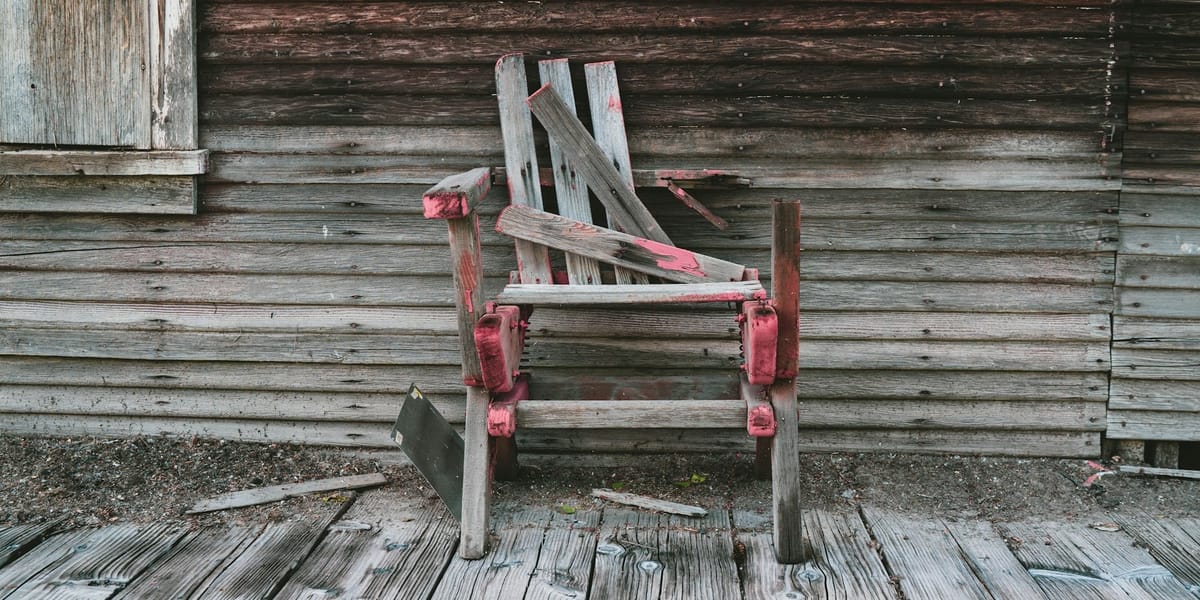
You're walking through an abandoned factory and you see a rusted gear, a broken chair, a length of chain with links worn smooth from decades of use. You pick up the gear and immediately you're thinking about what it could become in your work. Not because you're cheap or lazy, but because that specific object, with its history and associations and evidence of use, brings something to sculpture that buying new materials from an art supply store never could.
Found objects carry their previous lives with them. A wooden crate that held oranges means something different than clean lumber cut to the same dimensions. The staining, the labels, the wear patterns all tell stories that become part of your work whether you intend it or not. This embedded meaning is either enormous asset or significant liability depending on how you use it.
Understanding what found objects actually do, when they strengthen work versus when they're just cheap material substitutes, and how to work with objects' existing associations rather than fighting them transforms scavenging from economical necessity into deliberate conceptual strategy. The question isn't whether to use found objects but when they serve your ideas better than anything you could make or buy new.
What Duchamp Actually Did and What Everyone Misunderstands
The readymade gets referenced constantly in discussions of found object art, usually incorrectly, so understanding what Duchamp actually did clarifies what found objects can and can't do.
Duchamp's Fountain, the famous urinal signed R. Mutt and submitted to an exhibition, wasn't primarily about the object itself. It was about institutional authority, what gets called art and why, and who decides. The urinal was perfect for this critique specifically because it was mass-produced, functional, and not precious. Any urinal would have worked. The specific object didn't matter.
This is crucial because most found object sculpture is nothing like Duchamp's readymade. When you incorporate a specific rusted gear because of its particular history and appearance, you're not making a readymade. You're using found material for its specific qualities, which is completely different conceptual approach.
The readymade says "art is whatever gets designated as art by institutions and artists, regardless of what the object is." Found object sculpture says "this particular object has qualities that serve my concept." One is primarily conceptual and institutional critique. The other is material and aesthetic practice.
Confusing the two leads to misunderstanding found object work as automatically critical or conceptual when it might just be aesthetic or practical choice. Using scavenged materials doesn't automatically make your work about Duchamp's concerns any more than using bronze makes it about ancient Greek sculpture.
Duchamp's later work, particularly the assisted readymades where he modified objects slightly, complicates the pure readymade idea. But even assisted readymades maintain the conceptual framework of institutional critique and designation rather than being about the objects' specific material qualities.
When contemporary artists reference Duchamp while using found objects, they're often claiming conceptual legitimacy for what might actually be formal or aesthetic choices. This isn't necessarily dishonest but it does muddy the waters about what found object work is actually doing.
The Cultural Baggage Objects Carry
Every manufactured object carries associations from its original function, the culture that produced it, and the class positions it signals. These associations work on viewers whether you intend them or not.
Working-class objects, tools, industrial materials, all carry associations with labor, manual work, working-class life. Using these objects connects your work to those associations. This can be powerful if you're addressing labor, class, or industrial history. It can be problematic if you're aestheticizing poverty or co-opting working-class culture without engaging with it meaningfully.
Mark Di Suvero's large-scale sculptures using I-beams and industrial materials engage with industrial labor and American manufacturing history. The materials aren't incidental; they're inseparable from the work's meaning about American industry, strength, and working-class culture.
Domestic objects, furniture, kitchenware, household items, carry associations with home life, domesticity, often femininity. Rachel Whiteread's resin casts of furniture and architectural spaces use domestic objects to address memory, absence, and private life made public. The domestic associations are essential to the work's meaning.
Consumer goods and packaging reference consumerism, waste, capitalism, often disposability and planned obsolescence. Using these objects automatically invokes those associations. You can work with them critically or affirmatively but you can't escape them.
Luxury objects carry different associations than cheap mass-produced ones. An antique chair means something different than an IKEA chair. Both are furniture but they signal different class positions, different relationships to craft and history, different values around objects and ownership.
Cultural specificity matters enormously. Objects produced by and for specific communities carry meanings within those communities that outsiders might not understand. Using culturally specific objects without understanding their significance risks appropriation or simply missing the point.
Religious objects, even when decontextualized, retain powerful associations. Using them requires understanding those associations and either working with them intentionally or accepting that you're courting controversy and possibly offense.
Obsolete technology, old computers, typewriters, rotary phones, all carry nostalgia and associations with specific historical moments. They date your work but also ground it in particular technological and cultural context. This temporal specificity can be strength or limitation.
Children's toys invoke childhood, innocence, play, but also often disturbing undertones when used in adult art context. The juxtaposition of childlike objects with adult concerns creates tension that many artists use deliberately but that can also feel manipulative or cheap.
The key is recognizing these associations exist and deciding whether to work with them, against them, or try to strip them away. You can't ignore them. They're built into the objects through years or decades of cultural conditioning. Viewers bring these associations to your work automatically.
When Transformation Matters and When It Doesn't
The degree to which you transform found objects affects how the work reads and what it means. Pure presentation versus heavy modification are different strategies with different implications.
Minimal transformation maintains object recognition and emphasizes the object's existing associations. Duchamp's readymades presented objects essentially unchanged. The power came from context shift, moving objects from utilitarian contexts to art contexts, not from physical transformation.
Contemporary artists using minimal transformation are making similar moves, asking viewers to see familiar objects differently through recontextualization. Ai Weiwei dropping a Han Dynasty urn, documented in photographs, doesn't physically transform the urn much (it's broken) but completely recontextualizes it.
Heavy transformation obscures original objects, making them raw material more than found objects. John Chamberlain's crushed car sculptures are clearly made from automobiles but the crushing transforms them so completely that you see abstract form and color as much as cars. The car-ness matters but doesn't dominate.
The spectrum between these extremes offers range of approaches. Partial transformation might modify objects enough to make them yours while retaining enough original character to maintain associations. Robert Rauschenberg's Combines modify and assemble found objects but you can still identify what things are.
Assemblage typically involves collecting and arranging found objects without heavy transformation of individual pieces. The relationships between objects create meaning. Joseph Cornell's boxes assemble unmodified found objects but the juxtapositions create new narratives.
Sculptural transformation through cutting, welding, bending, or otherwise physically altering found materials treats them more like raw material than objects. This can strip away associations or create new ones depending on degree and type of transformation.
Surface treatment, painting, coating, or finishing found objects can suppress or emphasize their found-ness. Painting everything uniform color might unify disparate objects but obscures their individual histories. Leaving surfaces untreated emphasizes their found origins.
The question is whether the object's identity as that specific thing matters to your concept. If you're using a chair because its chair-ness is important, maintain its recognizability. If you're using a chair because it's shaped wood and you need shaped wood, transform it until it serves your formal needs.
Some artists deliberately work in the tension between recognition and abstraction, making work where you can barely identify objects but their ghost presence creates meaning. Tony Cragg's early plastic assemblages collected colored plastic fragments where you could sometimes identify what objects they came from but the overall effect was abstract color and form.
Legal and Ethical Dimensions of Taking Things
Using found objects requires navigating questions about ownership, appropriation, and what you're entitled to take and use.
Trash and discarded items are generally fair game legally. If something's genuinely abandoned, taking it isn't theft. But determining whether something is truly abandoned versus temporarily placed or stored can be ambiguous. Taking items from someone's curb on trash day is different from taking items from an alley where property status is unclear.
Salvage yards, junkyards, and recycling centers are businesses selling discarded materials. Taking without permission and payment is theft. Many artists develop relationships with these businesses, buying interesting items or getting permission to salvage specific things.
Construction sites and demolition operations often have materials that seem abandoned but are actually property of contractors or building owners. Taking materials without permission is theft even if they appear discarded. Asking permission usually works if you explain you're an artist interested in salvaging specific materials.
Street finds, things people leave on sidewalks or in public spaces, occupy gray area. In most places, taking truly abandoned items from public space is legal but you need to be confident items are actually abandoned and not just temporarily placed.
Dumpster diving legality varies by location and context. Private dumpsters on private property create trespassing concerns. Public dumpsters might be legally accessible but many municipalities have ordinances against scavenging. Understanding local regulations prevents legal problems.
Corporate property, even when discarded, can create complications. Some companies destroy or prohibit salvage of their branded materials to control their image. Taking branded items and using them in ways companies object to can create legal disputes.
Historical or archaeologically significant items have specific legal protections. Taking artifacts from historical sites is illegal. Even finding items on public land might require reporting and turning over to authorities depending on significance and jurisdiction.
Cultural property and objects with specific cultural or religious significance raise ethical issues beyond legal questions. Using sacred objects from cultures you're not part of is appropriation regardless of legality. Respect and cultural sensitivity matter.
Permission from original owners, when possible, creates legal and ethical clarity. If you're using someone's discarded items in ways they might recognize, asking permission prevents later disputes and shows respect.
Documentation of provenance, where objects came from and how you acquired them, protects you if questions arise about legitimacy. Keeping records of salvage sources, purchases, and permissions is prudent practice.
Some artists make the acquisition process itself part of the work's meaning. Theaster Gates's Dorchester Projects used materials salvaged from demolished Chicago buildings, with the salvage process itself addressing urban decay, Black neighborhoods, and cultural memory. The objects' origins were essential to meaning.
Material Qualities Found Objects Offer
Beyond associations and meaning, found objects have physical properties that might serve your work better than new materials.
Patina and weathering give objects visual richness impossible to fake convincingly. Real rust, actual wear, genuine aging all have qualities that artificial distressing never quite matches. If you want weathered appearance, using actually weathered objects is more authentic than creating artificial patina.
Aged wood has checking, grain patterns, color variations, and surface texture that new wood lacks. If those qualities serve your work aesthetically, found wood offers them immediately rather than requiring years of natural aging.
Structural properties of salvaged materials can equal or exceed new materials. Old-growth timber is often denser and stronger than contemporary lumber. Vintage steel might be higher quality than current production. Salvaged materials aren't necessarily inferior to new ones.
Unusual forms and shapes from industrial objects, machine parts, or specialized tools offer formal possibilities hard to create from scratch. If you need complex curved form, finding object with that shape might be easier than fabricating it.
Scale and mass of large salvaged objects, industrial equipment, architectural elements, vehicles, all offer sculptural presence that's expensive or difficult to create otherwise. A found shipping container offers cubic volume that would cost thousands to fabricate new.
Surface variations and imperfections in found objects create visual interest that perfectly uniform new materials lack. Dents, scratches, stains, repairs all add character. This might be aesthetic liability or strength depending on your goals.
Mechanical assemblies in found objects, gears, linkages, mechanisms, all come pre-made. If you need functional or decorative mechanical elements, salvaging them from machines is more efficient than fabricating from scratch.
Material combinations in manufactured objects often join materials in ways difficult to achieve in studio fabrication. If you want metal bonded to rubber or plastic fused to wood, finding manufactured objects with those combinations might be easier than creating them.
Standardized dimensions of industrial materials, pipes, beams, panels, all offer consistency that hand-made work might lack. If you need repetitive elements at precise sizes, salvaged standardized materials provide that.
Authenticity, the sense that objects are genuinely what they appear to be rather than representations or replicas, comes automatically with found objects. A real tool has authenticity that a sculpture of a tool doesn't, which matters for some work and is irrelevant for other work.
When Found Objects Become Clichéd
Certain approaches to found objects have become so common they verge on cliché, requiring either avoiding them or using them with enough sophistication to overcome the cliché status.
Using doll heads or baby doll parts is almost universally understood as shorthand for creepy, disturbing, or addressing childhood trauma. It's been done so often that it's hard to use doll parts without invoking every other artwork that's used them. Unless you have genuinely new approach, avoid.
Mannequins and dress forms similarly carry heavy associations from decades of art use. They can still work but you're operating in context of enormous precedent. Understanding that history and either building on it or deliberately working against it is necessary.
Typewriters and other obsolete technology have become common in work addressing memory, history, and technological change. They're not yet completely clichéd but getting there. Using them well requires acknowledging their symbolic weight.
Religious imagery, crucifixes particularly, get used frequently in work addressing spirituality, suffering, or institutional religion. The shock value has largely worn off. Using religious objects now requires more conceptual sophistication than mere presence.
Found text, whether from books, newspapers, or signage, can create interesting meaning but text-based found object work is common enough that doing it well requires careful attention to what the text actually says and how it interacts with other elements.
Clocks and watches appear frequently in work about time, mortality, aging. They're not inherently clichéd but they're obvious symbols that require strong conceptual framing to overcome their predictability.
Chairs are so common in sculpture and installation that using chairs requires justifying why chairs rather than other furniture or other objects. Chairs have been done comprehensively. New chair work needs to add something to the extensive chair precedent.
The "everything covered in X" approach, whether covering objects in paint, glitter, resin, or other coating material, has been explored thoroughly. It can still work but the coating-as-transformation strategy is familiar enough to require fresh conceptual approach.
Collections of identical found objects, bottle caps, buttons, specific consumer products, create different meaning than collections of varied objects but the accumulation strategy itself is well-established. Using it well requires understanding what accumulation does and whether your specific objects add new dimension.
Cliché happens when approach becomes so familiar that viewers see the strategy instead of the specific work. When you recognize "oh, this is one of those [type] pieces" before engaging with the particular artwork, cliché has won. Overcoming cliché requires either completely fresh approach or using familiar approach with enough intelligence and specificity that the cliché dissolves.
Scale Considerations With Found Objects
Found objects come in the sizes they come in, which both enables and constrains what you can make with them.
Small objects, hardware, toys, tools, consumer products, all work for tabletop-scale sculpture but scaling up requires accumulation or combination rather than finding larger individual objects. Accumulation creates different reading than single large object.
Large objects, furniture, appliances, vehicles, industrial equipment, offer immediate scale impact but create transportation, installation, and stability challenges. A found couch is easier to work with than a found car simply because of size and weight.
Modular objects, shipping pallets, cinder blocks, standard containers, all offer repetitive scale that can be assembled into larger structures. Their modularity is formal and conceptual asset. Donald Judd wasn't using found objects exactly, but his use of industrial materials and modular units shares logic with found object approaches.
Combining objects at different scales creates relationships that generate meaning. A tiny object placed on or in large object creates different reading than objects at similar scale. Scale relationships between found objects work like scale relationships between any sculptural elements.
Architectural salvage, doors, windows, structural elements, all operate at human scale or larger, making them suitable for installation or large sculpture but difficult to manage practically. A salvaged door is heavy, bulky, and has specific proportions you must work with or against.
Objects that are multiples, sets of matching chairs or stacks of identical containers, offer both repetition and scale through quantity. Ten identical objects create different presence than one object at ten times the size.
Fragmenting large objects into smaller pieces changes their scale identity. Car parts separated from the car operate at different scale and with different associations than the intact vehicle. John Chamberlain's crushed car sculptures fragment cars but maintain enough scale and material character to read as automotive.
The practical limits of what you can move, store, and install constrain found object scale. A sculpture made from small found objects can be transported in a car. A sculpture made from car bodies requires truck and equipment. These practical constraints shape what's possible.
Some artists deliberately work at extremes, either minute found objects or massive ones, using scale as primary formal strategy. The extreme scale becomes content, not just practical consideration.
Combining Found and Made Elements
Pure found object assemblage is one approach, but combining found objects with fabricated elements expands possibilities while creating new challenges.
Integration questions arise immediately. Do found and made elements read as unified work or as found objects in fabricated container? Either can work but you need clarity about intended relationship.
Material compatibility affects how found and fabricated elements combine. Welding found steel to fabricated steel works straightforwardly. Bonding disparate materials requires appropriate adhesives or mechanical fastening. Material incompatibility can cause failures.
Visual coherence or deliberate incoherence both work depending on concept. Making fabricated elements match found objects' character creates unity. Making them obviously different creates contrast and tension. Neither is automatically better.
Scale relationships between found and made elements affect reading. If fabricated elements dominate by size or quantity, found objects become details. If found objects dominate, fabricated elements become support or framework.
Some artists use fabricated elements as formal support for found object content. Nancy Rubins's sculptures use fabricated steel armatures to suspend found objects, appliances, boats, creating tension between organic accumulation and engineered structure.
Other artists make found objects the structure and fill or extend with fabricated elements. This inverts the relationship, making found objects do heavy lifting literally and conceptually.
The fabrication quality signals whether made elements are meant to compete with or defer to found objects. Highly finished fabrication suggests equivalence. Rough or minimal fabrication might subordinate made elements to found objects' character.
Some work deliberately confuses what's found and what's made, creating uncertainty that becomes conceptual content. If viewers can't tell what was found and what was fabricated, that ambiguity can be productive.
Making exact replicas of found objects then combining replicas with originals creates uncanny relationships between authentic and reproduction. This can address questions about authenticity, reproduction, and value.
Display Contexts Change Found Objects' Meanings
The same found object reads completely differently in different exhibition contexts.
White cube gallery presentation often aestheticizes found objects, encouraging formal appreciation over attention to objects' histories or associations. The clean gallery context strips away some found-ness, making objects seem more like art objects than found materials.
This isn't automatically bad but it changes what work does. If you want viewers to think about objects' previous lives and associations, white cube might work against you. If you want formal appreciation, white cube helps.
Museum display, particularly in vitrines or on pedestals, gives found objects precious object status. Cornell's boxes in museum cases read differently than they would installed more casually. The museological presentation adds authority and removes accessibility.
Site-specific installation, particularly using found objects in locations related to their original contexts, strengthens associations and meanings. Industrial objects in industrial sites, domestic objects in domestic spaces, all create resonance between object and context.
Outdoor installation exposes found objects to weathering, making their found-ness more extreme over time. Objects continue aging, rusting, degrading, which might be conceptually valuable or might just be deterioration depending on intent.
Temporary installations allow using found objects that wouldn't survive permanent display. Fragile, degrading, or minimally transformed objects can work in temporary contexts where permanent installation would be problematic.
Public space presentation without art-world framing might make found objects invisible as art. Viewers might not recognize artistic intention without cues like pedestals, labels, or gallery context. This can be productive ambiguity or frustrating miscommunication.
Commercial gallery context adds market pressure and value questions. Found objects with minimal transformation create anxiety about pricing and value. How do you sell something that was trash? The market pressure affects how work gets made and shown.
Contemporary Artists Using Found Objects Effectively
Understanding how working artists navigate found object sculpture's challenges and possibilities helps clarify successful approaches.
Theaster Gates uses salvaged materials from demolished Chicago buildings to create sculptures, installations, and entire architectural projects. The materials' origins are inseparable from the work's content about urban decay, Black neighborhoods, and cultural preservation. Gates doesn't just use found materials; he uses specific materials from specific places to address specific histories.
Tara Donovan accumulates found or cheap materials, plastic cups, toothpicks, styrofoam cups, in massive quantities to create installations where individual objects disappear into larger forms. The found-ness matters less than the accumulation and transformation through quantity. She's using found materials for their formal properties more than their associations.
El Anatsui uses found bottle caps and metal scraps to create enormous hanging sculptures that resemble fabric despite being metal. The materials reference consumption and waste while being transformed into beautiful forms. The work operates in tension between trash origin and aesthetic magnificence.
Mark Bradford uses found papers, posters, advertisements, billboards from urban environments to create abstract paintings. The source materials ground the work in specific urban contexts and social issues while being transformed through process into abstraction. The found-ness is essential but not dominant.
Gabriel Orozco photographs and sometimes minimally modifies found objects and situations. His work with found elements is about attention and recontextualization more than physical transformation. Photographs document found conditions that become art through artist's designation and attention.
Cornelia Parker's installations often use found objects from specific sources, instruments crushed by steamroller, charred remnants from building fire, flattened silverware. The objects' traumatic transformations are part of their meaning. Found objects provide authenticity that fabricated elements couldn't.
Tom Sachs uses found and consumer materials to create meticulous replicas of cultural objects and spaces. His work addresses consumption, DIY culture, and authenticity through materials' commercial origins and obvious handmade quality.
These artists share attention to why specific found materials serve their concepts better than alternatives. They're not using found objects because they're cheap or easy but because those objects bring meaning, associations, or qualities that fabricated materials can't provide.
Making Found Object Work Your Own
Moving beyond obvious found object strategies requires developing distinct approach grounded in your specific interests and concepts.
Material obsessions develop through paying attention to what attracts you repeatedly. If you find yourself consistently drawn to certain types of objects, lean into that rather than diversifying just to be diverse. Specificity creates stronger work than attempting to use all possible found materials.
Transformation strategies that become signature approaches distinguish your work from generic assemblage. Developing consistent way of modifying, combining, or presenting found objects creates recognizable practice rather than one-off experiments.
Sourcing rituals, regular practices of looking for materials, create both practical material supply and conceptual grounding. Artists who regularly visit specific salvage yards, scavenge particular neighborhoods, or have relationships with specific sources develop material practices that become part of their work's meaning.
Respect for materials' histories, treating found objects as worthy of attention rather than just cheap resources, creates work that honors objects and their previous lives. This isn't about sentimentality but about recognizing that objects carry stories worth acknowledging.
Research into objects' origins, histories, and cultural contexts deepens work beyond surface use. Understanding what you're working with, where it came from, what it meant in original context, all inform how you use it.
Editing and selection, being rigorous about which found objects serve your work and which don't, prevents unfocused accumulation. Not every interesting object belongs in your work. Discipline about what you include and exclude strengthens final pieces.
Scale commitment, working consistently at particular scale range or deliberately varying scale for specific reasons, creates coherence across bodies of work. Some artists always work small with found objects. Others consistently work large. Both approaches work better than random scale variation.
Conceptual clarity about why you're using found objects rather than new materials grounds practice in intention rather than convenience. If you can't articulate why found objects serve your work better than alternatives, you might not need found objects.
The challenge is developing approach that's distinctly yours, that draws on found object sculpture's history without merely repeating it, and that uses found materials for genuine conceptual reasons rather than just because they're available. When found objects become integral to your artistic vision rather than material substitutes, when you couldn't imagine making the work any other way, you've moved beyond generic found object use into something actually yours.
Found objects offer sculptural possibilities nothing else matches. The embedded histories, the authentic aging, the cultural associations, the surprising forms, all provide raw material for work that resonates in ways pure fabrication rarely achieves. But those same qualities can overwhelm your intentions, create clichés, or simply become excuses for avoiding harder fabrication challenges. Understanding when found objects genuinely serve your concepts versus when they're just convenient determines whether using them strengthens your work or weakens it.