Why Marble Carving Requires Understanding Crystal Structure
Why marble carving requires understanding crystal structure, grain orientation, and cleavage planes. The geology and materials science behind sculptural technique.
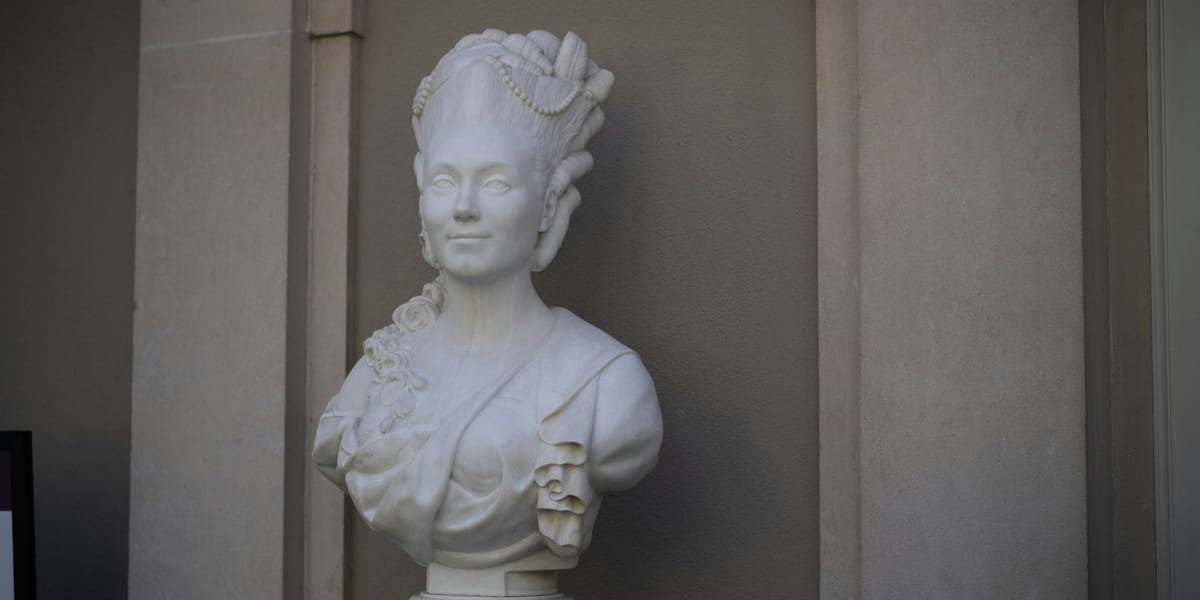
The Renaissance sculptor planning to carve a standing figure from a marble block needed to understand that the stone wasn't homogeneous material but organized crystalline structure with directional properties that could either support or destroy the intended form.
Carve perpendicular to the primary grain orientation and the marble splits cleanly along cleavage planes. Apply force parallel to grain boundaries and the crystals hold together through interlocking structure. Miss these relationships and delicate extremities shatter, complex undercuts fail, and months of work reduce to broken fragments.
This isn't mystical stone-reading or artistic intuition. It's applied crystallography.
Marble consists of interlocking calcite or dolomite crystals formed through metamorphism of limestone. The crystals' geometric organization, size, shape, and orientation determine how the stone responds to carving forces. Understanding this structure separates sculptors who can execute ambitious forms from those whose work fails during execution.
The relationship between crystal structure and carving technique operates at multiple scales. The molecular arrangement of calcium carbonate determines cleavage behavior. The individual crystal size and shape affect surface finish and fine detail capacity. The large-scale grain orientation influences structural integrity of extended forms.
Classical sculptors developed empirical knowledge of these properties through generations of practice, even without modern mineralogical understanding. They learned to read stone, identify grain patterns, test stone response, and plan forms that worked with rather than against the material's crystalline organization.
Contemporary sculptors benefit from explicit geological knowledge that explains what traditional practice discovered empirically. The combination of materials science understanding and practical carving experience creates deeper engagement with stone than either approach alone provides.
The Metamorphic Origins
Marble begins as limestone, a sedimentary rock composed of calcite crystals precipitated from calcium-rich water or accumulated from shell fragments of marine organisms. Metamorphism transforms this layered sedimentary structure into interlocking crystalline marble.
The metamorphic process involves heat and pressure sufficient to cause the original calcite crystals to dissolve and recrystallize into new, typically larger crystals. The temperature must reach roughly 200-400°C while pressure increases due to burial depth or tectonic compression.
The original limestone's layering and bedding structures often disappear during recrystallization as the new crystals grow across old boundaries. This creates marble's relatively homogeneous appearance compared to the stratified character of unmetamorphosed limestone.
However, the metamorphic process isn't perfectly uniform. Variations in temperature, pressure, and chemical conditions during metamorphism create subtle differences in crystal size, orientation, and purity across the marble body. These variations determine the stone's carving properties.
The Carrara marble that Michelangelo preferred formed during Alpine mountain building when tectonic forces compressed and heated limestone deposits. The specific metamorphic conditions in the Apuan Alps created marble with particular crystal characteristics that made it ideal for sculpture.
The grain size in Carrara marble tends toward medium (crystals visible to naked eye but not overly coarse), the crystals interlock tightly without excessive void space, and the chemical purity creates uniform white color without mineral inclusions that could interfere with carving.
Different marble sources worldwide formed under different metamorphic conditions, creating stones with varying properties. Greek Pentelic marble, Tennessee marble, Vermont marble, and Italian marbles all represent distinct metamorphic histories producing different crystalline structures.
Understanding the metamorphic origin explains why marble isn't standardized material but varies by source. The geological formation history determines the sculpture possibilities.
Calcite Crystal Structure and Cleavage
Calcite crystals have rhombohedral structure at the atomic level, with calcium and carbonate ions arranged in three-dimensional geometric pattern. This molecular organization creates the crystal's directional properties.
The cleavage, the tendency to split along specific planes, results from the atomic structure. Calcite exhibits perfect rhombohedral cleavage in three directions, meaning the crystal breaks cleanly along planes at specific angles rather than fracturing randomly.
When you strike calcite with a chisel, the force propagates through the crystal structure. If the force aligns with a cleavage plane, the bonds between atomic layers break easily and the crystal splits cleanly. If the force crosses cleavage planes at unfavorable angles, the crystal resists breaking or fractures irregularly.
In marble, thousands of interlocking calcite crystals each have their own cleavage orientations depending on how they grew during metamorphism. The overall stone behavior reflects the statistical average of all these individual crystal orientations plus the boundaries between crystals.
The sculptor's problem involves working with material that has internal preferred fracture directions. Understanding these directions allows strategic force application that removes material efficiently while preserving desired forms.
The cleavage planes also affect surface finish. When polishing marble, the tool encounters crystal faces with different orientations. Some crystals polish smoothly while others at different orientations may pit or pull out slightly, creating subtle surface texture.
The finest surface finishes require either marble with very small crystals (where the individual crystal effects average out at visible scale) or careful technique that works with the crystalline structure rather than against it.
The same cleavage that challenges detailed carving also enables certain carving approaches. Traditional point-and-claw chisels work by inducing controlled cleavage fractures that remove material in predictable ways. The tool design evolved to exploit calcite's cleavage properties.
Grain Orientation and Structural Integrity
The term "grain" in marble refers to the preferred orientation of calcite crystals resulting from directed stress during metamorphism. If the metamorphic pressure came primarily from one direction, the crystals tend to align perpendicular to that pressure.
This alignment creates directional strength properties similar to wood grain but from different physical causes. The marble is stronger when loads apply perpendicular to grain orientation and weaker when forces act parallel to grain.
For sculptural purposes, this means extended forms like arms, legs, or other projections need to align with the grain direction for maximum strength. Carving delicate elements perpendicular to grain orientation invites fracture during carving or subsequent handling.
Classical sculptors learned to inspect marble blocks for grain direction before beginning work. The traditional method involved wetting the stone surface, which makes grain patterns more visible as different crystal orientations absorb water at different rates.
The block orientation matters enormously. A standing figure carved with legs parallel to grain can support its own weight and resist handling stresses. The same figure carved perpendicular to grain will likely break at the ankles during finishing or installation.
The lost works of antiquity include countless sculptures that failed because sculptors misjudged grain orientation or attempted forms that exceeded the material's directional strength limits. The surviving works represent successful negotiation with crystalline structure.
Some sculptures incorporate metal pins or reinforcements at stress points where grain orientation can't provide adequate strength. This represents compromise between artistic ambition and geological reality.
The grain orientation also affects carving efficiency. Removing material along grain direction proceeds faster and with less tool wear than carving across grain. Experienced sculptors plan their roughing-out sequences to exploit favorable grain directions.
Crystal Size and Detail Capacity
The individual calcite crystal size in marble, ranging from microscopic to several centimeters, fundamentally determines what level of detail the stone can hold.
Fine-grained marble with crystals under 1mm allows sharp edges, crisp details, and smooth surfaces because the carving tool encounters many crystal boundaries in small area. The tool can create features at scales finer than individual crystals.
Coarse-grained marble with crystals over 5mm poses challenges for fine detail because each crystal behaves somewhat independently during carving. Creating a sharp edge requires cutting through or removing entire crystals, and the edge sharpness is limited by crystal size.
The relationship resembles pixelation in digital images. Fine pixels allow detailed images. Coarse pixels limit resolution. Fine marble crystals enable fine sculptural detail. Coarse crystals constrain minimum feature size.
Michelangelo's preference for fine- to medium-grained Carrara marble reflected understanding that the crystal size enabled the anatomical precision his work demanded. The fabric folds, muscle definition, and facial features required grain fine enough to hold these details.
The coarse saccharoidal marbles (sugar-textured due to large visible crystals) work well for architectural applications or bold sculptural forms but can't achieve the refinement possible in finer stones. The aesthetic becomes different rather than inferior, but the limitation is real.
The crystal size also affects surface finish achievable through polishing. Fine-grained marble polishes to glass-like smoothness because the small crystals create microscopically uniform surface. Coarse-grained marble retains subtle texture from the individual crystal faces even when polished.
Some sculptors deliberately choose coarse marble for particular effects. The visible crystalline texture contributes to the work's character. But this choice means accepting the detail limitations that crystal size imposes.
The weathering behavior also relates to crystal size. Fine-grained marble weathers more uniformly because water penetrates evenly across many small crystal boundaries. Coarse marble develops more irregular weathering as individual large crystals respond differently to environmental exposure.
Veining and Mineral Inclusions
Pure marble consists entirely of calcite or dolomite, but most sculptural marble contains mineral inclusions that create veining, color variation, and structural complications.
The veins typically represent minerals concentrated along former fractures or bedding planes in the original limestone that persisted through metamorphism. Common vein minerals include serpentine (green), chlorite (green), graphite (black), iron oxides (red/brown), and clay minerals.
These veins create visual interest but also structural challenges. The boundary between calcite and vein minerals represents weakness plane where the different minerals' properties create discontinuity.
Carving across veins requires understanding that the vein material typically has different hardness, cleavage, and toughness than the surrounding marble. A chisel that works well in pure calcite may chip or grab when hitting serpentine veins.
The strategic response involves either incorporating veins into the composition (using them as color accents or design elements) or orienting the work to avoid placing structural stress across major veins.
Classical sculptors often selected marble specifically for vein patterns, using the natural coloration to enhance the sculptural form. The veins in Carrara statuary marble create subtle movement that animates the surface.
However, excessive veining or large mineral inclusions can make marble unsuitable for sculpture. If veins are too prominent or numerous, the stone becomes structurally unreliable and difficult to finish uniformly.
The mineral hardness differences also affect tool wear. Carving through quartz veins or other hard inclusions dulls chisels much faster than working pure calcite. This economic consideration influenced material selection historically.
Some contemporary sculptors specifically seek highly figured marble for its visual complexity, accepting the increased difficulty and structural limitations. The aesthetic priorities shift, but the geological constraints remain.
Temperature and Pressure Effects During Carving
The physical act of carving generates local stress, heat, and micro-fracturing that interact with marble's crystalline structure in ways that experienced sculptors learn to manage.
Each chisel blow creates stress waves propagating through the crystal structure. If the stress exceeds the bond strength between atomic layers, cleavage fractures develop. The sculptor controls where fractures propagate by understanding crystal orientation and force application angle.
The percussion from hammering generates localized heating at impact points. While the temperature rise is small, repeated impacts can cause stress in the crystal lattice that weakens the stone around the working area.
This heating effect means that aggressive carving in one area can make adjacent stone more prone to fracture. The solution involves working progressively across the form rather than concentrating all effort in small zones.
The micro-fractures from carving extend beyond the material visibly removed. The zone of weakened stone around carved features creates vulnerability during subsequent work. Undercutting or removing support from already-weakened areas risks collapse.
Experienced sculptors develop sense of how much "damage" they've introduced into the stone around working areas and adjust technique accordingly. This empirical knowledge of crystal fatigue prevents failures.
The ambient temperature also matters. Cold marble is more brittle because the calcite crystals contract, increasing internal stress. Hot marble is slightly more ductile. Traditional sculptors in Italy worked during moderate weather for this reason.
Modern climate-controlled studios eliminate temperature variability but remove the environmental feedback that taught sculptors to adapt technique to conditions.
The Physics of Tool Interaction
Different carving tools interact with marble's crystal structure through distinct physical mechanisms that determine their appropriate uses.
The point chisel concentrates force in small area, exceeding local strength and creating fracture. The fracture follows cleavage planes if the tool angle and force align favorably. Otherwise, unpredictable fracturing occurs.
The tooth chisel (toothed edge) creates multiple simultaneous fractures across its width. The adjacent fractures interact, and the stone between teeth breaks away in controlled fashion. This works best when teeth alignment roughly parallels grain orientation.
The flat chisel relies on shearing force across broader area. The crystal response depends on whether shearing occurs along favorable planes or requires breaking across crystal boundaries. The tool angle relative to grain determines efficiency.
The rasp and file remove material through abrasion rather than fracture. Individual abrasive particles pull out tiny crystal fragments or grind along cleavage surfaces. The grain orientation affects how easily material abrades away.
The drill generates rotational stress that creates circular fracture patterns. The drill advancement rate must match the marble's capacity to fracture and clear debris. Too fast and the stone crushes rather than cutting cleanly.
The modern power tools (pneumatic chisels, grinders, diamond saws) apply same basic physical principles at different speeds and forces. Understanding crystal structure remains essential even with mechanization.
The tool selection sequence (point to tooth to flat to rasps to abrasives) reflects progression from exploiting cleavage for rapid material removal to increasingly fine mechanical abrasion for surface finishing.
The sharpness maintenance matters because dull tools crush rather than fracture crystals, creating subsurface damage that weakens subsequent carving and degrades surface quality.
Reading the Stone Before Carving
Traditional sculptors developed sophisticated stone evaluation techniques before committing to major works.
The visual inspection identifies grain direction through subtle color banding, linear patterns, or slight texture variations. Wetting the surface enhances these patterns temporarily.
The sound test involves tapping the stone with a metal tool. Clear ringing indicates tight crystal interlocking without hidden fractures. Dull thuds suggest internal weaknesses or incipient cracks.
The scratch test uses a steel point to assess hardness and cleavage consistency across the block. Variations indicate compositional differences that will affect carving.
The structural test for large blocks involves drilling small inspection holes to check for hidden flaws, voids, or geological surprises within the stone mass.
The weathering examination of surface condition reveals how the stone responds to environmental exposure, predicting how the carved work will age.
The source knowledge matters because marble from particular quarries has known characteristics. Experienced sculptors develop preferences for specific sources based on accumulated understanding of their properties.
The block orientation relative to original geological context sometimes matters. Carrara quarrymen traditionally marked blocks to indicate the original "up" direction, though whether this actually affects carving properties remains debated.
The contemporary practice of purchasing stone from suppliers rather than quarries directly means sculptors often lack the geological context that informed traditional material selection.
Carving Against the Grain: Calculated Risks
Sometimes sculptural ambition requires forms that work against optimal grain orientation. Success requires extra care and often compromise.
The extended horizontal elements (raised arms, flowing drapery) that run perpendicular to vertical grain create fracture risks. Sculptors address this through several strategies.
The increased thickness maintains strength through sheer mass even when grain orientation isn't favorable. The proportions adjust to geological reality rather than pure aesthetic ideal.
The internal reinforcement using concealed metal pins or bars supports elements that stone structure alone can't sustain. This technological intervention enables forms that would otherwise fail.
The segmented construction builds risky elements separately, then assembles them with adhesives or mechanical connections. This approach sacrifices the monolithic purity some traditions value.
The alternative poses sometimes substitute achievable positions for the originally envisioned composition. The figure's arm position adjusts to align with grain rather than fighting it.
The acceptance of limitations acknowledges that some forms simply can't be executed in marble at certain scales or proportions. The material imposes real constraints that artistic vision must accommodate.
The historical record includes both spectacular successes where sculptors pushed marble beyond apparent limits and catastrophic failures where ambition exceeded material capacity.
Different Marbles, Different Properties
The geological diversity of marble sources creates a range of working properties that sculptors must understand for material selection.
Carrara Statuary marble (fine-grained, white, minimal veining) represents the gold standard for figurative sculpture. The crystal size and purity enable fine detail while maintaining strength.
Carrara Ordinary marble (more veining, occasional color variation) costs less but requires accommodating the veining in the composition or orientation.
Pentelic marble (Greek, fine-grained with golden iron staining) weathers to warm honey color that the Greeks exploited for architectural and sculptural purposes.
Paros marble (Greek, larger crystals with translucency) allows light penetration creating subtle luminosity but limits fine detail capacity due to crystal size.
Vermont marble (American, often white or gray) varies considerably by specific quarry location. Some is excellent sculptural stone, some is better suited to architecture.
Tennessee marble (American, often pink or red) contains more impurities creating color but also more structural variability.
The ancient Roman sculptors imported marble from diverse sources based on color, working properties, and symbolic associations. Understanding each marble's characteristics influenced material selection for specific projects.
Contemporary sculptors continue choosing marble by source, though globalized supply and standardized quarrying practices have somewhat homogenized available materials compared to historical variety.
Conservation and Crystal Structure
Understanding marble's crystalline structure matters equally for conserving existing sculpture as for creating new work.
The weathering mechanisms operate through crystal boundaries. Water penetrates along crystal interfaces, freezes and expands, and gradually loosens crystals from the surface. Understanding this process informs conservation treatments.
The salt crystallization damage occurs when dissolved salts precipitate within marble pores and cracks. The crystallizing salts exert pressure against confining crystal structure, causing mechanical damage. This explains why maritime or urban sculptures deteriorate faster.
The acid rain attack dissolves calcite through chemical reaction with sulfuric acid from atmospheric pollution. The dissolution begins at crystal surfaces and penetrates along grain boundaries, gradually degrading the stone structure.
The thermal cycling stress results from differential expansion and contraction as temperature changes. The crystals expand at different rates depending on orientation, creating internal stress that can cause fracturing.
The biological growth (algae, lichens, bacteria) establishes on marble surfaces and secretes acids that dissolve calcite while physically disrupting the crystal structure through growth pressure.
The conservation cleaning must consider crystal structure because aggressive techniques can remove surface crystals or induce fractures. The treatment must clean without damaging the crystalline organization.
The consolidation treatments aim to strengthen weakened stone by introducing materials that bond crystals together. Understanding the original crystal structure helps select appropriate consolidants and application methods.
The environmental control in museums maintains stable temperature and humidity partly to prevent stress on the crystalline structure from environmental fluctuations.
Contemporary Practice and Technology
Modern technology provides tools for understanding and working with marble's crystal structure that weren't available historically, yet the fundamental geological constraints remain.
The X-ray diffraction analysis reveals crystal orientation, size, and mineralogy before carving begins. This allows selecting optimal block orientation based on measured rather than estimated properties.
The ultrasonic testing detects internal flaws, cracks, and density variations within marble blocks non-destructively. This prevents committing to material with hidden structural problems.
The computed tomography (CT scanning) creates three-dimensional maps of internal structure including crystal size distribution and mineral inclusions. This information guides strategic carving approaches.
The modern diamond tooling cuts marble efficiently regardless of grain orientation, but the structural concerns remain. Power tools enable faster work but don't eliminate the fracture risks from working against grain.
The adhesives and consolidants allow repairing broken elements or reinforcing weak structures in ways unavailable to traditional sculptors. But they represent interventions acknowledging that the marble alone couldn't achieve the intended form.
The digital modeling and CNC carving can execute complex forms with precision, but the programs must account for grain orientation and structural limitations or the carved result will fail during extraction from the roughed block.
The combination of geological knowledge, advanced testing, and traditional carving understanding creates contemporary practice that's simultaneously more informed and more cautious than historical approaches that succeeded or failed through empirical trial.
Teaching Crystallography to Sculptors
Art schools teaching stone carving face pedagogical challenges in conveying geological and crystallographic concepts to students with artistic rather than scientific backgrounds.
The experiential learning through direct carving teaches crystal structure implicitly as students encounter cleavage, grain, and fracture behavior. The stone itself provides feedback about crystalline organization.
The geological explanation contextualizes the experiential knowledge, explaining why the stone behaves as students have discovered through practice. This combination of empirical experience and theoretical understanding creates deeper engagement.
The studio demonstrations showing how different approaches interact with crystal structure provide visual evidence of concepts that verbal explanation alone doesn't convey.
The material testing exercises where students deliberately carve against grain, with grain, across veining, etc., create controlled experiences demonstrating how crystal structure determines carving outcomes.
The quarry visits connecting finished marble to geological context help students understand that the sculptural material emerged from specific metamorphic processes rather than appearing in blocks spontaneously.
The failure analysis examining broken work identifies whether failure resulted from misjudging crystal structure, exceeding material limits, or technical errors unrelated to geology.
The contemporary challenge involves training sculptors who may work primarily with purchased blocks from unknown sources, unable to select material directly or understand its geological provenance.
The Limits of Knowledge
Despite advances in geological understanding and materials testing, marble retains unpredictability that no amount of knowledge completely eliminates.
The hidden flaws within blocks that no testing reveals until carving reaches them create unavoidable risks. The geological processes creating marble sometimes produced internal weaknesses invisible until exposed.
The stress redistribution as material is removed can cause unexpected failures even in apparently sound stone. Removing supporting material transfers stress to remaining structure in ways that aren't always predictable.
The accumulated damage from working creates zones of weakness that suddenly fail under final light touches after surviving heavy roughing work. The cumulative effect of carving stress exceeds the threshold unexpectedly.
The environmental changes during long projects can affect stone behavior. Temperature shifts, humidity changes, or simple aging can make marble respond differently than it did when work began.
The individual variation between blocks from the same quarry bed means that experience with previous stones doesn't guarantee identical behavior in current work.
This irreducible uncertainty means that even expert sculptors face moments when the stone behaves unexpectedly and work is lost. The craft requires accepting this geological uncertainty while using knowledge to minimize risk.
The relationship between sculptor and stone thus combines scientific understanding with experiential wisdom and acceptance of material agency. The marble isn't passive substance awaiting imposition of artistic will but active crystalline structure with inherent properties that shape what forms can emerge.
Understanding crystal structure provides foundation for skilled carving, but the stone ultimately teaches lessons that no amount of geological knowledge alone can convey. The combination of scientific literacy and practical experience creates competent practice, while the stone's resistance and cooperation teaches humility about material limits and geological realities that persist regardless of artistic ambition or technical knowledge.