What Actually Survives Outside: Material Realities of Outdoor Sculpture
Rain, sun, freezing, and vandalism destroy outdoor sculpture constantly. Learn which materials actually survive, how weather degrades everything, what protective coatings do and don't prevent, and why bronze still dominates public art.
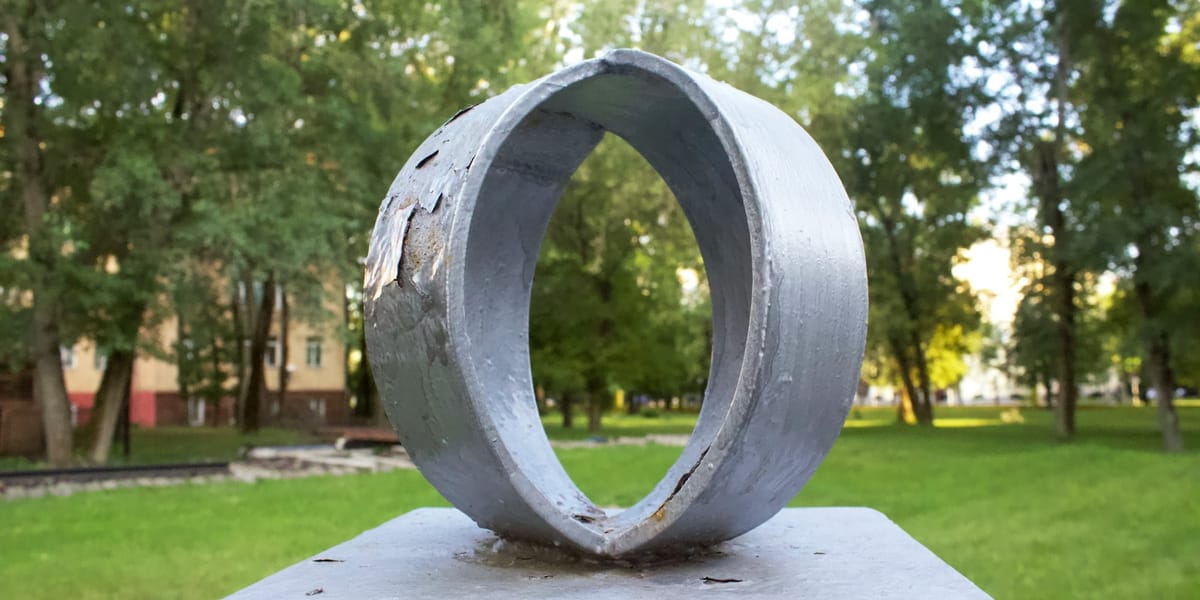
You've been asked to create a piece for an outdoor plaza. The client wants something bold, permanent, weather-resistant. You sketch ideas, thinking about form and concept, then start researching materials and realize you know almost nothing about what happens to sculpture when it lives outside for years. Rain, sun, freezing, vandalism, pollution, biological growth, all of it working constantly to destroy your work.
Indoor sculpture faces gentle environments with climate control and security guards. Outdoor sculpture faces everything nature and humans can throw at it. The material choices that work beautifully in galleries often fail catastrophically outside. Understanding what survives and what doesn't, what degrades gracefully versus what just looks terrible after five years, transforms outdoor work from wishful thinking into informed decision-making.
This isn't just technical concern. Material durability affects meaning. Work that disintegrates unintentionally sends different message than work designed to weather or decay. Maintenance requirements determine whether public sculpture remains accessible or becomes fenced-off liability. The practical realities of outdoor materials shape what's conceptually possible and what's economically sustainable.
The Fundamental Physics of Outdoor Exposure
Before addressing specific materials, understanding what outdoor environments do to things explains why certain approaches fail predictably.
UV radiation from sunlight breaks down molecular bonds in organic materials. Plastics become brittle. Pigments fade. Fabrics deteriorate. Paint chalks and loses adhesion. The damage is cumulative and irreversible. Every sunny day adds to total UV exposure, slowly destroying materials through photodegradation.
The intensity varies by geography. Outdoor work in Phoenix faces different UV load than work in Seattle. Southern exposures receive more direct sun than northern. Vertical surfaces facing the sun degrade faster than horizontal surfaces or shaded areas. Site-specific UV exposure should inform material choices.
Water is simultaneously essential and destructive. Rain washes surfaces, removing dirt and pollutants, which helps preserve some materials. But water also penetrates cracks, freezes and expands, drives corrosion, supports biological growth, and leaches soluble materials. How your sculpture handles water determines much of how it ages.
The freeze-thaw cycle destroys porous materials through ice expansion. Water enters small cracks or pores, freezes, expands with tremendous force, enlarges the crack. Thaw allows more water penetration. The next freeze expands the crack further. This cycle repeats hundreds or thousands of times over years, eventually shattering materials that seem solid.
Concrete, stone, ceramics, any porous material faces freeze-thaw damage in climates with winter freezing. Sealing helps but isn't perfect. Some materials are inherently freeze-thaw resistant. Others fail inevitably in cold climates regardless of protective measures.
Temperature cycling stresses materials through expansion and contraction. Metals expand when hot, contract when cold. Different materials expand at different rates. When dissimilar materials are bonded together, differential expansion creates stress at joints. Over thousands of cycles, this stress causes failures.
Summer sun can heat dark metal to 150°F or more. Winter cold can drop it to -20°F. That's a 170-degree temperature range creating constant expansion and contraction. Materials and joints must accommodate this movement or they fail.
Humidity affects different materials differently. High humidity accelerates corrosion of metals, promotes biological growth, can cause dimensional changes in wood and some composites. Low humidity prevents some degradation but creates other stresses. Neither extreme nor cycling humidity is ideal; both create challenges.
Wind creates mechanical stress, especially on large surfaces or tall elements. Wind load calculations become structural engineering questions for substantial outdoor work. Underestimating wind forces leads to sculptures that sway, vibrate, fatigue, or in extreme cases, collapse or blow over.
Air pollution, particularly in urban environments, chemically attacks many materials. Sulfur dioxide and nitrogen oxides create acid conditions that corrode metals and erode stone. Particulate matter embeds in surfaces, creating staining and deterioration. Industrial areas and high-traffic roadways create more aggressive chemical environments than rural locations.
Salt, whether from ocean spray in coastal locations or road salt in winter climates, accelerates corrosion dramatically. Stainless steel that's genuinely stainless in most environments can corrode in salt exposure. Any ferrous metal corrodes rapidly. Salt is one of the most destructive things outdoor sculpture faces.
Biological attack includes everything from algae and lichen to birds and insects. Biological growth discolors surfaces, retains moisture, produces acids that etch stone and corrode metal. Bird droppings are highly acidic. Trees drop sap and leaves. Understanding biological threats specific to your site informs material and design decisions.
All these factors work simultaneously and often synergistically. UV damage makes paint crack. Water penetrates cracks. Freeze-thaw enlarges them. Salt accelerates corrosion underneath. Biological growth takes hold in damaged areas. The degradation compounds itself. Materials must resist not just one factor but all of them simultaneously over years or decades.
Bronze and Other Patinating Metals
Bronze remains the default material for outdoor sculpture because thousands of years of evidence prove it survives, but even bronze requires understanding to use successfully.
Bronze is copper-tin alloy that forms protective patina layer when exposed to atmosphere. This patina, typically green copper carbonate or copper sulfate, actually protects underlying metal from further corrosion. The patina is the material working as designed, not failure.
But patina color and quality vary with environment and alloy composition. Coastal environments create green patinas from salt air. Industrial environments might create brown or black patinas from sulfur compounds. Desert environments produce minimal patina. You can't fully control patina development; you can only influence it.
Foundries can apply chemical patinas to new bronze, giving controlled initial color. But these applied patinas eventually give way to natural patina formed by environmental exposure. Hot patinas using heat and chemicals penetrate surface and last longer than cold patinas that sit on surface. Both eventually change as natural patination continues.
Waxing bronze protects it temporarily and controls patina development, but wax wears off through weathering and requires periodic reapplication. Annual or biennial waxing is standard maintenance for bronze sculpture. This ongoing cost must be budgeted and the work must be accessible for maintenance.
Some bronze alloys are more suitable for outdoor use than others. Silicon bronze is particularly weather-resistant. Architectural bronze is formulated for outdoor exposure. Art bronzes vary in composition depending on foundry and intended use. Discussing outdoor exposure with your foundry ensures appropriate alloy selection.
Bronze can fail through improper casting or installation. Thin sections can crack. Inadequate armatures can allow deformation. Poor mounting systems can allow water to accumulate in the sculpture's interior, causing problems. The foundry work quality matters as much as material choice.
Vandalism resistance is partial. Bronze is soft enough to scratch but hard enough to resist casual damage. The patina helps hide minor scratches. But determined vandals can damage bronze through gouging, hitting with hard objects, or spray painting. The last is particularly problematic because removing paint from patinated bronze without damaging the patina is difficult.
Theft is real concern. Bronze has scrap value. Smaller works or works in isolated locations face theft risk. Some sculptures get stolen and melted for scrap metal value. This is purely economic crime with no solution beyond security measures or accepting the risk.
Other copper alloys like brass weather similarly to bronze but their specific compositions affect patina color and corrosion resistance. Pure copper patinas beautifully but is expensive and soft. Brass, being copper-zinc, can corrode more aggressively than bronze in some environments because zinc is more reactive than tin.
Cast iron was historically used for outdoor sculpture but corrodes unless painted and maintained. The paint becomes the protective layer. Once paint fails, rust begins. Cast iron pieces require regular repainting, making them high-maintenance compared to bronze.
Steel weathers aggressively unless protected. Corten steel, weathering steel, is specifically designed to form stable rust layer that protects underlying metal. The rusty appearance is the material working correctly, similar to bronze patina. But Corten must be detailed correctly or it stains adjacent surfaces with rust runoff.
Regular steel requires protective coatings to survive outdoors. Paint, powder coating, galvanizing all protect steel from corrosion, but all require eventual maintenance. Once coating fails, corrosion begins. Steel outdoor sculpture is essentially a maintenance commitment.
Stainless steel is genuinely corrosion-resistant in most environments but expensive and difficult to fabricate. Different stainless grades have different corrosion resistance. Marine-grade stainless is necessary for coastal installations. Even stainless can stain or corrode in extremely aggressive environments or when contaminated with regular steel particles during fabrication.
The reflective quality of polished stainless is often desired but difficult to maintain outdoors. The surface shows every fingerprint, water spot, and dirt accumulation. Keeping it pristine requires regular cleaning. Brushed or matte finishes are more practical for outdoor work.
Aluminum is lightweight and corrosion-resistant through natural oxide layer formation, but it's soft and easily damaged. Anodizing aluminum improves corrosion resistance and allows color, but anodized surfaces can still scratch and wear. Aluminum is good choice for large-scale work where weight matters but less ideal where durability is priority.
Stone Endures But Changes
Stone seems permanent, and in geological time it is, but outdoor stone sculpture faces specific degradation patterns that inform material selection and design.
Granite is among the most durable stones for outdoor sculpture. It's hard, non-porous, highly resistant to weathering, freeze-thaw damage, and chemical attack. Polished granite can maintain finish for decades. It's heavy, difficult to carve, and expensive, but nothing weathers better.
Different granite colors and compositions have slightly different weathering characteristics. Darker granites show less dirt and biological growth. Lighter granites may show staining more but don't absorb as much heat. Geographic origin affects quality; some quarries produce more durable granite than others.
Marble is traditional sculpture material but relatively poor choice for outdoor exposure in many climates. It's calcium carbonate, which reacts with acid rain, creating sugaring where the surface becomes granular and eventually erodes away. This process is slow but irreversible and cumulative.
Historic marble sculptures that survived centuries are often now degrading rapidly due to increased air pollution and acid precipitation. Marble works beautifully indoors but outdoors it's fighting a losing battle against chemistry. In dry climates with little pollution, marble lasts better, but most environments are too aggressive for it.
Limestone varies enormously in density and durability. Dense limestone can be quite durable. Soft limestone erodes quickly. Freeze-thaw resistance depends on porosity. Some limestone is appropriate for outdoor work in certain climates; other limestone will fail quickly. Testing and knowing your specific stone is essential.
Sandstone is generally too porous and soft for most outdoor sculpture applications. It absorbs water readily, making it vulnerable to freeze-thaw damage. It can erode through wind abrasion. It supports biological growth. Some dense sandstones perform acceptably, but it's not first choice for durability.
Slate is durable and weathers well due to its density and structure. It's hard to carve in three dimensions but works for relief or laminar forms. Its natural cleavage planes can be design feature or structural weakness depending on how you work with them.
Basalt and other volcanic stones are generally quite durable. Basalt is very hard and dense, making it difficult to work but excellent for outdoor exposure. Its dark color shows less dirt and biological growth than lighter stones.
Soapstone is soft, easy to carve, and weathers acceptably in most climates. It's not as durable as granite but far more workable. It develops surface patina over time that can be attractive. Freeze-thaw resistance is generally good. It's reasonable compromise between workability and durability.
Sealing stone helps protect it from water penetration and staining but requires periodic reapplication. Sealers wear off through weathering. They can also trap moisture if applied improperly or if the stone wasn't completely dry. Sealing is maintenance commitment, not one-time solution.
Biological growth on stone, particularly algae, lichen, and moss, is often inevitable outdoors. It's primarily aesthetic issue rather than structural one, though biological acids can very slowly etch stone surface. Some people find biological growth attractive, others consider it degradation. Cleaning removes it but it returns.
Salts crystallizing within porous stone, efflorescence, can cause spalling where surface layers pop off. This happens when water carrying dissolved salts penetrates stone, then evaporates, leaving salt crystals that expand and create pressure. Preventing water penetration prevents this problem.
Thermal shock can crack stone when it's heated rapidly, typically from direct sun on very cold days. Dark stones absorb more heat and are more susceptible. This is relatively rare but possible failure mode, particularly for thin sections.
Wood Outdoors Is Temporary Unless Treated
Wood's organic nature makes it fundamentally temporary outdoors. Understanding this reality shapes expectations and design decisions.
Untreated wood exposed to weather will rot, typically within a few years to a decade depending on species, climate, and exposure. Wood-decaying fungi require moisture, oxygen, and moderate temperatures, all of which outdoor environments provide. Preventing decay means preventing fungal attack.
Some wood species are naturally more decay-resistant due to extractives that inhibit fungal growth. Redwood, cedar, black locust, white oak all have some natural resistance. But even these woods will eventually decay outdoors if exposed to sustained moisture.
Sapwood of any species decays faster than heartwood because it lacks the extractives that provide resistance. Using heartwood-only increases durability significantly but also increases cost and limits available dimensions.
Pressure-treated lumber uses chemical preservatives to prevent decay and insect attack. It's effective and relatively inexpensive but the treatment chemicals are toxic, which creates handling concerns and environmental issues when the wood eventually degrades or gets disposed of.
The aesthetic of pressure-treated wood, typically green or brown color, might not suit sculptural applications. It also has limited availability in certain sizes and species. It's practical solution but not always appropriate one.
Surface treatments like paint or exterior stains protect wood temporarily but require ongoing maintenance. Once coating fails, decay begins. The maintenance cycle of cleaning, preparing, and recoating is intensive and never-ending. Wood sculpture outdoors is maintenance commitment.
Some artists embrace wood's temporality, making work intended to decay as part of its concept. David Nash's wooden sculptures weather, crack, and eventually rot as intended processes. The decay is content, not failure. This approach requires accepting that the work won't last indefinitely.
Charred wood, traditional Japanese shou sugi ban technique, carbonizes surface, making it more decay-resistant and less attractive to insects. It also creates distinctive black appearance. This treatment is more durable than paint but still requires some maintenance and doesn't prevent decay indefinitely.
End grain exposed to weather absorbs water readily, making it particularly vulnerable. Sealing end grain or designing to shed water from it extends wood lifespan. Simply putting caps or covers over vertical posts prevents much water penetration.
Wood movement from moisture changes causes warping, cracking, and joint failure. Wood expands when wet, contracts when dry. Outdoor exposure means constant cycling through moisture changes, creating constant movement. Joints and fasteners must accommodate this movement or they fail.
Checking, surface cracking in wood, is normal response to outdoor exposure and not necessarily structural failure. Some species check more than others. Some find the checking attractive, others find it degradation. It's generally aesthetic concern rather than functional one unless checks are large enough to trap water.
Insect attack, particularly termites, carpenter ants, and beetles, damages wood. Some wood species are more resistant than others. Chemical treatments help prevent insect attack but aren't perfect. In areas with heavy insect pressure, wood might be poor choice regardless of treatment.
Wood staining from rust, dirt, biological growth, or extractives bleeding is common outdoors. Some staining is reversible through cleaning, some is permanent. Light-colored woods show staining more prominently than dark woods.
If you're using wood outdoors, plan for replacement or accept deterioration. Ten to twenty years might be realistic lifespan for treated wood in average conditions. Some installations last longer, some fail sooner. The variability depends on wood species, treatment, design, climate, and maintenance.
Concrete and Cement-Based Materials
Concrete seems indestructible but faces specific outdoor challenges that determine how well it performs over time.
Properly formulated and placed concrete is quite durable outdoors. It can last centuries as Roman structures demonstrate. But concrete can also fail dramatically if improperly done or exposed to conditions it can't withstand.
Freeze-thaw damage is primary failure mode for concrete in cold climates. Water enters the porous concrete, freezes, expands, creates internal pressure, causes spalling and cracking. Air-entrained concrete, formulated with microscopic air bubbles throughout, is essential for freeze-thaw resistance.
The air bubbles provide space for ice expansion without creating destructive pressure. Without proper air entrainment, concrete will fail through freeze-thaw cycling. Standard concrete mixes for vertical applications might not include adequate air entrainment, so specifying outdoor-appropriate concrete is necessary.
Concrete strength comes from proper curing, which requires maintaining moisture for days or weeks after placement. Concrete that dries too quickly doesn't fully cure and remains weak. This is particular concern for outdoor sculpture where surfaces might dry faster than mass interiors.
Reinforcement with rebar or mesh is almost always necessary for structural concrete sculpture. The reinforcement carries tensile loads that concrete alone can't handle. But reinforcement creates challenges because steel corrodes if exposed to moisture and air. Adequate concrete cover over reinforcement is essential.
When cover is insufficient or concrete cracks, water reaches steel, which corrodes. Corroding steel expands, creating pressure that spalls the concrete off. This failure mode, rebar corrosion, is common in outdoor concrete. Maintaining at least two inches of cover and minimizing cracking prevents it.
Cracking in concrete is nearly inevitable and not necessarily failure. Some cracking is from plastic shrinkage during curing. Some is from thermal expansion and contraction. Some is from structural loads. Control joints, intentional weakened planes, allow cracking to occur at planned locations rather than randomly.
Surface treatments for concrete affect durability and appearance. Sealers reduce water penetration and staining. They require periodic reapplication. Some create glossy finish, others are matte. Some change concrete color slightly, others are clear.
Polished concrete can look beautiful but is high-maintenance outdoors. The polish degrades through weathering. Re-polishing outdoor work is labor-intensive. Honed or textured finishes are more practical for outdoor exposure.
Staining concrete with acid stains or penetrating dyes colors it permanently but the color can fade with UV exposure. Integral color mixed throughout concrete is more UV-resistant but limits color options. Surface-applied color systems vary in durability.
Biological growth on concrete, particularly in humid climates, creates green or black discoloration. It's primarily aesthetic issue. Periodic washing removes it but it returns. Some designers accept biological growth as part of concrete aging; others find it objectionable.
Alkali-silica reaction, internal chemical reaction between cement and certain aggregates, can cause map cracking and deterioration. It's rare but catastrophic. Using appropriate aggregates and supplementary cementitious materials prevents it. Testing can determine if particular aggregate-cement combinations are reactive.
Cast concrete sculpture allows complex forms but requires skilled formwork and placement. The formwork quality determines surface quality. Honeycomb, voids from inadequate consolidation, creates durability problems and aesthetic issues. Professional concrete work matters for outdoor sculpture.
Precast elements, cast in controlled conditions and installed later, often perform better than cast-in-place work because curing conditions are controlled. For complex geometric sculpture, precast in sections and assembled on site might be more reliable approach.
Glass fiber reinforced concrete, GFRC, allows thinner, lighter sections than conventional concrete. It uses alkali-resistant glass fibers instead of steel reinforcement. GFRC can create forms impossible with regular concrete but requires specialized expertise to fabricate properly.
Shotcrete, pneumatically applied concrete, enables complex forms without formwork but requires experienced applicators. Poorly applied shotcrete can delaminate or lack proper density. Good shotcrete is excellent; bad shotcrete fails quickly.
Ceramics Face Brutal Outdoor Conditions
Ceramics' porosity and brittleness make outdoor exposure challenging, though some approaches can work in certain conditions.
Stoneware and porcelain fired to vitrification, above 2300°F, become dense enough to resist water penetration. Properly vitrified ceramics can survive freeze-thaw if they don't absorb significant water. But even vitrified ceramics have some porosity.
Glazed surfaces seal the clay body, preventing water penetration through glazed areas. But glaze can craze, developing fine cracks that allow water into clay body. If the body absorbs water and freezes, it can fail despite glazing. Additionally, any unglazed areas, like bottoms or interiors, can absorb water.
Earthenware and low-fire ceramics are generally unsuitable for outdoor exposure in freezing climates. They're too porous and will fail through freeze-thaw damage. In non-freezing climates, low-fire work can survive outdoors if adequately sealed or glazed, but it's never ideal.
Raku and other post-fired reduction techniques create particularly porous, fragile ceramics unsuitable for outdoor exposure. The aesthetic is beautiful but the durability is minimal. These techniques are for indoor display only.
Architectural ceramics, terra cotta and ceramic tile, are formulated specifically for outdoor exposure and can be very durable. They typically use dense clay bodies and specialized glazes. But sculptural ceramics rarely match architectural ceramics in durability because the formulations and firing cycles differ.
Thermal shock from rapid temperature changes can crack ceramics. A piece heated by sun then hit with cold rain might crack from rapid cooling. Dark glazes absorb more heat and are more susceptible. This risk limits ceramics in climates with extreme temperature variations.
Large-scale ceramic sculpture faces structural challenges. Clay has limited tensile strength. Thin sections can survive but thick, heavy sections can crack from their own weight during firing or installation. Internal armatures aren't possible in ceramics the way they are in concrete because they'd prevent even shrinkage during firing and drying.
Mounting ceramic sculpture safely outdoors requires careful engineering. The brittleness means that point loads or rigid mounting can cause cracking. Flexible mounting that allows some movement might protect the work better but creates engineering challenges.
Vandalism resistance is minimal. Ceramic is easily broken. A deliberate blow with hard object will crack or shatter most ceramic sculpture. Protective barriers might be necessary in public locations, which limits accessibility and changes viewer relationship to work.
Some artists work with ceramic specifically for its fragility and impermanence outdoors. Clare Twomey's installations often use ceramics knowing they'll be damaged or destroyed through use or exposure. The impermanence is conceptual content. But this requires accepting that the work won't last.
Repairing damaged ceramic outdoors is difficult and often unsatisfactory. Cracks can be filled but remain visible. Broken sections can sometimes be reattached but the repair shows. Unlike bronze that can be rewelded or stone that can be consolidated, ceramic repairs are always compromises.
In mild climates without freeze-thaw cycles and with some protection from direct exposure, properly made ceramic sculpture can survive outdoors for years. Mediterranean climates, for instance, are much friendlier to ceramics than northern climates. Site selection matters enormously for ceramic durability.
Glass and Its Surprising Durability
Glass is fragile but chemically stable, creating interesting possibilities and limitations for outdoor sculpture.
Glass doesn't corrode, rust, or decay. Chemically it's extraordinarily stable. Ancient glass survives for millennia. The material itself is nearly permanent. The challenge is physical breakage, not material degradation.
Different glass types have different properties. Annealed glass is standard glass with normal internal stresses. Tempered glass is heat-treated to create internal stresses that make it stronger and cause it to shatter into small granules rather than sharp shards when broken. Laminated glass sandwiches polymer between glass layers, so even when broken the pieces stay together.
For outdoor sculpture, tempered or laminated glass reduces vandalism damage and improves safety. If glass breaks, tempered shatters into small pieces less likely to cause injury. Laminated glass might crack but doesn't separate into dangerous shards.
Thick glass is stronger than thin glass but also heavier and more expensive. Structural glass for sculpture might be inch-thick or more, creating substantial weight that requires robust mounting systems.
Glass can be surface-treated with coatings or sandblasting to create texture and reduce transparency. These treatments affect cleanability and durability. Coated glass might require more maintenance. Deeply sandblasted glass can be harder to clean than smooth glass.
Biological growth on glass is minimal because there's nothing for organisms to consume, but dirt and dust accumulation can be significant. Glass surfaces show dirt clearly. Outdoor glass sculpture often requires periodic cleaning to maintain intended appearance.
Thermal stress can break glass if part of the piece heats while another part remains cool. Large glass panels in direct sun, particularly dark or partially shaded glass, can develop enough thermal stress to fracture. Designing to minimize thermal gradients prevents this.
Mounting glass securely while allowing thermal expansion requires sophisticated systems. Glass can't be drilled without risk of cracking unless done with specialized tools and techniques. Adhesive mounting, mechanical mounting with point fasteners, or channel systems each have advantages and limitations.
Vandalism resistance is obviously limited. Glass can be broken deliberately. The tempered glass will shatter into small pieces, which might be better than large shards but still means the work is destroyed. Laminated glass resists vandalism better because breaking it is more difficult and doesn't immediately destroy the piece.
Some artists use glass specifically for its vulnerability. The fragility becomes conceptual content, particularly in installations addressing violence, destruction, or impermanence. Accepting that the work might be damaged or destroyed is built into the concept.
Cast glass can create substantial sculptural forms but shares breakage concerns with flat glass. Cast glass can be very thick, creating apparent robustness, but it's still glass and will break if struck hard enough. The mass provides some protection but not immunity.
Fused glass art techniques create beautiful surface treatments and forms but the resulting pieces remain fragile. They're appropriate for protected outdoor locations but risky in fully exposed public spaces.
Plastics Degrade But Serve Specific Functions
Plastics seem modern and durable but most degrade significantly under UV exposure, limiting their outdoor utility.
UV degradation breaks polymer chains, making plastics brittle, discolored, and weak. This happens to almost all plastics exposed to sunlight, though rates vary. What starts flexible becomes rigid and cracks. What starts clear becomes yellowed or clouded. What starts strong becomes weak and friable.
The degradation is cumulative and irreversible. Some plastics degrade within a year or two of outdoor exposure. Others last longer but all eventually fail. Planning for finite lifespan is essential when using plastics outdoors.
UV stabilizers can be added during manufacture to slow degradation. UV-stabilized plastics last significantly longer than unstabilized ones. But stabilizers only delay degradation, not prevent it. Eventually the plastic still fails.
Different plastic types degrade at different rates. Acrylic degrades relatively slowly and can last years outdoors with some yellowing and surface crazing. Polycarbonate is more UV-resistant than many plastics but still degrades. Polyethylene and polypropylene degrade relatively quickly unless heavily stabilized.
PVC, polyvinyl chloride, can be reasonably durable outdoors with proper formulation and UV stabilization. It's used for outdoor applications like pipes and siding. But it's not inherently permanent and requires specific formulation for outdoor use.
FRP, fiberglass-reinforced plastic, combines plastic resin with glass fibers for strength. It can be quite durable outdoors if formulated correctly with UV-resistant resins and adequate gel coat protection. Automotive and marine FRP demonstrates years of outdoor durability. But artist-made FRP might not match industrial formulations.
Gel coat, the outer layer on FRP, provides UV protection to underlying laminate. If gel coat is properly applied and maintained, FRP can last decades. If gel coat fails, the underlying laminate degrades rapidly. Gel coat can crack, chalk, or delaminate, requiring repair or refinishing.
Colored plastics face additional challenges because pigments can fade under UV exposure. Some pigments are more lightfast than others. What starts as vibrant color can become washed out pastels after years of sun exposure.
Thermal expansion of plastics exceeds that of metals or stone, creating design challenges when plastics are mounted to other materials. The joints must accommodate significant movement or stress will crack the plastic.
Some plastics become brittle in cold temperatures. A piece that's flexible and tough in summer might crack from impact in winter. Understanding the temperature range the material will experience informs material selection.
Biological growth on plastic is generally minimal, though some organisms can actually consume certain plastics very slowly. Dirt and pollution adherence varies with surface texture. Smooth plastics clean more easily than textured surfaces.
Plastics don't corrode but they can be scratched, gouged, or abraded. Vandalism resistance depends on the specific plastic and its thickness. Thin plastics are easily damaged. Thick, tough plastics like polycarbonate resist casual vandalism better but can still be deliberately destroyed.
Some contemporary artists use plastic knowing it's temporary, making work about disposability, pollution, or impermanence. The degradation becomes part of the concept. But this requires being explicit about temporality rather than hoping plastic will last forever.
For outdoor sculpture requiring specific properties like transparency or color, plastics might be only practical option. But expect finite lifespan and plan accordingly. Five to ten years might be realistic for even good plastics outdoors. Some last longer, many fail sooner.
Composite and Experimental Materials
Modern materials enable forms and effects impossible with traditional materials but often lack long-term outdoor performance data.
Carbon fiber composites are lightweight and strong but UV-sensitive unless properly protected. The carbon fibers themselves are stable, but the resin matrix holding them degrades under UV exposure. Protective coating is essential and becomes maintenance requirement.
Advanced composites used in aerospace and marine applications demonstrate outdoor durability but require specialized fabrication knowledge and expensive materials. Artist fabrication of composites might not match industrial standards, affecting longevity.
3D-printed materials for large-scale outdoor sculpture remain largely unproven. Most 3D printing materials are plastics with known UV sensitivity. Printed concrete and metal are emerging but performance data is limited. Using unproven materials outdoors is gambling on durability.
Rubber and elastomers degrade under UV and ozone exposure, becoming brittle and cracking. Some formulations are more resistant than others. Automotive and roofing applications demonstrate that properly formulated rubber can last years outdoors, but artist-grade materials might not match those formulations.
Fabric and membrane materials can work outdoors if properly specified and protected. Architectural fabrics used for canopies and structures demonstrate long-term performance. But standard textiles degrade rapidly. Understanding the difference between technical fabrics and regular fabrics is essential.
Coated fabrics, whether PVC-coated or fluoropolymer-coated, provide UV and water resistance. These materials can last ten to twenty years in outdoor exposure. But they're expensive and require professional fabrication for structural applications.
Foam materials used in sculpture, whether polyurethane foam or polystyrene foam, must be protected from UV and water for outdoor use. Hard coating systems can protect foam for years, but if coating fails, foam degrades rapidly. Coated foam is essentially perpetual maintenance commitment.
Some artists deliberately use non-durable materials outdoors, creating temporary installations or accepting that work will degrade. Andy Goldsworthy's natural materials, leaves, ice, sticks, are explicitly temporary. The impermanence is the point.
But when impermanence is unintentional, when you thought material would last but it fails quickly, that's simply failure. Understanding material limitations prevents unintentional impermanence masquerading as conceptual choice.
Testing new or experimental materials before committing to large-scale outdoor installation makes sense but has limitations. Accelerated weathering tests compress years of exposure into months through intense UV, moisture, and temperature cycling. They provide useful data but don't perfectly predict real-world performance.
The safest approach with experimental materials is starting small, exposing test pieces to actual outdoor conditions for extended periods, and scaling up only after confirming acceptable performance. This conservative approach prevents large expensive failures.
Protective Coatings and Their Limitations
Coatings can protect underlying materials but themselves require maintenance and can fail in ways that cause more damage than no coating.
Paint protects by creating barrier between substrate and environment. As long as paint film is intact, it prevents water penetration, UV damage to substrate, and some chemical attack. But paint films inevitably fail through weathering.
UV degrades paint binders, causing chalking where surface becomes powdery. Water penetrates through cracks or pores in paint film. Paint loses adhesion and begins to peel. These failures are gradual but inevitable. All paint will eventually fail outdoors.
High-quality exterior coatings last longer than cheap ones. Acrylic latex and urethane paints designed for outdoor exposure might last five to ten years with minimal chalking or peeling. But even best paints eventually require repainting.
The repainting cycle becomes ongoing maintenance. If sculpture can be easily accessed and repainted, this maintenance is manageable. If sculpture is large, tall, or difficult to access, repainting becomes expensive and complex. Some sculptures are essentially impossible to repaint once installed.
Powder coating bakes onto metal at high temperatures, creating durable coating that's more weather-resistant than liquid paints. It's excellent choice for fabricated metal sculpture. But it still eventually weathers and will need refinishing.
Clear coatings like polyurethane or acrylic can protect without changing appearance. They prevent oxidation, seal porous surfaces, and provide UV protection. But clear coatings often show degradation more obviously than pigmented paints. They yellow, crack, or peal in very visible ways.
Wax coatings on bronze require periodic reapplication, typically annually or biennially. The wax protects against moisture and slows patina development. But it's labor-intensive maintenance, requiring cleaning, applying multiple coats, and buffing.
Oil finishes on wood penetrate rather than sitting on surface. They require frequent reapplication, sometimes multiple times per year. They provide minimal actual protection compared to film-forming finishes.
Sealers for stone and concrete reduce water penetration and staining. Penetrating sealers soak into the material. Film-forming sealers sit on surface. Both require periodic reapplication as they wear away or degrade.
Coating failure can trap water under failed coating, accelerating deterioration of substrate. Once coating begins to fail, it often must be completely removed before recoating. This removal can be more difficult than initial application.
Some materials are better left uncoated. Bronze patina forms naturally and protects the metal. Coating bronze prevents the natural patina that's part of bronze's outdoor durability. Corten steel needs to rust to form its protective layer. Coating it prevents the designed weathering.
Accepting natural weathering rather than fighting it with coatings simplifies maintenance and often produces better results long-term. This means accepting that materials will change color, develop patina, show age. For some work this aging is enhancement. For others it's degradation.
Designing for Durability
Material choice matters but design decisions affect durability as much as material selection.
Water management is fundamental. Designing to shed water prevents accumulation that causes degradation. Horizontal surfaces that hold water fail faster than sloped surfaces that drain. Hollows and pockets where water collects create problems.
Weep holes allow water that penetrates into hollow sculpture to drain out rather than accumulating. Without drainage, water in hollow bronze or steel sculpture causes corrosion from inside. Hollow stone or concrete can freeze and crack from internal ice expansion.
Crevices and joints are vulnerable points where water penetrates and materials meet. Sealing joints prevents water penetration but sealants fail over time. Designing to minimize vulnerable joints improves durability.
Differential movement between materials stresses joints. Bonding materials with very different thermal expansion rates creates joints that fail through cycling stress. Either choose materials with similar expansion rates or design joints to accommodate movement.
Galvanic corrosion occurs when dissimilar metals contact in presence of moisture. Aluminum touching steel, brass touching iron, even stainless touching carbon steel can create galvanic cells that corrode one metal preferentially. Isolating dissimilar metals prevents this.
Sharp edges and fine details are more vulnerable to damage than rounded forms and robust details. Vandalism targets thin projections and delicate elements. Weather erodes fine details faster than massive forms. Designing with some robustness improves survival.
Accessibility for maintenance should be considered during design. If sculpture requires periodic maintenance but can't be safely accessed, maintenance won't happen and sculpture will degrade. Built-in access, removable sections, or designing to reach all surfaces facilitates long-term care.
Foundation design affects sculpture stability and longevity. Inadequate foundations allow settlement, tilting, or toppling. Foundations must handle sculpture weight, resist wind loads, and account for soil conditions. Professional engineering matters for substantial outdoor work.
Mounting systems that allow sculpture removal for conservation or repair provide flexibility. Permanent installation that can't be unmounted limits conservation options. Removable mounting adds initial cost but can save work later.
Maintenance Planning and Reality
Outdoor sculpture requires maintenance. The question is how much, how often, and whether it will actually happen.
No-maintenance sculpture is fantasy. All materials degrade outdoors. All work eventually requires intervention. The promise of permanent maintenance-free sculpture is marketing, not reality. The variables are degree and timing of required maintenance.
Annual inspection should be standard practice for outdoor sculpture. Checking for damage, degradation, coating failure, mounting security, drainage problems, all take minimal time but catch problems before they become serious.
Routine maintenance like cleaning, waxing bronze, tightening bolts, clearing drains should happen on schedule. Deferred maintenance compounds. A small crack that could be easily filled becomes large crack requiring major repair if ignored.
Professional maintenance for complex or large works requires budget allocation. Conservators, painters, structural engineers, all cost money. If budget doesn't include maintenance, maintenance won't happen adequately.
Public art contracts should specify maintenance responsibilities and funding. Who maintains the work? Who pays for it? What level of maintenance is required? These questions need answers before installation, not after degradation begins.
Some public sculptures become maintenance orphans when funding runs out or responsible parties disappear. The work degrades without maintenance until it's removed or destroyed. This is unfortunately common outcome for underfunded public art.
Private sculpture faces similar issues if owners don't understand maintenance requirements. Selling outdoor work should include education about maintenance needs. Providing maintenance instructions and schedules helps work survive.
Accepting that some works are temporary, designed to last years rather than decades or centuries, is reasonable approach. Not all sculpture needs to be permanent. Understanding intended lifespan informs material choices and maintenance expectations.
Documentation before installation and during maintenance creates baseline for future work. Photographs showing original condition, material specifications, installation details all help future conservators understand the work and plan interventions.
What Actually Lasts
After all the variables and caveats, some materials and approaches demonstrably outlast others outdoors.
Bronze with minimal intervention lasts centuries. Natural patina forms, protects metal, changes aesthetically but doesn't compromise structure. Periodic waxing extends control over appearance but even unwaxed bronze survives.
Granite and other dense igneous stones last essentially forever in most climates. They might stain or grow biological colonies but structurally they endure. Ancient Egyptian granite sculpture proves the durability.
Properly formulated concrete lasts many decades. Roman concrete structures survive two thousand years. Modern concrete with air entrainment and adequate reinforcement cover should last a century with reasonable maintenance.
Stainless steel and aluminum form protective oxide layers and resist corrosion in most environments. Regular cleaning maintains appearance but structural integrity doesn't degrade significantly over decades.
Corten steel stabilizes with protective rust layer and then changes little over decades. The aesthetic might not suit all work but the durability is proven.
What doesn't last is plastics, wood, unsealed ceramics, coated materials when coating fails, anything relying on UV-sensitive components, most experimental materials without long-term data.
The conservative material choices, bronze, granite, stainless, might seem boring but they survive. If longevity matters, proven materials win. If experimentation matters more than longevity, accept the impermanence.
Understanding these realities transforms outdoor sculpture from hopeful guessing to informed decision-making. Materials behave predictably outdoors. Weather, pollution, biological attack, vandalism, all work according to physics and chemistry that we understand. Choosing materials and designs that work with these forces rather than against them creates sculpture that survives, functions, and continues to mean what you intended year after year, weather after weather, season after season.