What Artists Can Learn from Rashid Johnson's Guggenheim Retrospective
Rashid Johnson's major Guggenheim retrospective through January 2026 spans three decades of multidisciplinary practice. Here's what working artists can learn from his use of materials, serial work, and conceptual consistency.
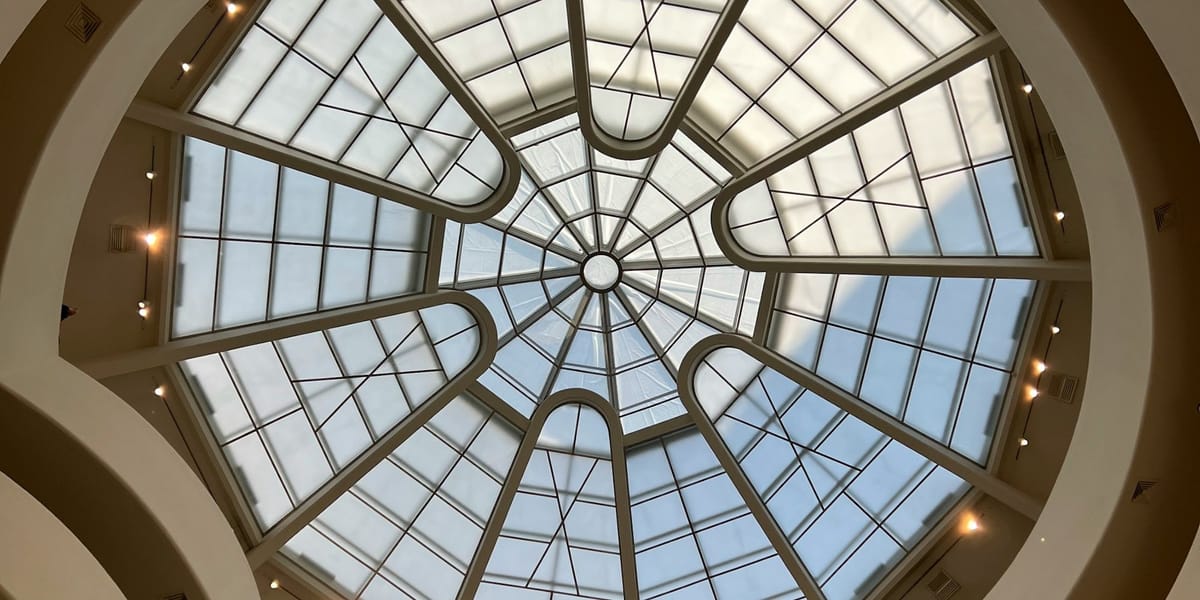
Rashid Johnson's A Poem for Deep Thinkers at the Solomon R. Guggenheim Museum sprawls across the entire rotunda through January 18, 2026, offering the most comprehensive look at his practice in over a decade. For working artists, this retrospective does something more valuable than documenting a successful career. It demonstrates how someone builds a multidisciplinary practice that holds together across thirty years, multiple media, and consistent conceptual concerns without becoming repetitive or losing coherence.
The exhibition brings together more than ninety works spanning photography, painting, sculpture, video, installation, and performance. Johnson moves between these forms not as someone dabbling in different media but as someone letting concept determine form. Each medium serves specific purposes within his broader investigation of race, masculinity, anxiety, and the conditions of contemporary existence. The show reveals what this kind of sustained, multidisciplinary engagement actually looks like when done well.
Materials Doing Conceptual Work
The materials Johnson uses aren't neutral. Shea butter, black soap, wax, burnt wood, ceramic tiles, plants, and red oak flooring all carry specific cultural, historical, and personal associations. These aren't found objects in the tradition of assemblage art where randomness and juxtaposition create meaning. Johnson selects materials because they already mean something, then deploys them in ways that amplify or complicate those meanings.
His shelf paintings incorporate shea butter and black soap as both material and subject. These substances come from African and African diaspora self-care practices, carrying associations with nurture, protection, and cultural maintenance. When Johnson uses them as painting material, they function simultaneously as medium, content, and cultural reference. The work becomes about care practices, about materials that circulate in Black communities, about the physical properties of these substances, and about painting's expanded possibilities.
This isn't symbolic use of materials where black soap "stands for" something else. The soap is literally there, its properties affecting how the work looks and smells and ages. The material does actual work beyond representation. For artists thinking about material choices, this approach offers an alternative to both pure formalism and heavy-handed symbolism. Materials can carry meaning without being symbols. Their physical properties and cultural associations can operate simultaneously.
The burnt wood panels in various works throughout the exhibition demonstrate similar thinking. Johnson uses controlled burning to alter the surface of wood panels, creating charred surfaces that reference fire, destruction, transformation, and the history of racial violence while also being beautiful objects with specific textures and visual qualities. The burning isn't metaphorical. It's a process that literally transforms the material and creates the surface for further work.
Artists working with unconventional materials often face questions about whether the materials are gimmicks or necessary to the work. Johnson's practice answers this by making materials inseparable from meaning. You couldn't substitute other materials without fundamentally changing what the work does. The specificity matters. This gives useful criteria for evaluating your own material choices. Does the material do something only it can do? Does it carry associations that serve the work? Does its physical behavior matter to how the piece functions?
Serial Work Without Repetition
The exhibition groups Johnson's work into several major series developed over years or decades: The New Negro Escapist Social and Athletic Club, Cosmic Slops, the Anxious Men paintings, the Broken Men mosaics, and various bodies of sculpture and installation work. Seeing these series together reveals how serial practice can sustain investigation without becoming formulaic.
Each series establishes a consistent formal framework but allows variation within that structure. The Anxious Men works, for instance, share compositional strategies and material palettes but address different aspects of masculine anxiety, cultural pressure, and psychological states. Johnson returns to the same basic format repeatedly because the format still has things to reveal, not because he's run out of ideas.
This differs from artists who find a successful format and simply repeat it. Johnson's series evolve. The Broken Men mosaics develop from earlier work but incorporate new materials and approaches. The ceramic tile, mirror, branded oak flooring, and incorporated materials create complex surfaces that relate to earlier work while doing new things. You can see connections across the practice without feeling like you're seeing the same piece multiple times.
For artists developing serial work, Johnson's approach suggests several principles. First, the series should be structured enough to be recognizable but open enough to accommodate genuine exploration. If every piece in a series is predictable from the first one, the series isn't doing much. Second, series can run in parallel rather than sequentially. Johnson develops multiple bodies of work simultaneously, letting them inform each other rather than exhausting one approach before starting another.
Third, series work best when they address questions that don't have simple answers. Johnson's ongoing investigation of anxiety, escape, refuge, and care doesn't resolve because these aren't problems that get solved. The series continues because the subject continues being relevant. This gives serial work substance beyond formal variation.
The thirty-year span of work in this exhibition demonstrates how long-term commitment to related concerns can build into something more substantial than individual pieces. The early self-portraits connect to the later Anxious Men paintings through sustained attention to similar themes approached with increasing complexity and formal sophistication. Young artists worrying about finding their voice might find this more useful than advice about signature styles. Johnson has a recognizable practice not because everything looks the same but because he keeps asking related questions.
Moving Between Media Strategically
Johnson works in photography, painting, sculpture, video, installation, and performance. The exhibition includes all these forms, and the movement between them never feels arbitrary. Different media serve different purposes within the larger practice. This isn't someone trying everything to see what sticks. It's someone selecting the right form for what each piece needs to do.
The early photographs establish visual and conceptual territory that later work explores through other means. Self-Portrait Laying on Jack Johnson's Grave (2006) uses photography because it needs to document a specific relationship between the artist and a particular place. The work is about being there, about the connection between Rashid Johnson the artist and Jack Johnson the boxer, about Chicago and history and identity. Photography does this work directly.
The shelf paintings and Anxious Men works need different things from their medium. These address psychological states, cultural pressures, and abstract conditions that painting's flexibility with abstraction and representation can hold simultaneously. The shelves incorporate actual objects, books, and materials in ways that photography couldn't achieve. The medium matches what the work needs to do.
Johnson's installations, like the major new work filling the Guggenheim rotunda floor, use space and viewer movement in ways that flat work can't. The suspended plants throughout the rotunda transform the architecture and create relationships between organic and built environments. This needs installation thinking, not painting or photography. The work exists in how it shapes space and how viewers move through it.
The video work Me, Tavis Smiley and Shea Butter (2004) captures duration and intimate gesture through time-based media. Watching Johnson apply shea butter while listening to NPR creates meaning through process and routine that a still image couldn't convey. The medium serves the content.
This strategic use of different media offers a model more useful than advice to either specialize or try everything. The question isn't whether to work in multiple media but whether each medium does something necessary to your concerns. Johnson's practice holds together because everything serves overlapping investigations. The media diversity doesn't scatter the work because the underlying questions remain consistent.
Artists often face pressure to stay in one lane for career reasons. Galleries and collectors prefer recognizable output. But Johnson's success working across forms suggests that consistency of concern can create coherence even with media diversity. The key is that different forms serve the same fundamental interests approached from different angles.
Site-Specificity and Institutional Engagement
The Guggenheim commission required Johnson to engage Frank Lloyd Wright's distinctive architecture. His response demonstrates how site-specific work can acknowledge its context without being constrained by it. The suspended plants filling the rotunda use the building's central void as intended by Wright, who designed the space to include vegetation. But Johnson's approach transforms that original vision into something addressing contemporary conditions.
The plants aren't decoration. They create relationships between natural and built environments, between care and display, between growth and containment. The work uses the architecture while also commenting on institutions, exhibition contexts, and the conditions under which art appears. This dual function—working with the site while also examining what the site represents—gives the installation more complexity than pure architectural response.
Sanguine (2025), installed on the museum's top ramp, includes a piano and serves as a stage for biweekly musical performances. This work engages both the specific architecture of the Guggenheim and broader questions about how art functions in institutional spaces. The piano activates the piece through performance, making the sculpture a platform for something beyond itself. This approach to site-specificity addresses both the physical location and the social conditions of art's presentation.
For artists creating commissioned or site-specific work, Johnson's approach suggests that responding to architecture and questioning institutional frameworks can happen simultaneously. Site-specificity doesn't require uncritical acceptance of the site's meanings or constraints. The strongest site-specific work often examines the site while working with it.
The practical challenge in site-specific practice involves creating work that engages its location specifically while maintaining your larger concerns. Johnson's solution involves selecting aspects of the site that connect to his existing interests. The Guggenheim's circular ramp creates conditions for certain kinds of viewer movement and certain relationships between works. He uses those conditions to advance investigations already present in his practice rather than creating work solely to fit the space.
Performance Integration Without Performance Art
Several works in the exhibition include performance elements, but Johnson isn't primarily a performance artist. The performances activate existing objects rather than being the primary work. This distinction matters for artists thinking about incorporating live elements into practices based in other media.
Rotunda Stage (2025) creates a space for performances on the museum's ground floor. The stage itself is a sculpture, but it becomes complete through use. The performances aren't documentation of the work happening elsewhere. They're part of how the sculpture functions. This model for performance integration keeps the object-based work central while acknowledging that some meanings only emerge through activation.
The biweekly performances at Sanguine operate similarly. The piano exists as part of the installation whether or not someone plays it, but performance reveals dimensions the static object holds in potential. This differs from performance art where the performance itself is primary and any remaining objects are documentation or residue.
For artists whose practice centers on objects but who want to incorporate durational or performative elements, this approach offers useful precedent. The performances serve the objects rather than the reverse. This keeps the work accessible to audiences who never see performances while adding layers for those who do. It also addresses practical exhibition concerns since museums can display the objects continuously even when performances happen intermittently.
The integration of community collaborators in the performances also demonstrates how Johnson's practice engages social dimensions without becoming relational aesthetics or social practice art. The performances activate community connections and create social situations, but these emerge from and serve object-based work rather than being the primary focus.
Personal Narrative Serving Cultural Commentary
Johnson draws extensively on his own life—growing up in Chicago, his relationship to Black cultural production, his experiences of anxiety and seeking refuge, his daily routines and self-care practices. But the work never becomes merely autobiographical. Personal experience serves as evidence and entry point for larger cultural examination.
Me, Tavis Smiley and Shea Butter uses Johnson's literal bathroom routine, but the work addresses cultural circulation, media consumption, self-care in Black communities, and relationships between private ritual and public culture. The personal specificity gives the work concrete grounding, but the concerns extend beyond individual experience.
This navigation of personal narrative in art addresses one of the harder problems in contemporary practice. Work that's too personal becomes inaccessible or self-indulgent. Work that avoids the personal often lacks grounding or feels generic. Johnson's solution involves using his own experience as case study rather than confession. The work examines conditions and systems that extend beyond him while acknowledging his particular perspective and situation.
The photographs of himself at Jack Johnson's grave or applying shea butter or in other specific circumstances don't ask viewers to care about Johnson personally. They use his presence to examine relationships between individuals and larger histories, between private acts and cultural meaning, between specific bodies and broader categories. This approach to first-person material in art keeps the personal from becoming precious or therapeutic.
For artists drawing on their own experiences, this offers a model where autobiography serves investigation rather than being its subject. The question becomes not "what happened to me" but "what does my experience reveal about conditions others share" or "how does my particular situation illuminate larger patterns." This shift from confession to examination changes how personal material functions.
Materials as Archive and Library
Many of Johnson's works incorporate books, music, cultural references, and materials that function as compressed archives of Black cultural production. The shelf paintings include actual books, often significant texts in African American literature and thought. The red oak flooring references domestic and institutional spaces. The plants connect to both Afrofuturist imagery and practical traditions of keeping greenery in homes.
These materials bring their associations and histories into the work. You can't fully understand the pieces without recognizing what these materials reference and where they circulate culturally. But the work doesn't require encyclopedic knowledge to function. The books remain books, the shea butter remains shea butter. The work operates on multiple levels depending on what viewers recognize.
This use of culturally loaded materials differs from appropriation or reference in that Johnson isn't borrowing images or forms from other sources. He's incorporating actual materials from circulating culture. The books aren't paintings of books or photographs of books. They're books. This directness creates different relationships between work and reference than image-based appropriation.
For artists thinking about how to engage cultural specificity without explaining everything or requiring extensive context, Johnson's approach suggests that materials and objects can carry information viewers will recognize at different depths. Someone who doesn't know the specific books on the shelves still understands they're reading materials, cultural production, knowledge systems. Someone familiar with the titles gets additional layers.
Anxiety and Care as Subjects
Much of Johnson's work addresses anxiety, stress, and the various ways people seek refuge or relief. The Anxious Men paintings don't depict anxiety literally but create visual analogs for anxious states through their compositions, mark-making, and material handling. The New Negro Escapist Social and Athletic Club series examines the need for spaces of refuge and escape from constant cultural pressure.
These subjects matter to contemporary practice because anxiety, overwhelm, and the need for refuge are widespread conditions. Johnson addresses them through formal means rather than illustration or direct statement. The work gives form to felt experience without explaining it or offering solutions. This approach to difficult subject matter keeps the work from becoming either self-help or journalism.
The care practices visible throughout the work—self-care through shea butter and grooming, intellectual care through reading, spatial care through creating refuge—operate as both subject and method. Johnson makes work about care and makes work carefully. The attention to materials, to construction, to how objects hold together physically demonstrates care in practice.
This connection between subject and method offers useful thinking for artists addressing difficult or heavy subjects. The question becomes not just what you're depicting but how the making itself demonstrates a relationship to the subject. Work about care that's carelessly made contradicts itself. Work about anxiety that's anxiously made might reinforce rather than examine the condition.
Building Across Thirty Years
The retrospective format shows how a practice develops over decades. Johnson's early work from the 2000s shows clear relationships to later pieces while also being distinct from them. The concerns remain consistent but the formal approaches and conceptual sophistication evolve. Seeing this development compressed into one exhibition reveals what long-term engagement with related questions produces.
The early self-portraits investigating identity and cultural positioning lead to the more complex investigations of anxiety and refuge in later work. The shelf paintings develop from earlier uses of non-traditional materials. The ceramic and mosaic works extend thinking about surface and materiality present in earlier painting. Nothing appears from nowhere. Each body of work grows from previous concerns while adding new dimensions.
This visible evolution addresses something young artists often struggle with: how much to change versus how much to maintain continuity. Johnson's practice demonstrates that both happen simultaneously when you're genuinely working through ideas rather than just producing variations. The changes serve deeper investigation of consistent concerns rather than being changes for their own sake.
The timeline also reveals something about pacing and patience. Johnson didn't produce ninety major works in five years. These pieces span three decades, with some series developing over ten or fifteen years. This suggests that rushing to produce large bodies of work might be less useful than sustained engagement with ideas that keep revealing new aspects over time.
The Exhibition as Total Environment
Walking through the Guggenheim rotunda with Johnson's work transforms the space completely. The suspended plants create vertical relationships and soften the hard architecture. The works on the walls engage the ramps' curves and the sightlines between levels. The floor installations interrupt typical circulation patterns. The total effect creates an environment rather than a collection of pieces.
This environmental approach to exhibition design matters for artists thinking about how work appears in institutional contexts. The pieces don't just hang on walls. They engage the entire architectural situation, creating relationships between objects, space, and viewer movement. This requires thinking beyond individual pieces to how they function collectively in specific spaces.
The practical challenge in environmental installation involves balancing your vision with institutional constraints and the needs of viewers navigating the space. Johnson's solution involves using the Guggenheim's unusual architecture as opportunity rather than limitation. The ramps create sequential viewing that he uses narratively. The central void allows for the suspended plants. The top-floor isolation makes it perfect for Sanguine with its performance component.
For artists working toward major museum presentations, this exhibition demonstrates what's possible when you engage institutional spaces ambitiously while maintaining your own agenda. The work serves both the museum's need for spectacular shows and Johnson's ongoing artistic investigations.
What This Retrospective Reveals About Practice
Seeing three decades of work together clarifies several principles about sustaining serious practice. First, consistency of concern matters more than consistency of form. Johnson works in radically different media and formats, but everything addresses overlapping questions about identity, refuge, anxiety, care, and culture. This conceptual through-line creates coherence even with formal diversity.
Second, materials can do conceptual work without being symbolic. Johnson's use of shea butter, black soap, books, plants, and other loaded materials shows how substances with cultural associations and physical properties create meaning through their actual presence rather than through representation.
Third, serial work stays vital when the series addresses questions without simple answers. Johnson's various series continue because the subjects—anxiety, refuge, care, cultural production—remain relevant and complex. The series never feel exhausted because the terrain keeps revealing new aspects.
Fourth, multidisciplinary practice holds together when different media serve consistent concerns. Moving between photography, painting, sculpture, installation, and performance makes sense when each form does specific work related to your larger project.
Fifth, personal experience can serve cultural examination without becoming confessional. Using your own life as evidence and entry point differs from making work about yourself. The distinction lies in whether personal material illuminates broader conditions or just documents individual experience.
Sixth, long-term development requires patience with individual pieces and series. Johnson's practice shows how staying with ideas over years or decades allows them to deepen and complicate in ways that rushing past them prevents.
Practical Takeaways
If you're working on building sustainable practice, several lessons from this exhibition transfer directly. Start by examining whether your material choices serve your concepts or just follow convention. Could you use different materials that bring associations or properties useful to what you're addressing? This doesn't mean using unconventional materials for novelty but choosing materials that do conceptual and formal work simultaneously.
Look at whether your serial work evolves or repeats. If you're making series, do later pieces reveal new aspects of your subject or just produce variations? Series should complicate and deepen investigation, not just multiply instances. This might mean working on series over longer periods or being more selective about what variations add value.
Consider whether you're using media strategically or randomly. If you work in multiple forms, can you articulate what each medium does that others can't? If not, you might be diversifying for its own sake rather than because different forms serve different purposes. This doesn't mean you should limit yourself artificially, but the choices should be purposeful.
Think about how your personal experience appears in your work. Does it serve investigation or is it the subject? There's room for both approaches, but clarity about which you're doing matters. If personal material serves broader examination, make sure the work actually addresses those larger concerns rather than just gesturing toward them.
Examine your pacing. Are you rushing to produce large quantities assuming that's how practice develops? Johnson's timeline suggests that depth might matter more than volume. Staying with ideas longer and letting series develop over years might produce more substantial work than constantly moving to new territory.
The Exhibition Experience
A Poem for Deep Thinkers runs through January 18, 2026 at the Guggenheim in New York. The exhibition then travels to the Modern Art Museum of Fort Worth, where it will continue offering the only opportunity to see this scope of Johnson's work in one place. For artists who can visit, the experience of seeing how this much work holds together provides lessons beyond what individual pieces or images convey.
Pay attention to how the works relate to each other and to the architecture. Notice how the materials age and change over time—the shea butter yellows, the plants grow and die, the wax develops patina. Observe how different media serve different purposes within the larger practice. Watch how other visitors move through the space and interact with pieces that include participatory elements.
The catalogue published by the Guggenheim includes essays examining Johnson's work from multiple perspectives and an interview with fellow artist Odili Donald Odita. For artists wanting to go deeper into the thinking behind the work, the publication offers useful context and analysis.
Beyond the Exhibition
What makes this retrospective significant for working artists isn't just Johnson's success or the quality of individual pieces. It's seeing what thirty years of sustained, serious engagement with overlapping concerns produces. The exhibition demonstrates that consistency matters more than novelty, that materials can think, that working across media makes sense when concept drives form, and that personal experience can serve cultural examination.
These aren't revolutionary insights, but seeing them embodied in three decades of actual work makes them tangible in ways that general principles don't. Johnson's practice shows these ideas in action over time, with all the evolution, complication, and deepening that sustained work allows.
For artists building careers, this exhibition offers something more useful than inspiration. It provides a model of what long-term practice actually looks like when done with intelligence, consistency, and genuine engagement with ideas that don't have simple resolutions. That's rare enough to be worth paying attention to while the work is accessible in one place.
The exhibition has received substantial critical attention, with reviews in the Brooklyn Rail, Washington Post, and other major publications offering different perspectives on the work. Johnson is represented by Hauser & Wirth, and his work is held in major museum collections internationally.
EXHIBITION INFORMATION
Rashid Johnson: A Poem for Deep Thinkers Solomon R. Guggenheim Museum, New York 1071 Fifth Avenue (at 89th Street) April 18, 2025 – January 18, 2026
Tickets: guggenheim.org Admission includes access to all current exhibitions
Next Venue: Modern Art Museum of Fort Worth, Texas Dates to be announced (2026)
Curator Information: Co-curated by Naomi Beckwith (Deputy Director and Jennifer and David Stockman Chief Curator, Solomon R. Guggenheim Museum) and Andrea Karnes (Chief Curator, Modern Art Museum of Fort Worth)