Reading Art History as a Practicing Artist
Art historians analyze meaning and context. Practicing artists need technical knowledge—how historical work was made, what compositional strategies organized it, what material approaches it demonstrates. Learn to extract studio-applicable knowledge from art history.
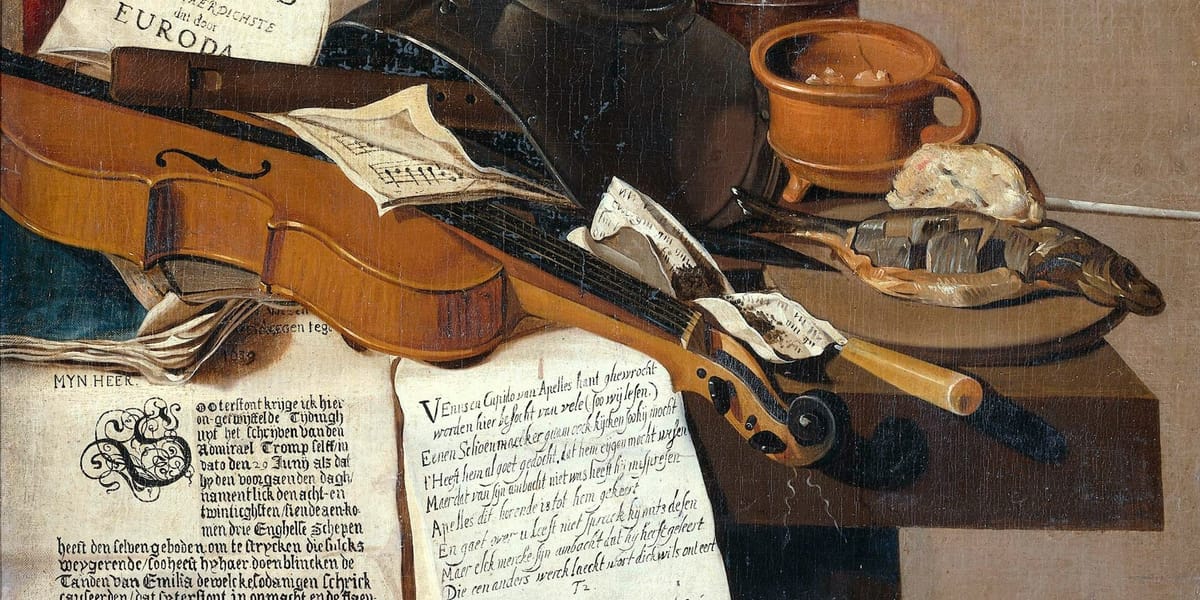
Art history classes teach chronology, iconography, cultural context, and theoretical frameworks. They analyze what paintings mean, trace stylistic evolution, and situate artworks in their historical moments. This scholarly approach serves art historians, critics, and students of visual culture well. But practicing artists need to engage art history differently—not just understanding what historical work means but extracting technical knowledge, learning how historical artists solved problems, and adapting past approaches to contemporary practice.
The difference matters because historians and makers ask different questions when looking at the same painting. A historian seeing Caravaggio's "The Calling of St. Matthew" analyzes its Counter-Reformation theology, its use of contemporary costume, its dramatic naturalism. An artist sees the specific light source placement creating the shadow pattern, the limited value range suggesting single-session direct painting, the compositional structure directing attention across the picture plane. Both readings are valid, but they serve different purposes.
Learning to read art history as a maker means developing dual vision—understanding scholarly context while extracting technical and formal knowledge useful for studio practice. It means asking not just "what does this mean?" but "how was this made?" and "what can I learn from this for my own work?" This approach treats historical art as vast repository of solved problems, experimental results, and technical innovations available for study and adaptation rather than just cultural artifacts to be analyzed and appreciated.
What Historians Look For Versus What Artists Need
Art historians analyze iconography, context, patron relationships, cultural meaning, and stylistic evolution. These scholarly concerns provide rich understanding of artworks as historical documents and cultural products.
Iconographic analysis decodes symbols and references. A historian explains that lilies represent purity, dogs represent fidelity, skulls represent mortality. These symbolic systems operated within specific cultural contexts making them legible to period audiences.
For artists, understanding iconography helps when working with symbolic content but doesn't directly teach making skills. Knowing what symbols mean historically differs from knowing how to create meaningful imagery contemporarily.
Contextual analysis situates work within political, social, economic, and religious frameworks. Understanding that Caravaggio painted during Counter-Reformation when Catholic Church sought emotionally engaging religious imagery explains his dramatic naturalism's cultural function.
This context is interesting and sometimes relevant to contemporary practice, particularly for artists addressing historical subjects or working with institutional critique. But it doesn't teach painting technique.
Stylistic analysis traces formal developments across time and geography. Art historians map how Byzantine icons influenced early Italian painting, how Northern Renaissance oil technique spread south, how Impressionism emerged from Realism and academic training.
These genealogies help artists understand their practice's historical lineage and recognize that current approaches emerged from specific historical conditions rather than being natural or inevitable.
Theoretical frameworks including formalism, semiotics, psychoanalysis, Marxism, feminism, postcolonialism all provide lenses for interpreting artworks politically and philosophically.
Theory can inform artistic practice conceptually but doesn't teach material technique or formal problem-solving. It's useful for developing ideas but not for learning how to paint.
Artists need different information than historians. How was this made? What materials? What process? What problems did the artist encounter and how were they solved? What formal strategies organize the composition? How does light function? How is space created?
These maker-focused questions complement historical analysis rather than replacing it. Both approaches together create richer understanding than either alone.
Mining Technical Information From Historical Images
Paintings, sculptures, and prints contain technical information visible to careful observation even when documentation of methods is absent.
Brushwork visibility reveals application technique. Smooth blended passages suggest careful gradation and multiple sessions. Visible, gestural brushwork suggests faster direct painting. The marks themselves demonstrate how paint was applied.
Titian's late work shows loose, gestural brushwork with visible dragging and scrubbing. This wasn't stylistic choice alone—it's evidence of direct alla prima painting building form through brushwork rather than through careful underpainting and glazing.
Comparing this to Titian's earlier smoother work reveals his technical evolution from meticulous layering to freer direct application. Both techniques are visible in the finished surfaces.
Impasto thickness indicates paint consistency and application method. Heavy impasto suggests thick paint applied with palette knife or stiff brush loaded generously. Thin paint suggests dilution or glazing.
Rembrandt's thick impasto highlights in faces and armor demonstrate deliberate textural contrast with thinly painted shadows. The technique creates sculptural quality through actual surface relief.
Glaze translucency in shadows reveals layering technique. Thin transparent darks over lighter underpainting create luminous shadows impossible to achieve with opaque paint alone.
Old Master paintings often show this clearly—bright underpainting glowing through transparent shadow glazes creating depth and richness. The technique is visible when studying original paintings in person.
Underpainting visibility where upper layers have become transparent with age reveals initial construction. Sometimes pentimenti (artist's changes) become visible as upper paint becomes transparent.
These glimpses beneath finished surfaces show working process—how composition was developed, what changed during execution, what initial approaches were tried before final decisions.
Surface cracking patterns indicate paint flexibility and layering. Fat-over-lean oil painting creates minimal cracking. Lean-over-fat creates severe cracking as inflexible layers sit over flexible ones.
Technical failures visible in historical paintings teach what not to do as clearly as successes teach what works. The cracking is permanent record of technical mistake.
Drawing underpinning sometimes visible in infrared reflectography (museum documentation) shows initial drawing stage. This reveals how artists planned compositions and how closely finished work follows initial drawing.
Sculptural technique leaves evidence in finished works. Cast bronze shows mold seams, filing marks, cold-working. Carved stone shows tool marks, drill holes, surface finishing progression from rough to smooth.
Auguste Rodin's bronzes show his clay modeling technique—additive building of forms, finger marks, tool impressions all preserved in bronze casting. The bronze records the clay's surface exactly.
Learning Compositional Strategies From Masterworks
Historical paintings demonstrate solved compositional problems offering formal strategies applicable to contemporary work regardless of style or subject.
Focal point creation through contrast, detail, or compositional convergence is visible across historical work. Caravaggio uses high contrast and sharp focus at key narrative moments. Baroque ceiling paintings create spatial illusions directing eye upward.
Diego Velázquez's "Las Meninas" creates complex spatial illusion with figures at different depths and multiple focal points creating wandering, exploratory viewing rather than single fixed focus.
Studying how Velázquez distributes attention across the composition through value contrast, detail sharpness, and figure placement teaches compositional control applicable to any figurative work.
Spatial organization through overlapping, atmospheric perspective, size relationships all visible in historical landscape and architectural painting.
Claude Lorrain's landscapes demonstrate atmospheric perspective pushing distant elements cool and light while maintaining warm saturated foreground. The consistent spatial logic creates convincing depth.
These spatial strategies work in representational painting regardless of style. The principles of value contrast decreasing with distance, warmth shifting cooler, saturation decreasing, all remain valid.
Balance and asymmetry tension appears in paintings maintaining equilibrium without symmetry. Japanese prints, Chinese landscape paintings, and European compositions all demonstrate sophisticated asymmetrical balance.
Katsushika Hokusai's "The Great Wave off Kanagawa" creates dynamic asymmetrical composition with wave dominating one side balanced by Mount Fuji small in distance. The asymmetry creates energy while maintaining overall balance.
Understanding these balance strategies through studying examples enables creating dynamic asymmetrical compositions rather than falling back on obvious symmetry.
Rhythm and repetition create movement and visual interest. Repeated shapes, colors, or intervals create rhythm like musical repetition. Too much sameness becomes monotonous. Too little creates chaos.
Gustav Klimt's decorative patterns create rhythms through repeated motifs. The patterns create unity while figural elements provide variation preventing monotony.
Figure-ground relationships determining how forms read against backgrounds vary from clearly separated to ambiguous. Matisse's late cutouts play with figure-ground ambiguity where shapes and backgrounds have equal weight.
The figure-ground strategies visible in historical work—clear separation, subtle integration, deliberate ambiguity—offer approaches for organizing contemporary work.
Color relationships including complementary contrasts, analogous harmonies, temperature shifts all demonstrate in historical painting. Titian's use of complementary orange and blue. Vermeer's subtle cool-warm shifts within limited palette.
Studying specific color relationships in historical work teaches color strategies more effectively than abstract color theory. The application in actual paintings demonstrates how principles function in practice.
Technical Knowledge Embedded in Different Historical Periods
Each historical period developed specific technical approaches solving problems particular to available materials and cultural requirements.
Early Renaissance egg tempera painting required careful planning because the fast-drying paint couldn't be blended extensively. This led to hatching and crosshatching for gradation, systematic color mixing, and methodical working process.
Studying tempera paintings reveals meticulous craft and planning that oil painting's flexibility sometimes permits artists to avoid. The discipline serves any medium even if not working in tempera.
Northern Renaissance oil technique pioneered by Jan van Eyck and others enabled luminous, detailed painting through thin glazes over white grounds. The light passing through transparent color layers and reflecting back creates jewel-like quality.
This glazing technique remains useful for contemporary oil painters. The specific method—bright underpainting, multiple transparent colored glazes—creates effects difficult to achieve through direct painting.
Venetian school painting including Titian, Veronese, and Tintoretto developed looser, more painterly technique emphasizing color and light over linear precision. The approach influenced subsequent painting including Rubens and Velázquez.
This painterly tradition values visible brushwork, color relationships, and optical effects over precise drawing. Contemporary painters working in this tradition connect to centuries of technical development.
Baroque dramatic lighting from Caravaggio and followers used strong single light sources creating dramatic value contrasts and sharp form definition. This theatrical lighting technique creates psychological intensity.
The lighting strategy is applicable to any representational work regardless of style. Understanding how Caravaggio positioned light sources and developed shadow patterns teaches contemporary lighting control.
Rococo light palette and decorative surface emerged from cultural context emphasizing elegance and pleasure. The technical approach—high-key values, delicate color, visible brushwork—serves specific aesthetic goals.
While contemporary work rarely aims for Rococo aesthetic, understanding how technical choices support specific effects teaches the relationship between technique and desired result.
Impressionist broken color and optical mixing abandoned smooth blending for visible brushstrokes mixing optically rather than on palette. This was partly response to color theory but also practical adaptation to plein air conditions.
The specific techniques—short visible strokes, complementary colors creating vibration, working wet-into-wet—all teach approaches still relevant for direct painting.
Expressionist and Fauvist arbitrary color separated color from natural observation. The color choices served emotional and compositional purposes rather than representing perceived color.
This liberation from naturalistic color opened possibilities for contemporary color use. Studying how Matisse or Kirchner used color provides practical examples of non-naturalistic color strategies.
Drawing From Old Master Techniques
Old Master drawing demonstrates sophisticated approaches to linear mark-making, value structure, and spatial representation.
Silverpoint drawing on prepared grounds requires precision and confidence because marks can't be erased. This medieval and Renaissance technique creates delicate, permanent lines teaching commitment and careful observation.
Leonardo's silverpoint drawings show meticulous observation and careful line placement. The technique forced thorough visual analysis before marking because corrections weren't possible.
While contemporary artists rarely use silverpoint, understanding that historical artists worked without erasers encourages more decisive, confident drawing regardless of medium.
Chalk drawing on toned paper using white highlights and dark marks around middle-tone ground was Renaissance and Baroque standard. The technique efficiently creates three-dimensional form.
Studying Rubens's three-chalk drawings shows how working on middle-tone paper allows building light and dark simultaneously rather than working from white paper toward darks only.
This approach translates to contemporary drawing—starting with toned paper and working both light and dark creates dimensional forms efficiently.
Pen and ink hatching techniques visible in Master drawings demonstrate building tone and volume through parallel lines and crosshatching. Different directions, densities, and line qualities create varied tones and textures.
Albrecht Dürer's engravings show systematic hatching creating full tonal range and descriptive detail entirely through line. The technical virtuosity demonstrates what systematic line work can achieve.
Contemporary artists might not work with Dürer's exactitude but understanding systematic hatching enables creating tonal structures through line when appropriate.
Rapid gestural sketches from Baroque artists including Tiepolo and Fragonard demonstrate capturing essential character through minimal, energetic marks.
These sketches weren't preliminary studies for finished works but records of observations and ideas. The freedom and economy demonstrate that finished precision isn't always necessary or desirable.
Studying gestural historical drawings encourages looseness and economy in contemporary sketching rather than always working toward finish.
What Sculpture History Teaches About Form and Material
Sculpture history demonstrates how artists engaged material properties and formal problems across media and periods.
Greek classical sculpture's contrapposto and balance on single support point solves structural problem while creating naturalistic pose. The technical solution became aesthetic standard.
Understanding how Greek sculptors balanced marble figures requiring internal armatures shows structural thinking essential for figurative sculpture in any material.
Michelangelo's approach to marble as releasing figures trapped within stone demonstrates conceptual framework shaping technical approach. His unfinished works show extraction process—roughed forms emerging from stone.
This reveals Michelangelo's specific working method but also demonstrates how conceptual framework affects material engagement. The idea of releasing versus imposing forms changes the making process.
Bernini's dramatic Baroque sculpture pushes marble's properties toward theatrical effects. His multi-figure groups, flowing drapery, and emotional intensity require supreme technical skill extracting maximum expression from stone.
Studying Bernini's technical achievements demonstrates marble's expressive possibilities beyond classical restraint. The material isn't limiting factor if skill and vision match.
Rodin's modeled surfaces in bronze preserve clay working process. His fingerprints, tool marks, additive building all transfer to bronze through casting. The bronze is record of clay modeling not attempt to hide process.
This approach to bronze values modeling process visibility over surface perfection. Contemporary artists can choose whether to preserve process evidence or create finished surfaces.
Minimalist sculpture's emphasis on industrial materials and fabrication questions hand craftsmanship's necessity. Donald Judd's fabricated metal and plywood boxes are designed by artist but made by fabricators.
This separation of conception from execution has historical precedent but Minimalism made it central to practice. Understanding this history helps contemporary artists navigate fabrication versus hand-making decisions.
Installation art's spatial and temporal dimensions expand sculpture beyond object into environment and duration. The historical development from pedestal sculpture to installation demonstrates expanded sculptural thinking.
Contemporary artists inherit this expanded field. Understanding the historical progression helps situate current spatial and temporal approaches within sculpture's evolution.
Color Theory Through Historical Practice
Historical painters' color use demonstrates principles more effectively than abstract color theory because application in actual paintings shows how theory functions in practice.
Limited palette Old Master paintings demonstrate achieving full color range with few pigments. Rembrandt's browns, ochres, white, and limited brights created richly colored paintings despite palette restriction.
Studying how Rembrandt mixed hundreds of color nuances from few pigments teaches color mixing more effectively than color wheel diagrams. The paintings show results of sophisticated mixing.
Complementary color vibration visible in Impressionist painting demonstrates simultaneous contrast effects. Orange-blue, red-green, yellow-purple combinations create optical vibration enhancing color intensity.
Monet's haystacks show complementary relationships in shadows and highlights creating luminosity through color interaction rather than just value contrast.
Color temperature shifts from Venetian painters through Impressionists to Expressionists show progressive understanding of warm-cool dimension. Titian's subtle temperature modulation. Cézanne's systematic warm-cool structures. Matisse's arbitrary temperature choices.
Each demonstrates different approach to temperature. Studying this range shows temperature as flexible compositional tool rather than fixed natural law.
Broken color technique separating hues through visible brushwork rather than blending creates optical mixing and surface vibrancy. This technical approach from Impressionism forward demonstrates alternative to smooth blending.
Seurat took this further into systematic pointillism. Van Gogh used it expressively with swirling strokes. Both demonstrate broken color principle with different purposes.
High-key and low-key color palettes demonstrate value range choices affecting mood and readability. Rococo high-key palettes create lightness and elegance. Caravaggio's low-key creates drama and mystery.
These value range choices remain relevant for contemporary color use. The historical examples show how value key affects overall effect regardless of specific colors used.
Learning From Historical "Failures" and Experiments
Not all historical art succeeded. Technical failures, stylistic dead-ends, and abandoned experiments teach valuable lessons.
Cracked and deteriorated paintings show technical mistakes clearly. Lean-over-fat layering causes cracking. Incompatible materials delaminate. Poor ground preparation creates adhesion failures.
These failures visible in museum conservation demonstrates what not to do. The mistakes are permanent warnings preserved in damaged paintings.
Pentimenti and visible changes show artists' working processes including mistakes, changes, and evolution during execution. X-rays and infrared imaging reveal extensive reworking in many Old Master paintings.
Rembrandt often changed compositions significantly during painting. The visible pentimenti show he worked through problems rather than following fixed plans. This demonstrates that even masters make adjustments.
Experimental techniques that didn't endure sometimes failed for good reasons. Sigmar Polke's experimental materials deliberately chosen for instability create conservation nightmares but this was intentional.
Other experiments failed unintentionally. Whistler's poorly formulated paints created technical problems he didn't foresee. His paintings often have condition issues from material experimentation.
Historical artists' technical treatises including Cennini, Vasari, and others document period practices including warnings about common mistakes. These texts provide insider technical knowledge.
Cennino Cennini's 15th century "Il Libro dell'Arte" describes egg tempera technique in detail. The practical advice from working practitioner is more valuable than later scholarly analysis.
Restoration and conservation documentation reveals construction methods invisible in finished works. Technical studies using microscopy, cross-sections, and chemical analysis show exact layer structures and materials.
Museums publish this technical research. Artists reading conservation reports learn specific historical techniques often lost when methods stopped being passed teacher to student.
Adapting Historical Techniques to Contemporary Practice
Historical methods can be adopted wholesale, adapted to contemporary conditions, or inspire new approaches.
Direct adoption of historical techniques creates work in authentic historical methods. Some contemporary painters work in genuine egg tempera following Renaissance procedures. Others practice traditional bronze casting or fresco.
This direct continuation of historical methods keeps techniques alive and teaches them thoroughly. But it's not the only valid approach.
Adaptation modifies historical techniques for contemporary materials or purposes. Using acrylic in place of egg tempera. Applying glazing techniques with contemporary synthetic media. Using historical compositional strategies with contemporary subjects.
This adaptation takes useful aspects while acknowledging changed materials and contexts. The historical technique informs rather than dictates the approach.
Inspiration from historical work generates new techniques responding to historical examples without directly copying them. Seeing Pollock respond to Benton. Richter responding to Abstract Expressionism and photography. Contemporary artists building on historical precedent.
This generative relationship with history is creative dialog rather than preservation or direct adaptation. The historical work sparks ideas without being template.
Hybrid approaches mix historical and contemporary techniques. Using traditional underpainting with contemporary finishing. Combining historical glazing with contemporary direct painting. Mixing media historically separated.
These hybrids create contemporary work informed by historical knowledge but not bound by it. The historical techniques serve contemporary purposes.
When Historical Knowledge Helps Versus When It Constrains
Understanding art history's benefits and limitations prevents it from becoming inhibiting burden rather than useful resource.
Historical knowledge helps when solving similar problems historical artists faced. Representing three-dimensional form on flat surface. Creating specific atmospheric effects. Organizing complex compositions. Managing color relationships.
These formal and technical problems persist across historical periods. Historical solutions provide tested approaches applicable to contemporary practice.
Historical precedent helps when working with traditional materials. Oil painting chemistry hasn't fundamentally changed since van Eyck. Understanding historical oil technique prevents reinventing established practices.
If working in watercolor, oil, egg tempera, fresco, bronze casting, or other traditional media, historical technical knowledge is directly applicable.
Historical examples help when developing visual literacy. Understanding composition, value structure, color relationships, spatial representation all benefit from seeing how historical artists addressed these concerns.
The vast museum of historical solutions provides education beyond what any single lifetime of practice could discover independently.
Historical knowledge constrains when it becomes obligation rather than resource. Feeling required to master all historical precedent before making work creates paralysis.
Many great artists had limited art historical knowledge. Folk artists, outsider artists, self-taught artists all made significant work without comprehensive historical training.
Historical styles constrain when copied rather than understood. Making work that looks historically derivative rather than historically informed suggests insufficient transformation of influences.
The historical influence should be absorbed and digested, not worn as costume. Copying surface appearance without understanding underlying logic produces empty pastiche.
Historical standards constrain when they become measures against which contemporary work is judged unfairly. "It's not as good as Rembrandt" is meaningless comparison if the work has different purposes.
Historical masterworks are peaks of achievement worth studying but not necessarily standards contemporary work must match. Different purposes require different measures.
Anxiety about originality intensifies with historical knowledge. Knowing everything's been done before can inhibit making anything. But influence is inevitable and valuable when transformed rather than copied.
Understanding historical precedent enables building on rather than ignorantly repeating earlier work. The knowledge allows conscious engagement with tradition rather than unconscious repetition.
Building Practical Art Historical Knowledge
Developing useful art historical knowledge for studio practice requires different approach than academic art history study.
Museum visits focusing on technical observation rather than label-reading teaches more for studio practice. Stand close to paintings observing brushwork, surface, and material handling. Step back studying composition and spatial organization.
This direct observation reveals technical information photographs and reproductions obscure. Original paintings show actual surface, scale, and material presence that documentation can't capture.
Drawing from artworks forces careful observation. Museum drawing programs and classes encourage this. The act of drawing from historical work teaches through doing more than passive viewing.
Many artists maintain sketchbook practice in museums, drawing not to copy but to understand formal structure and technical approach through active engagement.
Targeted research investigating specific technical questions yields practical information. How did Renaissance artists prepare panels? What glazing sequences did Dutch painters use? How did Impressionists manage plein air conditions?
These specific technical questions lead to conservation reports, historical treatises, and practical information applicable to contemporary practice.
Reading artists' writings and letters provides insider perspective on creative process and technical thinking. Van Gogh's letters describe his technical experiments and color theories. Leonardo's notebooks document his investigations.
These primary sources reveal how historical artists thought about their practice often more candidly than public artworks suggest.
Watching demonstrations and taking workshops in historical techniques teaches through hands-on experience. Many institutions offer workshops in egg tempera, fresco, traditional printmaking, bronze casting.
Direct experience with historical materials and methods reveals why historical artists worked certain ways and what these approaches can offer contemporary practice.
Studying across media and periods prevents narrow focus. Understanding sculpture informs painting. Eastern art traditions offer perspectives Western tradition lacks. Contemporary and historical dialog creates richer practice than historical focus alone.
The goal is useful knowledge supporting studio practice, not comprehensive scholarly understanding. Artists can be selectively knowledgeable, learning what serves their work while accepting gaps in historical knowledge.
Specific Historical Artists Worth Deep Study
Certain historical artists repay sustained attention for practicing artists due to their technical innovation, formal sophistication, or documented working methods.
Leonardo da Vinci's drawings and technical investigations demonstrate observational rigor and systematic study. His drawings from nature, anatomical studies, and engineering sketches show scientific and artistic thinking merged.
The observational discipline and systematic investigation of natural phenomena serve any artist working from observation regardless of style.
Rembrandt's light and shadow control, paint handling, and psychological depth demonstrate painting at highest levels. His self-portraits show technical and expressive evolution across decades.
Studying Rembrandt's specific techniques—his limited palette, his thick impasto highlights, his transparent shadows—provides practical technical knowledge.
Vermeer's light, composition, and controlled surfaces create contemplative quiet unusual in Baroque painting. His limited output and meticulous craft demonstrate concentrated focus.
The specific technical approaches—likely using camera obscura, systematic paint application, careful color temperature control—all inform contemporary practice.
Cézanne's spatial reconstruction and color structure influenced modern painting fundamentally. His systematic approach to color temperature, his constructive brushwork, his flattening of space while maintaining volume all repay sustained study.
For contemporary painters, Cézanne demonstrates thinking through form and space using color and constructed marks rather than traditional modeling.
Matisse's color liberation and compositional boldness show sophisticated color relationships and spatial organization often appearing simple but being carefully constructed.
Studying Matisse's specific color choices, his compositional structures, his relationship between figure and pattern teaches contemporary color and design thinking.
Rodin's modeling and emotional expression in sculpture demonstrate clay modeling's expressive possibilities and bronze casting preserving process evidence.
For sculptors, Rodin shows how maintaining working process visibility creates expressive surfaces rather than hiding the making.
Each artist offers specific technical and formal knowledge. The choice of whom to study depends on which problems interest you and what your practice needs.
Making Historical Knowledge Your Own
The goal isn't becoming art historian but developing historical knowledge serving studio practice through transformation and application rather than reproduction.
Selective knowledge focused on relevant concerns serves better than encyclopedic but superficial coverage. Deep knowledge of few artists or periods more useful than scattered awareness of everything.
Choose areas of historical study based on problems you're confronting in your work. Studying historical artists who addressed similar concerns provides directly applicable knowledge.
Experimental application tests whether historical techniques serve contemporary work. Try historical approaches in your practice. Adapt them. Discover what translates and what doesn't.
This experimental testing reveals what's genuinely useful versus what's historically interesting but practically irrelevant to your work.
Critical transformation of influences digests and transforms rather than copies historical precedent. The influence should be absorbed until it's yours, not decorative historical reference.
Picasso absorbed African sculpture, Iberian sculpture, and Cézanne transforming these influences into Cubism. The influences are visible but transformed beyond reproduction.
Maintaining contemporary perspective prevents historical nostalgia. Study history to serve current practice, not to reproduce past glories or bemoan contemporary decline.
The past offers resources, not golden age to return to. Historical knowledge should enable contemporary making, not inhibit it through comparison.
Documentation of what historical study teaches your practice—keeping notes, making test pieces, recording observations—preserves learning and builds knowledge over time.
This creates personal archive of historical influences and lessons transforming scattered learning into coherent resource supporting practice.
Reading art history as practicing artist means engaging historical work for technical knowledge, formal strategies, and problem-solving approaches applicable to contemporary making. The scholarly analysis of meaning and context has value but practicing artists need different information—how historical work was made, what formal strategies organized it, what technical knowledge it embodies. This maker-focused reading treats art history as vast laboratory of experiments, solutions, and approaches available for study and adaptation. The goal isn't reproducing historical styles but learning from historical problem-solving to inform contemporary practice. Historical knowledge serves making when it's transformed and applied rather than reproduced or worshipped.