Why Londoners Confuse Shoreditch, Hoxton, and Spitalfields
Hoxton isn't really next to Shoreditch — it's part of it. Spitalfields is the one that's genuinely a different place. Here's the actual geography behind three names locals use almost interchangeably.
Ask a visitor where Shoreditch ends and Hoxton begins and most locals will hesitate, because the honest answer is that Hoxton is technically part of Shoreditch — not a separate place next door to it, but a district within it, with its own name because it was a village in its own right, a hamlet of Shoreditch parish recorded in the Domesday Book, long before either was absorbed into modern London. Spitalfields is the one that's actually distinct, sitting in a different borough entirely with a completely different history. Knowing which is which changes what you should expect to find when you get off the train.
At a glance
| Borough | Historic identity | Today, best known for | |
|---|---|---|---|
| Shoreditch | Hackney | Elizabethan theatre district, then industrial | Bars, nightlife, the commercial core |
| Hoxton | Hackney (within historic Shoreditch) | A Domesday hamlet inside Shoreditch parish, outside the City walls | Hoxton Square, quieter galleries and studios |
| Spitalfields | Tower Hamlets | Huguenot silk-weaving district | Old Spitalfields Market, Brick Lane |
Why Hoxton isn't really "next to" Shoreditch
Shoreditch and Hoxton share a slightly confusing administrative history: Hoxton was a hamlet and manor inside the ancient parish of St Leonard, Shoreditch, recorded in the Domesday Book as Hochestone and given a church parish of its own only in 1830, while Shoreditch grew into the area's commercial and entertainment core — London's first purpose-built playhouse, The Theatre, stood there from 1576. Both were folded into the Metropolitan Borough of Shoreditch, and then into the modern London Borough of Hackney in 1965. In practice today, "Shoreditch" tends to mean the busier, more commercial streets nearer Old Street and the City — bars, nightlife, Boxpark — while "Hoxton" refers to the quieter blocks further north, centred on Hoxton Square, where the area's gallery scene actually took root.
Why Spitalfields is genuinely a different place
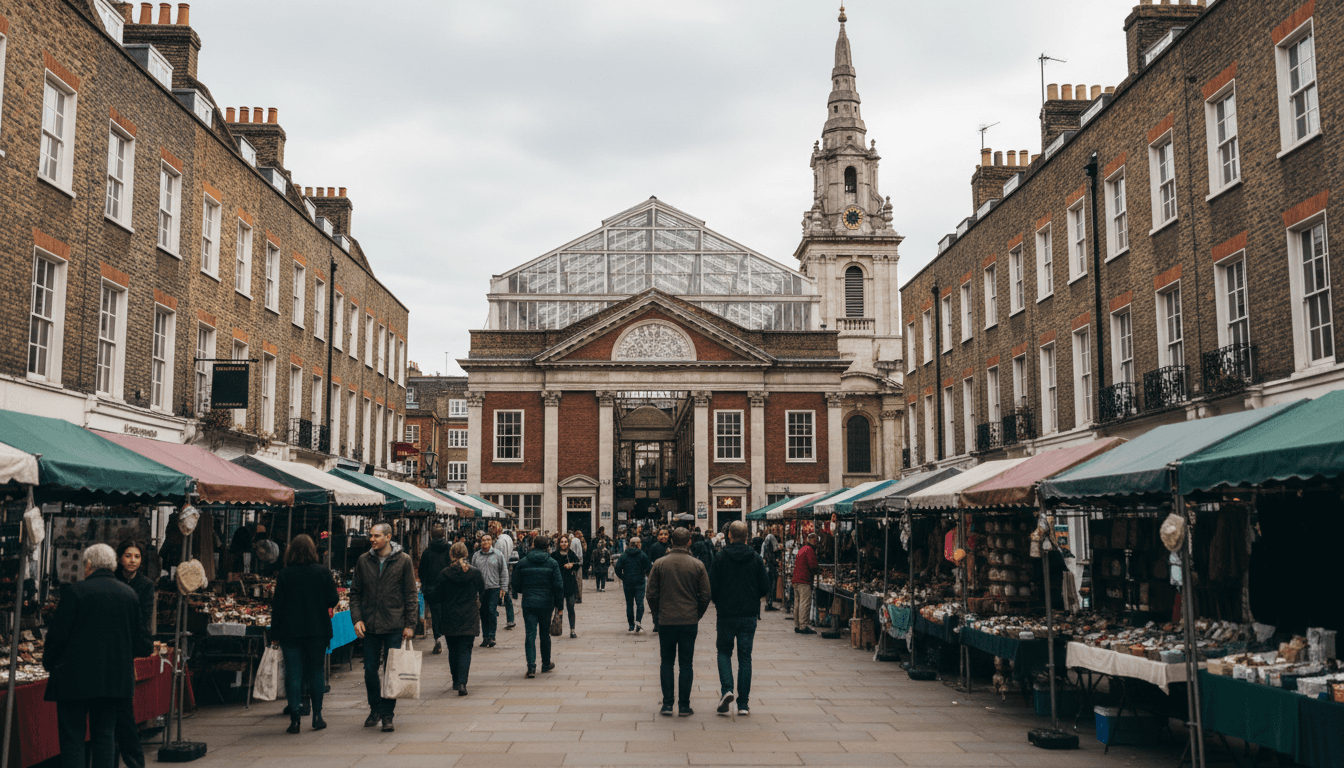
Spitalfields sits in the London Borough of Tower Hamlets, not Hackney, and its history has nothing to do with Shoreditch's theatre-and-industry story. Huguenot silk weavers, fleeing religious persecution in France, settled the area in the 17th and 18th centuries, and their legacy is still visible in the neighbourhood's distinctive terraced weavers' houses. Old Spitalfields Market and Brick Lane — genuinely one street that runs from Spitalfields into the edge of Shoreditch — are Spitalfields' defining landmarks, built around trade and food rather than nightlife or contemporary art.
Why Brick Lane confuses the boundary further
Brick Lane is the single biggest source of confusion between all three areas, because it physically runs through the border zone connecting them — its southern end is solidly Spitalfields, its northern stretch bleeds into Shoreditch, and it's close enough to Hoxton that all three names get applied to roughly the same few blocks depending on who's talking. This is also, not coincidentally, the corner where Tracey Emin and Sarah Lucas opened their influential 1993 shop — not on Brick Lane itself but at 103 Bethnal Green Road, the road it crosses, in the exact zone where the three identities overlap most.
Advertisement
What this means for a visit
If you want nightlife, bars, and the busiest commercial strip, head for what's commonly called Shoreditch, near Old Street and Shoreditch High Street stations. If you want the quieter gallery and studio scene, Hoxton Square and the streets immediately around it are the actual destination, even though most maps will still label the wider area "Shoreditch." If you want the market, the historic silk-weavers' houses, and Brick Lane's curry houses and vintage shops, that's Spitalfields — a genuinely separate neighbourhood with its own borough, its own history, and very little to do with Shoreditch's story at all. And if a museum day is also on the itinerary, it's worth remembering that London's free-admission policy has nothing to do with any of this — it's a national-museum scheme, not a neighbourhood one.
The bottom line
Shoreditch and Hoxton aren't two neighbourhoods so much as one area with two names, inherited from the line between a medieval hamlet and the rest of its parish — a line that stopped mattering administratively long ago but never quite disappeared from how Londoners talk. Spitalfields is the real outlier — a different borough, a different origin story, sharing only a literal street with its more famous neighbour. Knowing the difference is mostly about knowing which one you actually asked for.
FAQ
Is Hoxton part of Shoreditch?
Administratively and historically, yes — Hoxton was a hamlet within the ancient parish of St Leonard, Shoreditch (it got a church parish of its own only in 1830), and it's now considered part of the broader Shoreditch area within the London Borough of Hackney, though locals still use the two names to mean slightly different things.
Is Spitalfields the same as Shoreditch?
No — Spitalfields is in the London Borough of Tower Hamlets, with a distinct history built around Huguenot silk weaving, separate from Shoreditch's theatre-and-industry past in Hackney.
Where does Brick Lane actually run?
From Spitalfields in the south up toward the edge of Shoreditch in the north, which is why it's often associated with all three neighbourhoods depending on which end you're standing on.
Where should I go to see Shoreditch's gallery scene?
Hoxton Square and its immediate surroundings, even though the wider area is often just labelled "Shoreditch" on maps and in casual conversation.
Which borough is each area in?
Shoreditch and Hoxton are both in the London Borough of Hackney; Spitalfields is in the London Borough of Tower Hamlets.