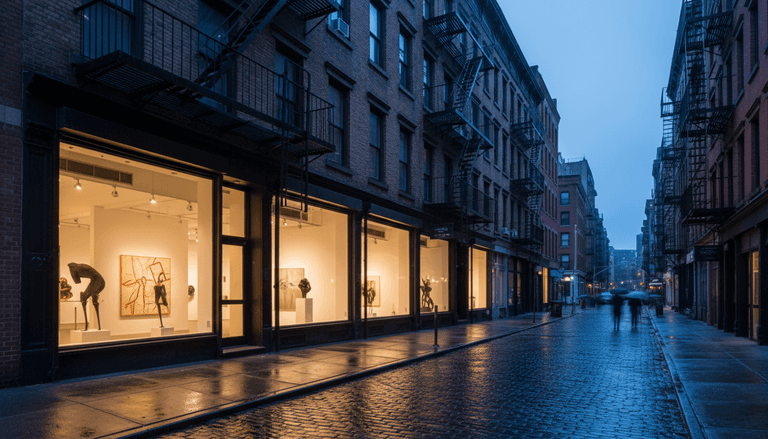
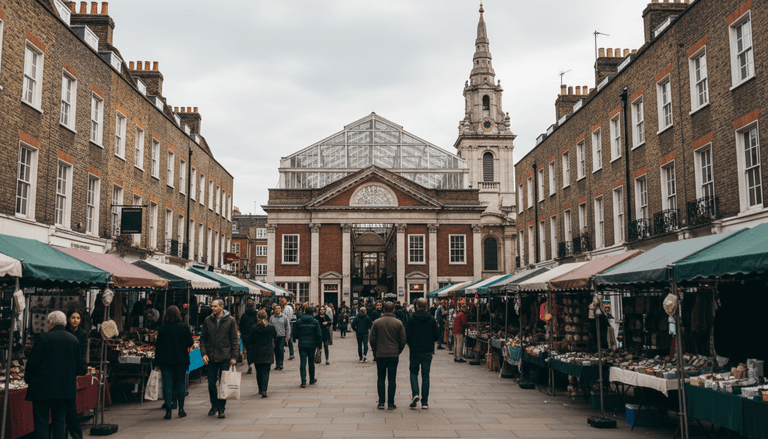
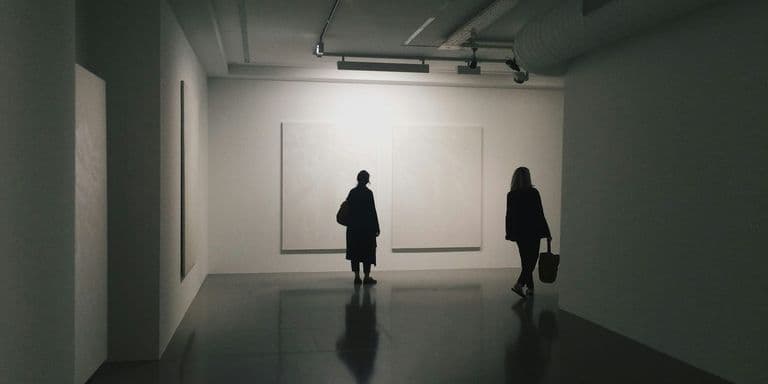
How a 1993 Shop Off Brick Lane Turned Shoreditch Into an Art District
Tracey Emin and Sarah Lucas rented a cheap storefront in 1993. Within a decade, the streets around it became the centre of British contemporary art — and then the same economics that built the scene priced parts of it back out.
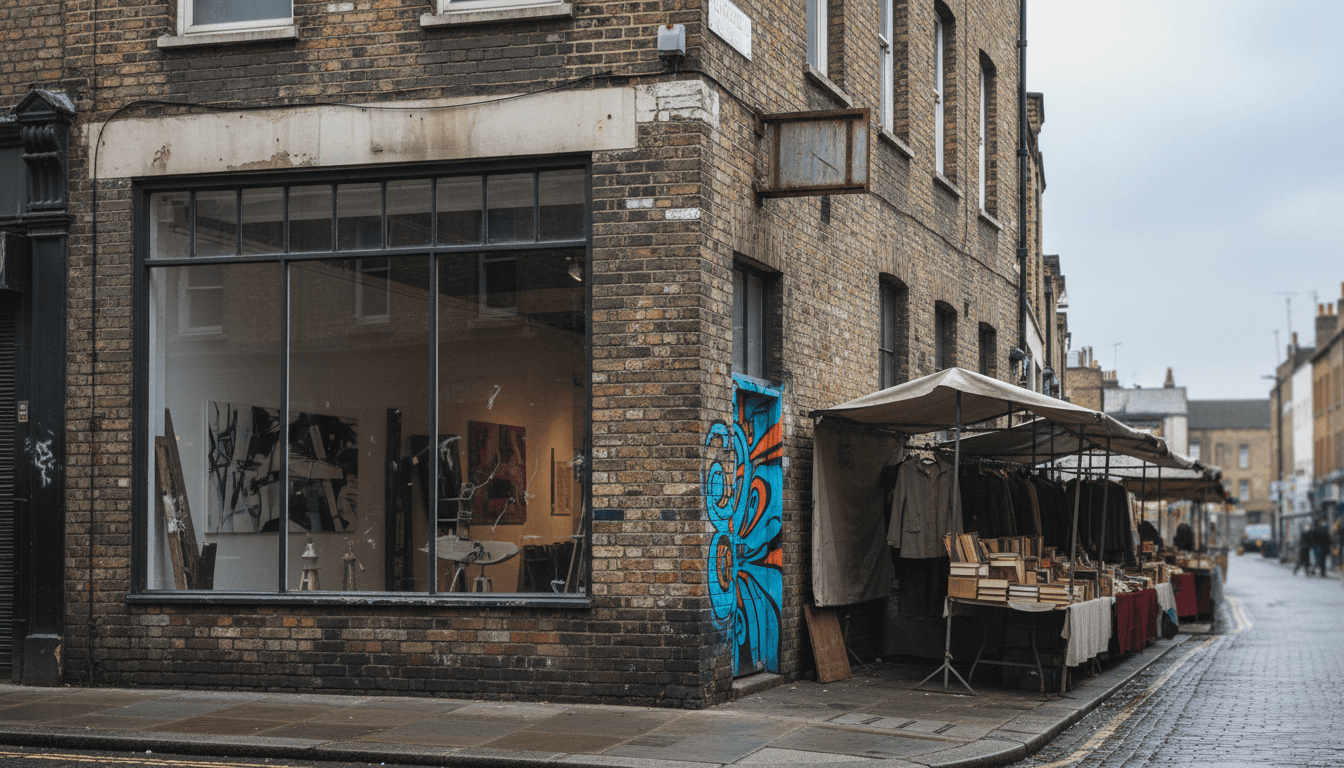
In 1993, the artists Tracey Emin and Sarah Lucas rented a former doctor's surgery at 103 Bethnal Green Road, a short walk from Brick Lane, and opened "The Shop" — selling their own hand-made art objects, T-shirts, and ashtrays out of a semi-derelict East London storefront nobody with money would have looked at twice. Neither of them was famous yet. Within a decade, the triangle of streets around that shop had become, by most accounts, the centre of British contemporary art.
1993: cheap space, and who followed it there
Emin and Lucas didn't choose Shoreditch for its scene — there wasn't one yet. They chose it because the rent was next to nothing and the space was large enough to work in, which is exactly what drew scores of their peers into the same few streets over the following years. Cheap, semi-derelict industrial buildings in Shoreditch, Hoxton, and Spitalfields filled with studios, and the area started to develop an identity distinct from anywhere else in London.
The late 1990s: an identity forms
By the time galleries started arriving in numbers, the neighbourhood already had a reputation as the place British art was actually happening — new work, new artists, no polish yet, exactly the kind of ground-floor discovery that small, unglamorous spaces do better than any museum ever could. Street art added to the identity rather than competing with it; Banksy in particular became closely associated with the area, and the E1/E2 postcodes are still sometimes described as having the highest concentration of working artists anywhere in Europe.
2000: the year it became official
Two of London's most significant contemporary galleries made the same move within months of each other. In April 2000, White Cube opened a second, much larger space at 48 Hoxton Square, choosing the area specifically because it was — in the gallery's own words at the time — the epicentre of London's artistic resurgence. That November, Victoria Miro relocated from a cramped 750-square-foot space on Cork Street in Mayfair to a converted Victorian furniture factory at 16 Wharf Road, ten times the size, on the border of Hoxton and Islington. Her co-director attributed the move directly to rents in the West End quadrupling — the same economic pressure that had pushed Emin and Lucas east seven years earlier, just operating at a bigger scale. Once two galleries with that level of standing had planted a flag, others followed, and the area's transition from artist squat to established gallery district was more or less complete.
Advertisement
The 2000s: the peak, and its own version of the same pressure
Through the 2000s, Shoreditch and Hoxton functioned as both a serious commercial gallery district and an internationally recognized street-art destination simultaneously — a combination few neighbourhoods anywhere manage to sustain. But the area's own success worked against it in a familiar way: rising profile brought rising rents, bars, nightlife, and eventually the kind of foot traffic that makes ground-floor gallery space expensive to hold onto.
2012: a symbolic close
White Cube closed its Hoxton Square gallery at the end of 2012, consolidating its London presence into St James's and a large new space south of the river in Bermondsey. The closure wasn't a verdict on the neighbourhood's importance — White Cube had simply outgrown the space and found more room elsewhere — but it marked the end of the era when Hoxton Square itself was the address that defined London's contemporary art scene.
Where it stands now
Victoria Miro is still at Wharf Road, having marked her gallery's fortieth anniversary in 2025 — proof the area's original anchor tenants can stay for decades even as everything around them changes. Shoreditch and Hoxton today read less as a single gallery district and more as a broader creative and nightlife neighbourhood that art helped build: independent galleries, street-art walking tours, markets, and bars occupying the same blocks that Emin and Lucas found half-derelict and nearly free in 1993. The shop is gone. The pattern it set in motion — cheap space draws artists, artists draw galleries, galleries draw everyone else — is the same one that pushed New York's own gallery scene from SoHo to Chelsea to the Lower East Side, on both sides of the Atlantic, ever since.