Small Galleries in Manchester's Northern Quarter Actually Worth the Train from London
Manchester's Northern Quarter galleries showing work that justifies the train from London. Industrial spaces, experimental programming, and prices you can afford.
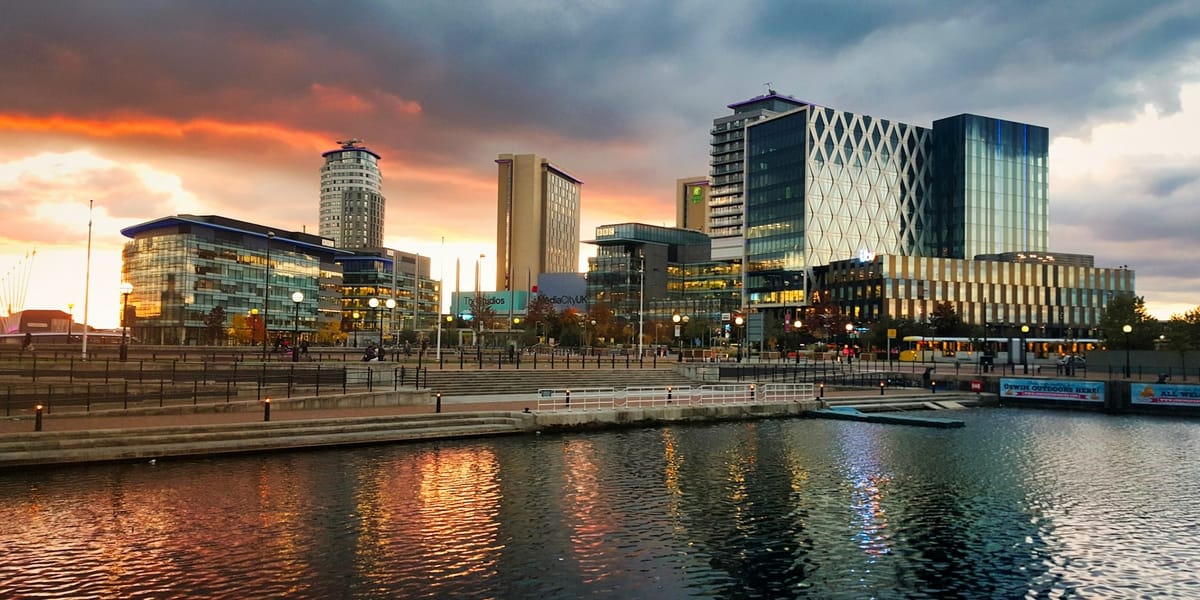
Manchester sits two hours north of London by train, close enough for day trips but far enough that most London-based artists, collectors, and curators never bother making the journey.
This absence creates opportunity.
The Northern Quarter's small galleries operate outside London's attention economy, which means they can program artists before the hype cycle begins, show work too experimental for commercial viability in the capital, and maintain price points that acknowledge most people buying art aren't hedge fund managers or Russian oligarchs.
The neighborhood occupies the northeastern corner of Manchester city centre, bounded roughly by Piccadilly to the south and the Arndale to the west. The streets still carry names like Tib Street, Oldham Street, and Stevenson Square. Former textile warehouses converted to studios, bars, record shops, and galleries create density of cultural activity impossible to replicate in areas purpose-built for culture.
Walking the Northern Quarter takes maybe thirty minutes if you're moving with intention. Most visitors spend hours because the galleries, vintage shops, and cafes create endless diversions. The compressed geography means you can see a dozen exhibitions in an afternoon without requiring transport between venues.
The galleries here don't compete with White Cube or Hauser & Wirth. They're not trying to. They show emerging and mid-career artists whose practices don't yet command five-figure prices, experimental work that commercial galleries in London won't risk, and regional practitioners who've built substantial careers outside the London-centric art world narrative.
Why Northern Quarter Galleries Function Differently Than London Spaces
The economic reality shapes everything.
Gallery rent in the Northern Quarter runs perhaps £800 to £2,000 monthly for decent storefront space. Comparable footage in Shoreditch or Peckham costs triple that minimum. This differential means Manchester gallerists can survive on fewer sales, take risks on unknown artists, and maintain programming that prioritizes artistic merit over commercial certainty.
The collector base consists largely of Manchester professionals, university faculty, and people who actually live in the North rather than investment buyers or international collectors passing through London art fairs. These collectors buy work they want to live with, not assets to store in freeports. The commercial pressure skews toward accessible pricing and genuine engagement rather than speculative positioning.
The artist community provides both supply and audience. Manchester School of Art, Manchester Metropolitan University, and University of Salford produce steady stream of graduates, many of whom remain in the region rather than automatically relocating to London. This retention creates depth of talent that galleries can draw from.
The absence of London art media attention liberates programming choices. Galleries don't curry favor with Frieze Magazine or worry about Instagram-friendly exhibitions. They show what they believe matters, knowing that validation will come from artist community and local collectors rather than art world tastemakers.
The industrial architecture suits contemporary work better than converted Georgian townhouses or purpose-built white cubes. Brick walls, exposed beams, concrete floors, and high ceilings provide context that enhances rather than competes with artwork. The spaces feel honest about their histories rather than pretending art always existed in pristine isolation.
Distance from London functions as quality filter. Gallerists who choose Manchester over the capital tend to prioritize sustainable practice over rapid growth and international art fair circuits. They're building something meant to last decades rather than flipping spaces after few successful years.
Castlefield Gallery: The Institutional Anchor
Castlefield Gallery operates slightly outside the Northern Quarter proper, in the Castlefield urban heritage park, but its influence on Manchester's entire gallery ecosystem warrants inclusion.
Not technically a small gallery. But not quite an institution either.
The space occupies former Victorian warehouse with canal views and industrial bones. The architecture creates exhibition environment that major institutions struggle to replicate. The galleries have character, history visible in every surface.
The programming balances emerging and established artists, solo exhibitions with group shows, local practitioners with international figures. What unifies the varied offerings is commitment to supporting artistic development rather than merely presenting finished work. Castlefield functions as bridge between educational contexts and commercial markets, providing crucial middle ground where artists develop professional practices.
The New Art Spaces program specifically supports Greater Manchester artists transitioning from education to professional practice. Selected artists receive studio space, mentorship, professional development opportunities, and exhibition platform. This infrastructure addresses the vulnerable period when recent graduates must sustain momentum without institutional support or commercial representation.
The solo exhibitions showcase artists at various career stages, often providing first significant institutional platform. The space allows for ambitious installations, site-specific work, and investigations that commercial galleries can't risk. Artists use Castlefield exhibitions to test ideas, develop bodies of work, and build documentation for future opportunities.
The Associates program creates ongoing relationships with artists rather than one-off exhibition opportunities. This sustained engagement allows curators to watch practices develop, understand evolving concerns, and provide support across multiple years. The model contrasts with commercial galleries churning through artists seeking quick returns.
Castlefield also publishes substantial catalogues and critical writing around exhibitions, creating intellectual infrastructure that benefits artists long after shows close. The documentation provides context, analysis, and archival record that emerging artists especially need for future applications and opportunities.
The gallery maintains free admission, acknowledging that contemporary art shouldn't require entry fees. This accessibility matters in city where cultural engagement shouldn't be luxury consumption. Anyone can walk in during opening hours and spend time with challenging work.
The opening receptions draw mixed crowds. Students from Manchester's art schools. Artists working in Northern Quarter studios. Collectors and curators from across the North. The occasional visitor from London who's heard about the programming. This diversity creates atmosphere where genuine conversation about work happens alongside social networking.
International Anthony Burgess Foundation Gallery
The Burgess Foundation operates primarily as literature and archive organization, but the gallery program deserves attention for how it engages visual artists with literary themes and interdisciplinary investigations.
The space occupies converted warehouse in the Northern Quarter, maintaining industrial aesthetic while providing professional exhibition conditions. The gallery sits above the reading rooms and archive, creating vertical integration between literary research and visual art programming.
The exhibitions often involve artists responding to literary works, engaging with language and text, or investigating relationships between verbal and visual expression. This conceptual frame doesn't limit programming to illustration or book art. Instead, it creates productive constraints that generate unexpected approaches.
Recent programming has included artists exploring translation and mistranslation, work engaging with Burgess's own writings, investigations of language acquisition and loss, and projects that blur boundaries between writing and visual art. The curatorial vision values intellectual rigor without requiring academic obscurity.
The interdisciplinary approach attracts audiences beyond typical gallery-goers. Writers, academics, and people interested in literature who might not regularly visit art galleries discover visual work through literary connections. This crossover audience expands who engages with contemporary art.
The Burgess Foundation also hosts talks, readings, and events that create contexts beyond pure exhibition. An artist might present work alongside writer discussing related themes, or exhibition might include performance incorporating textual elements. These activations acknowledge that some work requires temporal experience beyond static viewing.
The scale remains intimate enough that visitor numbers matter less than quality of engagement. A dozen people genuinely wrestling with challenging work beats hundreds passing through without stopping. The gallery programs for depth rather than breadth.
The location in the Northern Quarter places the gallery within walking distance of other exhibition spaces, creating circuit where visitors naturally combine Burgess Foundation with commercial galleries and artist-run spaces. This clustering matters more than individual institutions acknowledge.
Rogue Artists' Studios: Where Production and Display Intersect
Rogue operates primarily as studio complex, but the project space functions as crucial exhibition venue showing work by resident artists and invited practitioners.
The building occupies former industrial space on Swan Street, maintaining raw character while providing functional work environments. Walking through the corridors to reach the gallery, you pass working studios, hear music, smell materials, encounter the actual production of art rather than just finished presentation.
This proximity between making and showing creates different relationships to artwork. You might see a piece in the gallery then encounter the artist in the hallway discussing technical challenges with another resident. The separation between pristine exhibition and messy production collapses productively.
The project space shows work by Rogue residents and artists connected to Manchester's broader creative community. The programming skews experimental because the space doesn't depend on sales for survival. It exists to provide platform for artistic investigation rather than commercial transactions.
The exhibitions change frequently, often organized by artists themselves rather than external curators. This artist-led model means programming reflects actual artistic concerns rather than market trends or institutional priorities. Shows might address specific technical investigations, respond to current political moments, or simply gather work by artists sharing studio building.
The openings feel like house parties more than formal gallery receptions. People spill into corridors and studios. Conversations happen in working spaces surrounded by unfinished projects and accumulated materials. The informal atmosphere suits work that often resists polished presentation.
The studio complex also hosts open studios events where the entire building becomes exhibition space. Visitors move between studios seeing work in production contexts, talking directly with artists, understanding practices through accumulated materials and tools. This access demystifies artistic production in ways that finished gallery presentations can't.
Rogue demonstrates that exhibition spaces don't need to be separate from production spaces. The integration creates opportunities for different kinds of engagement and different relationships between artists, work, and audiences.
Exhibit: The Queer Arts Specialist
Exhibit operates as gallery, community space, and cultural hub specifically serving LGBTQ+ artists and audiences. Located on Chapel Street near the Northern Quarter, the space provides platform for queer artistic production that mainstream galleries often tokenize or ignore.
The programming explicitly centers LGBTQ+ experiences, histories, and contemporary concerns. This isn't occasional diversity programming or Pride month exhibitions. It's sustained commitment to supporting queer artistic voices year-round, creating space where queer artists are norm rather than exception.
The exhibitions range from emerging artists showing first professional presentations to established figures whose work addresses queer themes, politics, and aesthetics. The curatorial vision values both aesthetic merit and cultural relevance, refusing to choose between artistic quality and political engagement.
Exhibit also functions as social space, hosting events, gatherings, and community meetings beyond exhibition programming. The gallery becomes hub for Manchester's queer creative community, providing infrastructure that extends beyond putting artwork on walls.
The space maintains commitment to accessibility, keeping events free or low-cost and creating welcoming atmosphere for people who might find conventional galleries intimidating. The staff and volunteers understand that for some visitors, simply entering gallery space requires overcoming barriers of class, education, and prior exclusion.
The exhibitions often engage explicitly with LGBTQ+ histories, contemporary politics, and ongoing struggles for recognition and rights. Work might address HIV/AIDS crisis, trans visibility, queer spaces under threat, or celebration of queer joy and resilience. The programming refuses to separate art from life.
The opening receptions draw crowds from Manchester's queer community alongside artists and curators from broader gallery scene. This mixing creates atmosphere where different forms of knowledge and experience inform how work gets received and understood.
Exhibit also maintains artist development programs, workshops, and skill-shares that build capacity within queer creative communities. These educational initiatives acknowledge that providing exhibition opportunities matters less if artists lack resources to develop sustainable practices.
The gallery's existence challenges assumptions about what counts as important contemporary art by insisting that queer experiences and perspectives deserve sustained attention and professional presentation. This political dimension doesn't undermine artistic quality. It expands understanding of what artistic quality can include.
Saul Hay Gallery: Contemporary Craft and Material Investigation
Saul Hay occupies corner space on New Mount Street, showing work that exists at intersection of fine art, craft, and design. The programming challenges hierarchies that elevate painting and sculpture while dismissing ceramics, textiles, and furniture as mere craft.
The gallery shows contemporary makers whose work engages seriously with materials, processes, and histories of craft production while addressing concerns shared with fine art practices. You might see ceramicists pushing sculptural boundaries, textile artists investigating color and surface, or furniture makers creating objects that function as sculpture.
This crossover programming creates dialogue between disciplines that art world conventions typically separate. A painter investigating surface might show alongside weaver exploring similar formal concerns through different materials. The juxtapositions illuminate how medium specificity sometimes obscures shared investigations.
The collector base includes people interested in both acquiring functional objects and collecting contemporary art. This dual market allows gallery to sell work at accessible prices while maintaining serious artistic standards. A ceramic vessel might cost £200 to £800, making original contemporary work available to collectors without significant disposable income.
The gallery also represents several makers on ongoing basis, providing sustained support rather than one-off exhibition opportunities. This representation includes studio visits, professional development, market positioning, and building collector relationships over years. The commercial model functions despite small scale and regional location.
Saul Hay demonstrates that contemporary craft deserves same serious attention as fine art while acknowledging that the craft label often signals different market positioning and price points. The gallery navigates this territory by simply showing strong work regardless of whether art world gatekeepers consider it properly artistic.
The exhibitions change every six to eight weeks, following conventional gallery rhythms. The pacing allows work to find audiences while keeping programming fresh enough that regular visitors encounter new offerings multiple times yearly.
The space itself provides clean, well-lit presentation that lets work speak without architectural distraction. The corner location offers good natural light and street visibility, making the gallery accessible to passersby rather than requiring insider knowledge to locate.
Partisan: The Showroom That Functions as Gallery
Partisan operates as collective showroom for independent designers, makers, and artists, but the space functions as gallery through combination of permanent display and rotating exhibitions.
Located on Tib Street in the Northern Quarter's heart, the space occupies former shop with good street presence and pedestrian traffic. The storefront window attracts casual viewers who might not specifically seek out gallery spaces.
The model combines ongoing display of members' work with curated exhibitions that change quarterly. This hybrid approach creates stability for makers needing consistent sales platforms while maintaining curatorial programming that keeps space feeling dynamic.
The work shown spans jewelry, ceramics, textiles, prints, and small sculptures. The scale suits both the space and the market, offering objects people can actually afford and accommodate in normal residential settings. Nothing requires institutional budgets or mansion-sized walls.
The collective structure means multiple artists share rent, staffing, and operational costs. This resource pooling makes professional retail presence accessible to makers who couldn't afford individual galleries. The model demonstrates how cooperation enables what individual competition can't achieve.
The location draws both intentional gallery visitors and casual shoppers, creating mixed audience that includes people who wouldn't normally enter art galleries. This accessibility matters for expanding who engages with contemporary making and who considers themselves potential collectors.
Partisan also hosts workshops, talks, and making sessions that activate the space beyond retail functions. These programs build community while developing skills and knowledge among participants. The educational dimension extends the space's impact beyond commercial transactions.
The affordability matters enormously. You can leave Partisan with original contemporary work for £30 to £300. This pricing acknowledges that most people building collections aren't wealthy and that accessible entry points matter for developing sustained engagement with contemporary practice.
The Trade Apartment: Domestic Scale Exhibition
Trade Apartment operates from actual residential apartment, using domestic space as exhibition venue. The model creates intimate viewing conditions impossible in commercial galleries or institutional spaces.
The programming includes solo and group exhibitions by contemporary artists, often involving site-specific responses to the apartment's architecture and domestic context. Artists might create work specifically for the bedroom, kitchen, or bathroom, engaging with how art functions in lived spaces rather than neutral galleries.
This domestic scale forces economy of presentation. Large installations don't fit. Multi-channel video requires creative solutions. Artists must consider how work operates in spaces designed for living rather than displaying art. These constraints often improve the work by requiring focus and intentionality.
The opening receptions involve perhaps thirty people maximum before the apartment becomes uncomfortably crowded. This limitation creates genuinely intimate events where meaningful conversation happens more easily than at packed gallery openings. You can actually hear people speak without shouting.
The apartment location changes as the organizers relocate, maintaining the model while adapting to different domestic contexts. This nomadic approach means the exhibition space itself remains unstable, requiring ongoing renegotiation rather than settling into fixed identity.
Trade Apartment demonstrates that exhibition infrastructure doesn't require commercial gallery spaces or institutional venues. Apartments, houses, and domestic settings can function as legitimate exhibition contexts that offer different possibilities than conventional galleries.
The temporary nature of each location also creates urgency. Exhibitions exist only briefly before the apartment turns back into private residence. This ephemerality suits work addressing transience, domesticity, or impermanence.
How to Actually Plan the Journey from London
Making the trip from London to see Manchester galleries requires some strategic planning to justify the time and expense.
The train from London Euston to Manchester Piccadilly takes just over two hours. Virgin Trains and Avanti West Coast operate frequent service. Book advance tickets for £20 to £40 return rather than paying £100+ for same-day travel. The pricing structure rewards planning ahead.
Schedule the visit around First Friday events when multiple galleries coordinate openings. The Northern Quarter galleries typically participate, creating concentrated evening when you can see multiple exhibitions with receptions happening simultaneously. The critical mass justifies the journey.
Morning trains arriving around 11 AM give you full afternoon to see galleries before evening openings. Most spaces maintain Thursday through Sunday hours, with many closed Monday through Wednesday. Verify specific schedules before traveling to avoid finding key galleries shuttered.
The Northern Quarter's walkable scale means you don't need transport once you arrive. From Piccadilly station, it's fifteen-minute walk to the gallery district. Everything clusters within few blocks, making comprehensive coverage possible in single afternoon.
Combine gallery visits with Manchester's other cultural infrastructure. The Whitworth, Manchester Art Gallery, and HOME all offer strong contemporary programming. Building full cultural day justifies journey more readily than galleries alone might.
The city also has excellent food, music venues, and nightlife if you're staying overnight. The Northern Quarter specifically offers independent restaurants, bars, and clubs that reward exploration beyond gallery hours.
Consider making quarterly trips rather than one-off visits. Establishing rhythm of regular Manchester visits lets you follow galleries over time, watch artists develop, and build relationships with gallerists and artists. This sustained engagement produces different understanding than tourist drop-ins.
The cost comparison matters. A day trip to Manchester including train fare, food, and incidentals runs perhaps £50 to £80. The same day gallery-hopping in London costs less travel-wise but more for everything else. Manchester offers better value while showing work you can't see in the capital.
The Economic Reality of Regional Collecting
Buying work from Manchester galleries offers opportunities that London galleries increasingly can't provide.
Prices reflect regional market realities rather than London speculation. Strong paintings by emerging artists might cost £500 to £2,000. Mid-career practitioners with regional recognition ask £2,000 to £8,000. These price points acknowledge that most collectors aren't oligarchs or finance professionals.
The galleries often negotiate flexible payment plans for significant purchases. Rather than requiring full payment immediately, they'll arrange monthly installments over six or twelve months. This accessibility matters for people building collections on normal professional incomes.
The works themselves often have more room for value appreciation because the artists haven't been discovered by London galleries or international collectors yet. You're buying at early career stages when work remains affordable but before wider recognition drives prices beyond reach.
The relationships with gallerists develop more easily than in London where commercial pressure and volume of traffic prevent sustained personal connection. Manchester gallerists remember collectors who support multiple artists over time, creating loyalty that manifests in first access to new work and introduction to artists before they break wider.
You're also supporting infrastructure that makes regional artistic practice viable. Your purchases help galleries survive, artists pay rent, and Manchester's cultural ecosystem continue functioning outside London's gravitational pull.
The collecting also comes with different social dynamics. Manchester galleries don't attract the international art crowd or oligarch collectors. You're buying alongside local professionals, academics, and people genuinely interested in living with contemporary work rather than treating art as asset class.
The documentation and provenance remain important even at accessible price points. Make sure you receive proper receipts, condition reports, and any available certificates of authenticity. These materials matter for insurance and future sales regardless of current value.
What You See That London Galleries Won't Show
The Manchester galleries program work that London commercial spaces avoid for various reasons.
Artists working in the North whose practices engage regional specificity, post-industrial landscapes, or working-class experiences often struggle finding London galleries willing to represent work without perceived universal appeal. Manchester galleries show this work because it speaks to local contexts and audiences.
Experimental practices that don't produce sellable objects in conventional sense find support in Manchester spaces willing to program installations, performance, time-based media, and conceptual projects. London commercial galleries need inventory. Manchester galleries can support artistic investigation.
The price points allow gallerists to show unknown artists taking genuine risks. London galleries increasingly can't afford to represent emerging artists whose work might not sell immediately because rent and operational costs demand consistent revenue. Manchester's lower overhead permits experimentation.
The work itself often addresses concerns that London-centric art world considers provincial or unfashionable. Paintings about Northern working-class communities. Installations engaging post-industrial landscapes. Work addressing Manchester-specific politics and histories. This regional specificity creates authenticity that generic international contemporary art often lacks.
Mid-career artists who've built substantial practices outside London find Manchester galleries willing to show work that London spaces dismiss because the artists lack fashionable credentials. The quality of the work matters more than whether the artist attended Goldsmiths or shows at Frieze.
The generational diversity in Manchester programming includes older artists who developed practices before current art market inflation. These practitioners often produce strongest work while lacking market positioning that contemporary art world rewards. Manchester galleries show them while London focuses on younger, more marketable figures.
The Northern Perspective That London Lacks
Manchester galleries operate from cultural position that questions London's assumed centrality to British contemporary art.
The programming often explicitly addresses Northern identity, working-class experience, post-industrial transformation, and regional specificity that London galleries treat as merely local interest. This perspective insists that artistic merit doesn't require metropolitan validation or international market appeal.
The galleries also resist the art world's increasing professionalization and credentialism. Artist's quality matters more than MFA pedigree or gallery representation history. This democratic approach creates opportunities for practitioners who pursued different paths than straight progression through art school to London galleries.
The relationship to Europe differs from London's orientation. Manchester looks to Liverpool, Leeds, Sheffield, and Glasgow as peer cities rather than accepting London as inevitable center. The gallery networks extend across Northern England and into Scotland, creating alternative circuit to London-continental Europe axis.
The class politics differ markedly from London art world. Manchester galleries operate in city where working-class culture remains visible and viable rather than being priced out entirely. The programming can address class directly rather than through anxious middle-class guilt or theoretical abstraction.
The galleries also maintain closer connections to music, design, and popular culture than London contemporary art spaces that often patrol boundaries between high and low culture. Manchester's musical heritage and ongoing creative music scenes inform visual art programming in productive ways.
This Northern perspective doesn't claim superiority over London. It simply insists on legitimacy independent of metropolitan validation. The work produced and shown in Manchester matters on its own terms, not as regional supplement to London's supposedly central position.
Why Gallerists Choose Manchester Over London
The people running Northern Quarter galleries often consciously chose Manchester over London for specific reasons worth understanding.
The lifestyle equation favors Manchester for people prioritizing sustained artistic practice over career advancement. Lower living costs mean artists and gallerists can maintain serious work without requiring trust funds or finance industry salaries. This economic accessibility supports long-term commitment to experimental practice.
The community feels more accessible than London's diffuse and hierarchical art world. You actually get to know other artists, gallerists, and curators rather than merely encountering them at overcrowded openings. This intimacy creates genuine support networks rather than transactional professional relationships.
The space to experiment without constant commercial pressure allows for artistic development that London's economics increasingly prevent. Galleries can show challenging work, support unknown artists, and maintain programming that prioritizes artistic merit over market validation.
The sense of building something meaningful rather than participating in established system attracts people interested in creating alternative infrastructure. Manchester galleries operate outside London's art world machinery, creating space for different values and different ways of working.
The cultural richness beyond visual art also matters. Manchester's music, theater, literature, and design scenes create interdisciplinary environment that enriches artistic practice. The boundaries between disciplines feel more porous than London's increasingly specialized cultural sectors.
The rejection of London doesn't mean provincial resignation. Many Manchester gallerists previously worked in London and consciously chose to relocate. They understand what they're not participating in and consider it worthwhile tradeoff for different possibilities Manchester offers.
The Visit You Should Actually Make
Stop reading London-centric art publications that pretend nothing significant happens outside the capital.
Book advance train tickets for next First Friday. Leave London mid-morning. Arrive Manchester by noon. Walk to Northern Quarter. Spend afternoon seeing galleries in sequence: Castlefield for institutional context, Rogue for studio energy, smaller spaces for surprising discoveries.
Attend evening openings. Have actual conversations with artists and gallerists. Ask about work. Express genuine interest. Collect business cards and exhibition announcements.
Buy something if you can afford it. Even small purchase supports infrastructure and signals engagement beyond tourist consumption of culture.
Stay overnight. See what Manchester offers beyond galleries. Eat well. Listen to music. Walk the city.
Return to London reconsidering assumptions about where important contemporary art happens and who decides what matters.
The journey isn't pilgrimage to undiscovered genius waiting in Northern galleries. It's recognition that viable artistic practice exists outside London's increasingly dysfunctional art market, that regional galleries show work worth seeing, and that train tickets north occasionally justify the expense and effort.
Manchester's Northern Quarter galleries matter because they demonstrate that contemporary art doesn't require London validation to be significant. The work happens. The galleries persist. The artists continue producing.
Everything else is just geography.