Street Art's Awkward Journey From Illegal Walls to White Cube Galleries
Street art moved from illegal walls to museum exhibitions and million-dollar auctions. Learn what's lost when transgressive public work becomes gallery commodity, how gentrification uses street art, and whether the practice means anything distinct anymore.
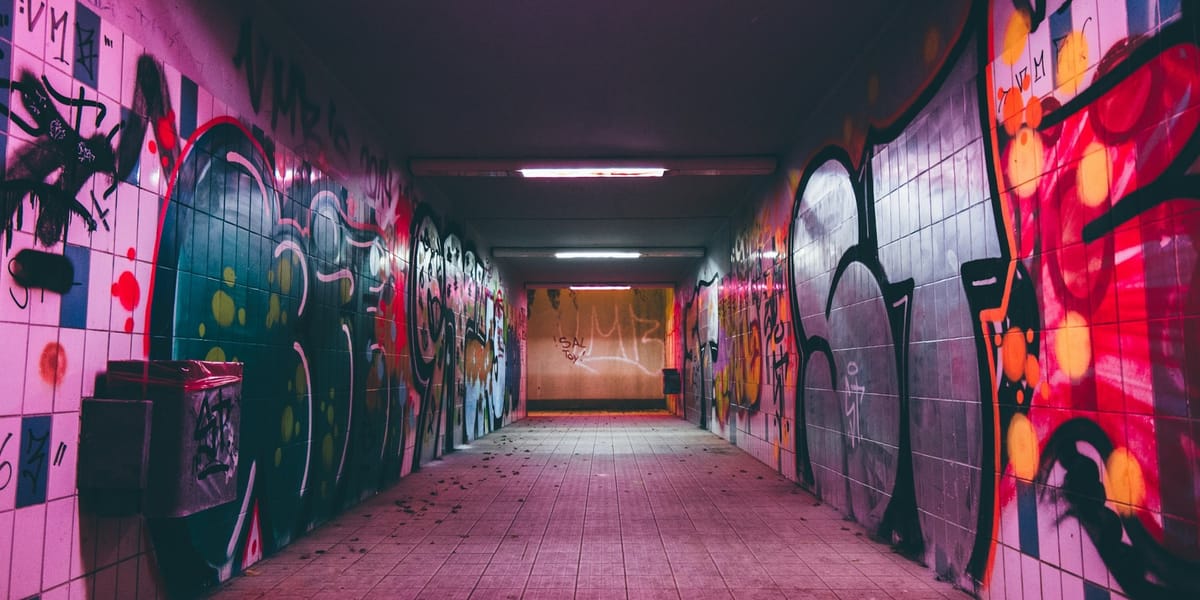
You've been painting illegally on walls for years, dodging cops, risking arrest, creating work that exists in public space without permission or payment. Your work gets buffed over, tagged over, weathered away. That ephemerality is part of the point. Then a gallery reaches out, wants to show your work, wants you to make pieces on canvas they can sell. Suddenly you're facing a question that has no clean answer: can street art survive becoming legitimate art?
The transformation of street art from vandalism to validated contemporary practice is one of the strangest cultural shifts in recent art history. Work that was literally criminal thirty years ago now sells for six figures at auction. Artists who started by bombing trains and tagging buildings now have museum retrospectives. But this validation comes with costs, contradictions, and compromises that trouble both street artists and the broader street art community.
Understanding what's lost and gained in this transition, why it happened, and whether street art means anything distinct anymore requires looking honestly at the economics, the gentrification dynamics, and the fundamental question of whether illegal public work and legal gallery work are even the same practice.
The Original Transgression
Street art emerged from graffiti culture, which itself emerged from hip-hop culture, territorial marking, and the desire to get your name up as widely and visibly as possible. The illegality wasn't incidental. It was definitional.
Graffiti writers in 1970s and 80s New York weren't making art for galleries. They were bombing subway cars, hitting highway overpasses, tagging everything they could reach. The goal was visibility, notoriety, respect from other writers. Getting arrested was risk, not romantic rebellion. Getting your pieces buffed was expected. The work existed in dialogue with the city, with other writers, with authority trying to erase it.
The entire value system of graffiti culture ran counter to art world values. Permanence didn't matter because nothing was permanent. Originality in the art world sense didn't matter because style biting was the problem, not making something unprecedented. Market value was meaningless because the work wasn't for sale. Getting up everywhere mattered. Having your tag recognized across the city mattered. Respect from other writers mattered.
Street art as distinct from graffiti writing emerged in the 1980s and 90s when artists started making images rather than letters, using stencils and wheatpaste and stickers alongside spray paint, and sometimes creating work with messages or commentary beyond just getting their name up. Shepard Fairey's Obey campaign, Banksy's stencils, Swoon's wheatpaste portraits all represented this shift.
But the illegality remained central. Street artists weren't asking permission. They were taking public space, using walls as canvas without authorization from property owners or city officials. This guerrilla approach meant the work existed in genuine public space, not in galleries claiming to be public but actually controlling who enters and what gets shown.
The public nature of street work meant anyone could see it, not just people who go to galleries or museums. A mural on a bodega wall reaches the neighborhood. A piece in a gallery reaches people with gallery-going habits. This democratic accessibility was part of street art's identity and part of its critique of the art world's exclusivity.
The ephemeral nature meant street work existed in the present tense. A piece might last days, weeks, if you were lucky months. But it would eventually be painted over, torn down, or weathered away. This impermanence gave urgency and immediacy. You saw it now or you missed it. Documentation became crucial because the work itself wouldn't last.
The risk involved added meaning. Making illegal art meant risking arrest, fines, potentially jail time. This stakes raised meant commitment. You weren't making street art casually. The physical danger, the running from police, the working in the dark or quickly, all shaped the work and the culture around it.
Community recognition mattered more than institutional validation. Other street artists, the neighborhood, people who saw your work regularly provided the meaningful audience. What critics or curators thought was irrelevant because you weren't making work for them.
This entire framework contradicts how the art world operates. The art world wants permanence, ownership, controlled spaces, institutional validation, market value. Street art's core values opposed all of that. So when street art started entering galleries and museums, something fundamental had to change.
Banksy as Case Study in Contradictions
No artist embodies street art's uncomfortable relationship with institutional validation more than Banksy, whose career demonstrates both the possibilities and problems of the transition.
Banksy's early work was straightforwardly illegal. Stenciled images on walls without permission, political and satirical content, quick execution to avoid arrest. The work was good, clever, visually striking, and it spread through Bristol, then London, then internationally. The illegality was essential. These weren't sanctioned murals. They were interventions in public space.
As Banksy's work gained recognition, something strange happened. Property owners stopped removing Banksy pieces. They protected them, sometimes with Perspex shields. Pieces that would normally be buffed as graffiti got preserved because they might be valuable. This immediately complicated the transgressive nature of the work.
When illegal art becomes valuable enough that property owners want to keep it, it's no longer functioning as illegal intervention. It's functioning as property enhancement. The critique gets absorbed. The transgression gets neutered by its own success.
Banksy's gallery exhibitions extend this contradiction. Selling screen prints of street work, creating gallery pieces that reference street aesthetic, staging elaborate installations in gallery spaces, all position Banksy as contemporary artist using street art as source material rather than street artist working in public space.
The authentication issue reveals the fundamental contradiction. Pest Control, Banksy's authentication service, determines what's real and what's fake. But graffiti culture doesn't have authentication boards. If you painted it on a wall illegally, it's real. The existence of authentication mechanisms shows street art becoming property rather than intervention.
When Banksy pieces sell at auction for millions, they're functioning entirely within art market logic. The illegality is now part of the provenance, adding value rather than creating risk. Collectors pay premium prices specifically for the transgressive origin story, which transforms transgression into commodity.
Banksy's pranks and interventions, like shredding Girl with Balloon after it sold at auction, or sneaking work into museums, maintain performance of anti-institutional stance while operating completely within institutional frameworks. You can't sell work at Sotheby's and credibly claim to be outside the art market. The shredding stunt happened at auction, increasing the work's value, not destroying market participation.
The anonymity preserves mystique but also enables having it both ways. Banksy maintains street credibility through anonymity while participating in markets and institutions that would compromise an identified artist's street authenticity. The mask permits contradictions that unmasked participation couldn't sustain.
Banksy's success opened doors for other street artists to enter galleries and museums, which is positive for those artists economically but changes what street art means. Once major museums are mounting street art exhibitions, once auction houses have street art departments, street art is no longer marginal practice. It's established category within contemporary art.
This establishment simultaneously validates street artists, proving their work matters and has value, and undermines street art's oppositional identity. You can't be both outside the system and inside it, though Banksy's career involves trying to occupy both positions simultaneously.
What Gallery Shows Do to Street Work
Moving from walls to canvas, from public space to private gallery, fundamentally changes what street art is and how it functions.
Scale changes immediately. Street murals can be building-sized. Gallery work is limited by wall space, ceiling height, doorways. Even large gallery pieces are smaller than many street works. This scale reduction affects impact. A twenty-foot mural dominates public space. A six-foot canvas in a gallery is substantial but not overwhelming.
Context changes completely. Street work exists in dialogue with its surroundings, the neighborhood, the architecture, the people who pass by daily. Gallery work exists in white cube isolation, surrounded by other art, viewed by gallery-goers, removed from urban context that gave it meaning.
Audience shifts from general public to art world audience. Anyone walking down the street sees street work. Only people who choose to enter galleries see gallery work. This selective audience differs demographically and culturally from street audiences. Gallery admission prices, operating hours, locations all create barriers street work doesn't have.
Permanence replaces ephemerality. Gallery pieces are preserved, cared for, conserved. They're meant to last and retain value. Street work is temporary by nature. This permanence contradicts street art's original embrace of impermanence and change.
Ownership becomes possible. Street work has no owner. It exists on property someone else owns, usually without their permission. Gallery work is created to be owned, bought, collected. Private ownership contradicts street art's public accessibility.
The edge that comes from illegality disappears. Making work for gallery exhibition is legal, sanctioned, safe. You're not risking arrest. You're not working quickly in the dark. You're not dodging security. The work loses the charge that came from risk and transgression.
Authentication and provenance matter in galleries but were irrelevant on streets. Once work enters markets, proving authenticity becomes crucial. This requires documentation, verification, institutional legitimacy. Street work existed outside these mechanisms. Gallery work depends on them.
Collaboration with institutions means accepting their terms. Galleries take commissions. Museums have insurance requirements, conservation standards, publicity machines. Working within these systems means compromise with institutional logic that street art originally opposed.
Some street artists make this transition successfully by treating gallery work as separate practice from street work. They continue painting illegally while also making gallery pieces, maintaining dual practices. Others abandon street work entirely once gallery success makes illegal activity financially and legally risky.
The artists who stop working illegally once they have gallery careers face authenticity questions. Are they still street artists if they're not working in streets? Does street art identity derive from practice or from style and subject matter? These questions have no consensus answers.
The Gentrification Problem
Street art's relationship to gentrification is deeply troubled because street art both resists and enables displacement of communities.
Developers and city planners use street art to make neighborhoods seem edgy, creative, safe for middle-class investment. Commissioning murals, inviting street artists to create legal works, organizing street art festivals all market neighborhoods as culturally vibrant destinations for tourists and new residents.
This is strategic gentrification. The street art creates atmosphere that attracts exactly the demographics who will displace existing residents. Artists become unwitting tools of urban redevelopment they might personally oppose.
The irony is brutal. Street art's original ethos involved claiming public space, often in working-class neighborhoods. Now it's used to make those same neighborhoods attractive to wealthier residents whose arrival pushes out the original community, including the street artists themselves.
Artists who accept commissions for legal murals in gentrifying neighborhoods participate in this dynamic whether they intend to or not. Your mural on a warehouse wall helps the developer market that warehouse as creative lofts. The proximity to street art becomes selling point for expensive housing.
Some street artists refuse these commissions, recognizing the complicity. Others accept them, needing income and seeing opportunity to create visible work. Both positions are understandable. Neither fully resolves the contradiction.
Cities use street art to manage image and attract tourism. Miami's Wynwood Walls, once industrial district, is now outdoor street art museum and major tourist destination. The art is legal, sanctioned, commissioned. Property values increased massively. Original residents couldn't afford to stay.
This process happened in London's East End, Brooklyn, Los Angeles, cities worldwide. Street art appears, neighborhood gets labeled creative and cool, capital follows, rents rise, artists and original residents get pushed out. The street art remains but the community that produced it doesn't.
Arguing street artists shouldn't accept paying work because it might contribute to gentrification is complicated because most artists need income. Turning down commissions on principle is easier if you have alternatives. Many street artists don't.
But accepting that economic necessity doesn't erase the gentrification dynamics. The work still functions within processes displacing communities. This creates genuine ethical dilemma without clear resolution.
Some artists try to work against gentrification while still making street art, creating pieces that explicitly critique displacement, document disappearing communities, or resist the sanitized street art aesthetic developers prefer. Whether this critical approach can actually resist gentrification or just becomes more sophisticated marketing for it remains contested.
Authentication and the Market Absurdity
The street art market's authentication mechanisms reveal how thoroughly street art has been absorbed into conventional art world structures.
Street pieces that started illegal are now worth enough that people remove them from walls, creating market for authenticated street work. Banksy pieces get cut from walls and sold. Walls themselves become valuable if they have authenticated work on them.
This creates perverse incentives. Property owners who would previously buff graffiti now protect anything that might be valuable street art. The work stops functioning as unsanctioned intervention because property owners want it there.
Authentication boards determine what's real, which gives them enormous power over value. A Banksy authenticated by Pest Control is worth millions. The same image without authentication is worthless. This gatekeeping function replicates exactly the institutional control street art supposedly opposed.
Forgers and imitators create fake street work by actual artists, prompting need for authentication. But the authentication process often requires cooperation from anonymous artists who built careers on not cooperating with authorities or institutions. The contradiction is obvious.
Provenance documentation for street work is often shaky because the work was created illegally. How do you prove when something was painted, by whom, if the artist was trying not to be identified at the time? The documentation that makes work valuable as art conflicts with the conditions that made it street art.
Removing pieces from their original contexts eliminates what made them site-specific. A Banksy stencil on a particular wall meant something because of that wall, that location, that context. Removed and sold, it's just an image. The site-specificity that gave it meaning as street art gets destroyed in converting it to commodity.
The secondary market for street art functions like any art market. Auction houses, galleries, dealers, advisors all profit from buying and selling work that originated outside market logic. The work gets absorbed completely into the system it supposedly critiqued.
Some artists resist by refusing authentication or actively disavowing work they actually created. This makes their street work less valuable financially but preserves some oppositional stance. However, it also means forgers can operate more easily, flooding markets with fakes.
The entire authentication apparatus shows street art becoming just another contemporary art category, subject to same market forces, same institutional structures, same wealth accumulation dynamics as all other art. The street origin becomes marketing story, not actual practice.
Whether Street Art Still Means Anything Distinct
After galleries, museums, auction houses, and mainstream art world acceptance, whether street art remains meaningfully different from any other contemporary art is questionable.
Style similarities don't constitute distinct practice. Using spray paint, stencils, wheatpaste, or street-derived imagery doesn't make work street art if it's created legally in studios for gallery sale. That's contemporary art using street aesthetic.
The practice of working illegally in public space is what made street art distinct. Remove that and you have work that looks like street art but functions like any other contemporary art. Aesthetic without practice is cosplay, not continuation of tradition.
Some argue the democratic impulse, making work accessible to general public rather than just gallery-goers, defines street art regardless of legality. By this definition, commissioned legal murals are street art because they're publicly accessible. But commissioned murals have existed for centuries. Public accessibility alone doesn't make something street art.
The political or social content street art often carries doesn't distinguish it because gallery art addresses political and social issues too. Content isn't what makes street art street art. Context and practice are.
If street art is work made illegally in public space, then legal murals, gallery pieces, and commissioned walls aren't street art regardless of who makes them or what they look like. This definition preserves street art as distinct practice but declares most work currently called street art isn't actually street art.
Alternatively, if street art is visual language and aesthetic approach that originated in illegal graffiti culture but now exists across legal and illegal contexts, then the category expands to include commissioned murals, gallery work, prints, basically anything that looks street art-ish. This definition is inclusive but so broad it's nearly meaningless.
The third position holds that street art was specific historical moment and cultural practice, roughly 1980s through early 2000s, before mainstream art world absorption. By this view, what exists now is post-street art, work influenced by street art but not continuous with it. This preserves street art as distinct historical practice while acknowledging current work operates differently.
Artists still working illegally exist and create street art in the original sense. But they're increasingly marginal to what gets called street art publicly and institutionally. The dominant discourse around street art now involves legal murals, gallery exhibitions, and market activity, not illegal painting.
Whether the illegal practitioners are maintaining tradition or just nostalgic for past moment depends partly on whether street art can survive cultural conditions that produced it. Hip-hop culture evolved and changed. Graffiti culture evolved. Street art is evolving. Whether that evolution means death of the original practice or healthy adaptation is perspective-dependent.
Artists Maintaining Illegal Practice Alongside Gallery Success
Some street artists manage to work both illegally and in galleries, though this dual practice creates tensions and requires careful navigation.
Continuing illegal work after gallery success means risking arrest with much more to lose. If you're unknown, arrest means fines and maybe jail time. If you're established artist with gallery career, arrest means negative publicity, potential loss of gallery representation, damage to market value of your work. The stakes increase dramatically.
Some successful artists work through crews or collaborations for illegal work, creating separation between their legal gallery identity and their illegal street presence. This separation protects gallery relationships while maintaining street credibility and practice.
Others are more open about continuing illegal work, accepting the risks as essential to maintaining authentic street practice. They see the gallery work as funding mechanism for the real work they do illegally. This position is ideologically consistent but practically dangerous.
The legal work often subsidizes illegal work. Gallery sales provide income that allows artists to buy materials, travel to paint illegally internationally, dedicate time to unpaid street projects. In this model, gallery success enables more ambitious illegal work rather than replacing it.
However, the gallery work often looks different from illegal work. Gallery pieces might be more refined, more detailed, created with more time and fewer constraints. Illegal work stays raw, immediate, done quickly with risk and urgency. Maintaining both practices means maintaining distinct approaches.
Community within street art splits between artists who transitioned fully to legal practice and those maintaining illegal work. The latter sometimes view the former as sell-outs. The former sometimes view the latter as stuck in past moment. These tensions are real and occasionally bitter.
Documentation practices differ between legal and illegal work. Legal work gets professionally photographed, publicized, used for promotion. Illegal work might get documented quickly with phone cameras, shared selectively, kept deliberately low-profile to avoid prosecution. Different documentation strategies serve different purposes.
The Future of Street Art as Practice
Where street art goes from here depends partly on economic conditions, cultural trends, and whether younger artists see value in maintaining illegal practice or whether street art becomes purely legal commissioned work.
The market for legal murals is robust. Developers, businesses, cities all commission street-style murals for branding and placemaking. This creates steady work for artists with street aesthetics, but it's commercial work, not transgressive practice.
The institutional acceptance seems permanent. Museums have street art departments. Galleries represent street artists. Auction houses sell street work. This infrastructure won't disappear. Street art is now established contemporary art category.
But the illegal practice continues in parallel, mostly invisible to institutions and markets. Kids still tag. Artists still bomb illegally. This underground practice exists independently of the institutional version, though it gets less attention and generates no market value.
Social media changed documentation and circulation of illegal work. Instagram and TikTok allow immediate wide distribution of photos of illegal pieces. This increases visibility but also provides evidence for prosecution. The double edge is sharp.
Technology enables new forms of unsanctioned public art. Projection bombing, AR interventions, digital graffiti all create public presence without permanent physical marks. Whether these count as street art or are something else entirely remains contested.
The political climate affects illegal street art significantly. Aggressive policing suppresses it. Tolerant policies allow it to flourish. Cities shift approaches over time, creating changing conditions for practice.
Climate change and environmental concerns are influencing street art content increasingly. Messages about sustainability, climate action, environmental justice appear in street work worldwide. This content focus doesn't resolve the legal/illegal question but shapes what street work addresses.
The gentrification dynamic will likely intensify as more cities use street art for development marketing. This makes street art's complicity in displacement more visible and more problematic. Artists will face increasing pressure to either refuse commissions in gentrifying areas or accept complicity.
Younger artists growing up with street art already institutionalized might not see the contradiction older practitioners feel. For them, street art might just be another contemporary art approach, not revolutionary practice. This generational shift could complete the transformation from transgression to convention.
Alternatively, new transgressive public art practices might emerge that deliberately reject the street art label precisely because it's become institutional. The oppositional energy that fueled early street art might find new forms that current institutions can't easily absorb.
Making Peace With the Contradictions
For artists navigating between illegal street practice and legal gallery work, the contradictions don't resolve cleanly. You make choices and live with them.
Being honest about what you're doing helps. If you're making gallery work that looks street art-ish but you're not painting illegally, you're not a street artist, you're a contemporary artist using street aesthetic. That's fine, but call it what it is.
If you're maintaining both practices, accept that each compromises the purity of the other. Your illegal work exists in context of your gallery career. Your gallery work exists in context of your illegal practice. The relationship between them is complicated and that complexity is honest.
Understanding the economic and social forces at play prevents naive positions. Gallery success changes what illegal work means. Legal murals participate in gentrification regardless of your intentions. Authentication systems absorb transgression into markets. These dynamics are real whether you acknowledge them or not.
Choosing which compromises you'll accept and which you won't creates personal ethical boundaries. Some artists refuse commissions in gentrifying neighborhoods. Others refuse gallery representation entirely. Others work within all available systems while maintaining critical awareness. Different artists draw different lines.
Community accountability matters. Staying connected to other street artists, to the neighborhoods where you work, to the culture that formed you provides grounding and prevents complete absorption into art world isolation. Those relationships offer perspective institutional success can't provide.
Recognizing that your work might be used in ways you don't intend or control is part of working publicly. Once your mural exists, it means what it means to viewers, not just what you intended. Once it's on a wall, you don't control how it functions socially, economically, politically.
The nostalgia for street art's oppositional past is understandable but not particularly productive. Culture changes. Practice evolves. Street art's current institutionalization is real. You can resist it, work within it, try to subvert it, or withdraw from it, but you can't undo it.
What matters is whether your work has integrity on its own terms, whether you're honest about what you're doing and why, and whether you maintain critical awareness of the systems you're participating in. The purity test approach, demanding absolute opposition to institutions and markets, doesn't account for real artists' needs to survive economically while making work.
But full capitulation to institutional logic without critical awareness or resistance means street art becomes just another market category with no meaningful difference from any other contemporary art. Maintaining some tension, some contradiction, some refusal even while participating keeps the practice from total absorption.
The awkwardness of street art's position, neither fully outside institutions nor fully inside them, neither purely transgressive nor purely conventional, is where the practice exists now. That awkwardness is honest. Pretending it doesn't exist serves no one. Living within it while making work that matters is the challenge for street artists now navigating this terrain.
Street art's journey from illegal walls to white cube galleries isn't simple story of success or failure, validation or cooptation. It's complicated, contradictory, ongoing transformation of practice that started as opposition to exactly the institutions that now embrace it. Understanding that complexity honestly is the first step toward navigating it with integrity.