The Collector's Guide to Art Fairs and Auctions: Navigating High-Stakes Environments
Art fairs and auctions feel intimidating by design. This insider guide covers strategies, timing, etiquette, and common mistakes collectors should avoid.
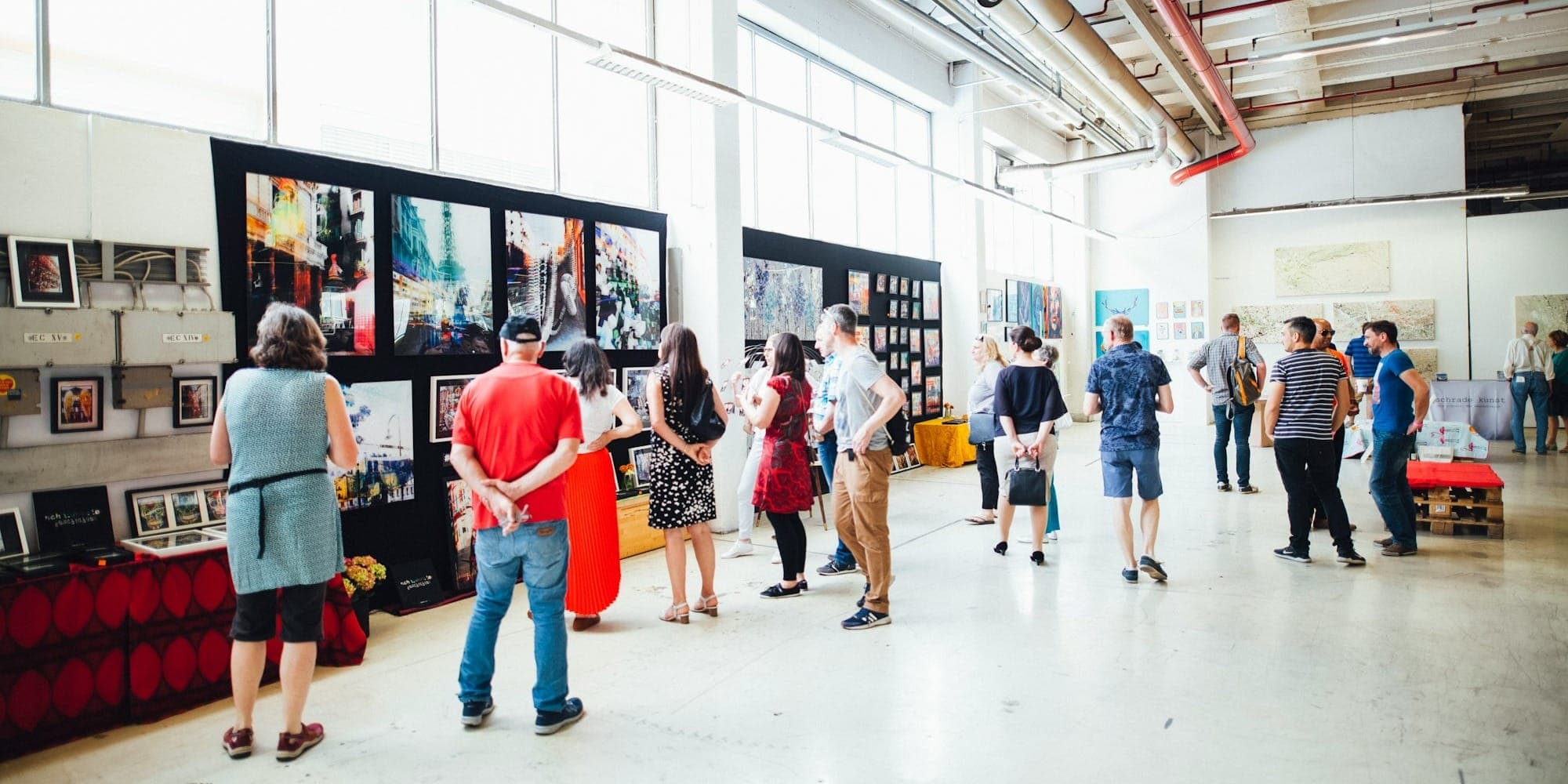
Art fairs and auction houses feel intimidating by design. The hushed conversations, the knowing glances, the apparent ease with which seasoned collectors navigate these spaces—all create impression that everyone knows rules except you. The air of exclusivity isn't accidental. These environments benefit from information asymmetry, from newcomers feeling uncertain while insiders operate with confidence born from experience and knowledge.
This guide demystifies both art fairs and auctions, explaining how they actually work, what strategies serve collectors well, and what mistakes to avoid. The information here comes from observing these environments extensively, talking with dealers and auction specialists, and learning from collectors' accumulated wisdom. None of it is secret, exactly, but it's rarely explained systematically to people entering these spaces for the first time.
Understanding these environments won't eliminate all discomfort—they're designed to feel special and somewhat exclusive—but it will replace vague anxiety with informed confidence. You'll know what's happening, why things work as they do, and how to navigate effectively whether you're spending $500 or $500,000.
Part One: Art Fairs
Art fairs have become dominant force in contemporary art market over past two decades. Understanding how they function, what they offer, and how to navigate them effectively matters for anyone seriously interested in collecting contemporary art.
What Art Fairs Actually Are
At their most basic, art fairs are temporary marketplaces where galleries rent booths to show and sell work. They concentrate enormous numbers of artworks, dealers, collectors, and industry professionals into single location for brief period—usually three to five days.
The major international fairs (Art Basel, Frieze, FIAC, TEFAF) function as crucial market moments where significant transactions happen, relationships form, and market trends become visible. Regional and specialized fairs serve more local markets or focus on particular types of work (emerging art, prints, design, specific periods).
For galleries, fairs represent major investments and crucial opportunities. Booth rental alone can cost $50,000-150,000 for major fairs, plus shipping, insurance, travel, and staff costs. Galleries attend because fairs provide concentrated access to collectors, press exposure, and networking opportunities impossible to achieve otherwise.
For collectors, fairs offer unparalleled opportunity to see vast amounts of work in short time, compare approaches and prices across galleries, and access galleries they might not otherwise encounter. They also provide rare chance to see work by artists galleries don't yet represent, as many galleries bring outside artists to attract attention.
The Fair Calendar and Hierarchy
Art fairs follow annual calendar with certain fairs occupying premium positions. Understanding this hierarchy helps determine which fairs deserve your attention.
Top-tier international fairs:
- Art Basel (Basel, Miami Beach, Hong Kong, Paris)
- Frieze (London, Los Angeles, New York, Seoul)
- TEFAF (Maastricht, New York)
- FIAC/Art Basel Paris
These fairs attract the most prestigious galleries, strongest work, wealthiest collectors, and most press attention. If you're serious about contemporary art, attending at least one or two of these annually provides education even if you don't purchase.
Strong regional fairs:
- Armory Show, ADAA Art Show (New York)
- Art Cologne (Germany)
- ARCOmadrid (Spain)
- Artissima (Turin)
- Various others depending on location
These fairs offer quality work, often at more accessible prices, with less overwhelming crowds than top-tier events.
Emerging and specialized fairs:
- Nada, Untitled, Independent (various cities)
- IFPDA Print Fair (New York)
- Paris Photo (photography)
- Design fairs, outsider art fairs, regional fairs
These serve specific markets and can offer excellent opportunities for collectors building focused collections or seeking accessible entry points.
Understanding fair hierarchy prevents disappointment from attending fairs that don't match your expectations or resources. Regional fairs aren't failed versions of Art Basel; they're different offerings with different strengths.
Before You Go: Preparation
Success at art fairs begins with advance preparation. Walking in cold dramatically reduces effectiveness.
Study the exhibitor list. Fair websites publish participating galleries weeks in advance. Review the list, research galleries that interest you, and note which booths to prioritize. Many galleries' websites show what they're bringing or at least suggest their typical offerings.
Understand preview day access. Major fairs have preview days or VIP hours before public opening. Access varies—some require invitation from participating galleries, others sell tickets (often expensive), some have benefactor programs. Preview access matters significantly because strong work often sells before public opening.
If you're interested in specific pieces or artists, contact galleries beforehand expressing interest. They may invite you to preview or at least alert you when work will be available. Don't assume you'll see pieces on public days; they may already be sold.
Set intentions and budget. Know roughly what you're hoping to accomplish. Are you there to purchase, to research for future acquisition, to educate yourself, to network? Having clear intentions helps navigate overwhelming environments.
If you're planning to purchase, establish budget beforehand. Fair environments create pressure to decide quickly. Knowing your limits ahead prevents regrettable decisions made in the moment.
Arrange gallery meetings. If you have relationships with galleries attending the fair, contact them in advance to arrange meetings. They'll appreciate the advance notice and can ensure relevant staff are available to discuss work you're interested in.
Arriving and Orienting
Art fairs are deliberately designed to overwhelm. The scale, the density of objects, the crowd, the noise—it's sensory assault. Successful navigation requires strategy.
Get the map and mark priorities. Fair maps show booth locations. Immediately mark galleries you identified beforehand. This creates manageable structure rather than wandering randomly through hundreds of booths.
Start with priorities, not entrance. Don't just start with whatever's nearest the entrance. Navigate directly to your priority galleries first while you're fresh and alert. Fair fatigue sets in quickly; see what matters most while you're still capable of focused attention.
Move quickly through non-priority areas. You cannot and should not attempt to look carefully at everything. Move through non-priority sections at pace that allows noticing anything that stops you while not getting bogged down in work that doesn't interest you.
This selective attention isn't disrespectful. It's practical acknowledgment that fairs contain far more than anyone can meaningfully engage with. Better to see some work well than everything poorly.
Note things for return visits. Carry notebook or use phone to note booths, artists, or specific works to revisit. Don't assume you'll remember—the volume of visual information overwhelms memory. The notes let you return to things that interested you after seeing everything once.
Talking to Dealers
Fair environments make dealer interactions different from gallery visits. Understanding these differences helps conversations be productive rather than awkward.
Dealers are busy and stressed. Fair weeks are intense for gallery staff. They're managing logistics, handling multiple collectors, tracking sales, and operating under pressure. Your interaction is one of hundreds they'll have that week.
This means being direct and efficient. Don't start with "I'm just looking"—that's obvious. If you're interested in specific work, say so. If you have questions, ask them clearly. If you're not interested, move on without taking up time.
Express interest clearly. If you're genuinely interested in purchasing, communicate this. You don't need to commit, but indicating serious interest ensures you receive appropriate attention and information.
Dealers can't read minds about whether you're casual viewer or serious collector. In fair environments where they meet hundreds of people, signals matter. If you want to be taken seriously, signal clearly.
Ask informed questions. Questions about work, artist, materials, or process show engagement and seriousness. Questions about price and availability are obviously appropriate. What annoys dealers are questions that reveal you haven't looked at the work or read basic label information.
Understand the pressure. Fairs create urgency—"this might sell today, decide quickly." This pressure is real (strong work does sell fast) but also strategic. Don't let it force bad decisions. If you need time to consider, say so clearly. Reputable dealers understand that significant purchases require thought.
Get contact information. If you have productive conversation but aren't ready to purchase, get the dealer's card and follow up afterward. Many fair sales actually close days or weeks later after collectors have time to consider. Dealers appreciate serious buyers who need reasonable time to decide.
Understanding Fair Pricing
Fair pricing follows particular dynamics worth understanding before discussing numbers.
Fair prices are firm. Unlike some gallery contexts where discrete negotiation might be possible, fair prices are generally non-negotiable. The public setting and compressed timeframe make haggling inappropriate and ineffective.
Occasionally dealers might offer modest "fair discount" (5-10%) to close sales, but don't expect or ask for this unless you're spending significantly. The effort to negotiate probably isn't worth potential savings on pieces under $10,000.
Prices may be higher than gallery. Some galleries mark up slightly for fairs to cover their massive costs. The same work might be cheaper at the gallery. However, some collectors find fair convenience worth modest premium, and strong work often isn't available after the fair regardless of price.
Payment terms vary. Some galleries require full payment immediately; others work out terms for significant purchases. Discuss payment clearly if price exceeds what you can pay immediately. Galleries often accommodate payment plans for serious collectors.
Sales tax considerations. Fair location determines sales tax application. Some fairs occur in locations with favorable tax structures; others have significant tax implications. Understand the tax situation before finalizing purchases.
Prices should be visible. Reputable galleries display prices or make them readily available on request. If prices are deliberately obscured or "available only to serious collectors," that's red flag suggesting gallery isn't operating transparently.
The Preview Day Strategy
For collectors with preview access, this becomes the most important fair time. Understanding preview dynamics maximizes effectiveness.
Strong work sells in first hours. Major collectors and museum representatives arrive early with clear acquisition goals. Highly sought pieces—works by hot artists, strong pieces at accessible prices, investment-grade acquisitions—often sell in first one to two hours.
If you're interested in specific pieces or artists, preview day is essentially required. Waiting for public days means accepting that the best work will likely be gone.
Dealers prioritize established relationships. In the rush of preview hours, dealers naturally focus on collectors they know. If you're unknown to them, you may receive less attention unless you communicate clear interest effectively.
This isn't personal or exclusionary, just practical. Dealers know their regular collectors' tastes and can quickly determine fit. With new contacts, they need more time to understand interests and seriousness.
Move strategically. Have your priority list and move through it efficiently. Don't get stuck in lengthy conversations at your first booth if you have others to see. You can always return once you've covered priorities.
Reserve pieces. If you're seriously interested but need brief time to decide, ask if you can have short hold while you complete your initial walkthrough. Reputable dealers will often grant holds for serious collectors, though usually not more than hour or two during preview.
What to Actually Buy at Fairs
Collectors often ask what purchases make sense at fairs versus elsewhere. Several factors matter.
Fairs excel for emerging artists. If you're interested in emerging or mid-career contemporary artists, fairs provide unusual concentration of options. You can compare work by dozens of artists galleries consider strong, often at prices more accessible than established artists.
Comparative shopping is efficient. If you're considering work by particular artist represented by multiple galleries, fairs let you see offerings side by side. This comparison helps assess quality and pricing across galleries.
Access to out-of-market galleries. Fairs bring galleries you might never otherwise visit. If you're interested in international artists or galleries in distant cities, fairs provide access without extensive travel.
Impulse purchases have risk. The pressure and excitement of fairs can prompt purchases you later regret. If you're drawn to something outside your usual interests or budget, take time to consider. The "it might sell" pressure, while real, shouldn't override careful thought.
Some things are better elsewhere. Highly established artists' major works often have complicated acquisition processes and waiting lists. These don't appear at fairs or sell through normal fair channels. For these acquisitions, gallery relationships matter more than fair attendance.
After the Fair
Your fair experience doesn't end when you leave. Several follow-up actions maximize value.
Follow up with galleries. If you had productive conversations but didn't purchase, reach out within a week or two. Reference your fair conversation and express continued interest. This maintains relationship for future opportunities.
Research artists you discovered. Fairs expose you to artists you might not otherwise encounter. If particular artists interested you, research their work more deeply. Subscribe to galleries representing them, follow the artists, note future exhibitions.
Photograph sparingly, remember actively. Many fairs prohibit photography or restrict it to certain areas. Even where allowed, don't let photographing replace looking. Trust your notes and memory or request gallery information afterward if you need images.
Review your purchases emotionally. If you bought work, live with your decisions for a while before judging them. Fair purchases sometimes look different at home than in the booth. Some need time to reveal their qualities; others might not have been right after all. Either response provides learning for future fairs.
Consider fair membership programs. Regular attendees benefit from fair membership or benefactor programs providing preview access, special events, and networking opportunities. If you plan to attend specific fairs annually, these programs often justify their cost.
Part Two: Auctions
Auction houses operate differently from galleries and fairs, with distinct dynamics, advantages, and risks. Understanding how they work enables confident participation whether bidding or observing.
How Auction Houses Actually Work
Auction houses are intermediaries that facilitate sales between sellers (consignors) and buyers (bidders). Understanding their business model clarifies how they operate and where their interests lie.
The auction house doesn't own the work. With rare exceptions, auctioned work belongs to consignors who've contracted with the house to sell it. The house earns commission from both seller (typically 10-15%) and buyer (15-25% buyer's premium plus fees).
This dual commission structure means auction houses have incentive to achieve highest price possible while also attracting both consignors and buyers. They balance these interests through estimates, reserves, and marketing.
Estimates and reserves. Each lot has published estimate (low and high expected price) and usually an undisclosed reserve (minimum price below which it won't sell). These figures are set through negotiation between auction house and consignor.
Estimates theoretically reflect realistic market expectations, but they also function strategically. Low estimates attract bidder interest; high estimates flatter consignors and suggest importance. The reserve protects consignors from works selling below acceptable prices.
The catalog and condition reports. Auction houses publish catalogs describing each lot, including artist, title, date, medium, size, provenance, exhibition history, and literature. These descriptions provide crucial information but also have legal significance—houses are responsible for their accuracy.
Condition reports provide detailed assessment of work's physical state. These are usually available on request and essential for serious bidding. The catalog might describe work glowingly, but condition report reveals repairs, condition issues, or other concerns affecting value.
House specialization. Major houses (Christie's, Sotheby's, Phillips, Bonhams) hold sales across categories. Smaller houses often specialize in particular areas. Knowing which houses excel in which categories helps determine where to look for specific types of work.
Types of Auction Sales
Not all auctions are equal. Understanding sale types helps manage expectations and strategy.
Evening sales. These marquee events feature the most valuable, museum-quality works. Extensive marketing, celebrity attendance, press coverage. Lots often have million-dollar-plus estimates. Unless you're spending at that level, these are theater more than shopping opportunity, though attending can be educational.
Day sales. These workhorse sales include mid-range and accessible works across wider quality and price spectrum. Much more practical entry point for emerging collectors. Less press attention but often better values.
Online sales. Increasingly important, online auctions run for weeks with internet-only bidding. These sales often include works at very accessible price points ($500-10,000) and represent good entry point for auction newcomers. Less pressure than live bidding, time to research, broader geographic participation.
Specialized sales. Houses hold sales devoted to specific categories—prints, photographs, editions, particular periods or movements. These focused sales attract specialist collectors and can offer strong work at relatively accessible prices.
Before You Bid: Research and Preparation
Successful auction buying requires substantial preparation. Impulse bidding rarely ends well.
Study the catalog carefully. Read lot descriptions completely. Note estimates, understand what's included (framing, etc.), check dimensions (work that looks substantial in catalog photos may be surprisingly small in person).
Pay attention to provenance and exhibition history. Strong provenance adds value and provides authentication assurance. Gaps or suspicious provenance history should prompt careful examination.
Request condition reports. Always, always get condition report for any lot you're seriously considering. Catalog photos can hide significant condition issues. The condition report describes restoration, condition problems, and concerns you need to know.
Examine work in person when possible. Auction houses hold preview exhibitions days before sales. Attending previews is crucial for serious bidding. Photographs, no matter how good, don't convey scale, surface, or condition accurately. Many disappointing auction purchases result from bidding sight unseen.
During preview, examine work carefully. Bring flashlight to look at surface in raking light. Check edges, corners, verso. Don't be shy about close inspection—everyone serious does this.
Research comparable sales. Auction house websites provide past results for similar work by the same artist. This data helps assess whether estimate is realistic, conservative, or aggressive. Look at results from past 2-3 years; older data may not reflect current market.
Don't assume similar work will bring similar prices. Market conditions change, and individual work quality varies dramatically. But comparable research provides context for estimates.
Understand the full cost. Winning bid isn't your final cost. Buyer's premium (typically 25% on first $400,000, then declining percentages) adds substantially. Plus sales tax, shipping if applicable, possibly export licenses or other fees. A $10,000 hammer price might cost $13,000+ all-in.
Calculate these additional costs before bidding. Many disappointed buyers win bids only to realize the total exceeds what they wanted to spend.
Set your maximum and stick to it. Decide your maximum bid (including premiums and fees) before the sale. Write it down. Bidding creates competitive adrenaline that can push you past reasonable limits. Having predetermined maximum and the discipline to stop protects against auction fever.
Bidding Strategies and Mechanics
If you've decided to bid, understanding mechanics and strategy helps navigate the actual sale.
Bidding methods. You can bid in room, via phone with auction house staff, or online/absentee. Each has advantages:
In-room bidding lets you read room dynamics and adjust strategy based on competition. Phone bidding allows participation from anywhere but depends on clear communication with house representative. Online bidding removes pressure but gives less sense of competition.
For lower-value lots, absentee or online bidding works well. For significant purchases, consider attending or bidding by phone to maintain flexibility.
Auctioneer's pace and increments. Auctioneers control bidding pace and increment amounts. Standard increments exist (10% jumps generally), but auctioneers have discretion. If bidding is slow, they might accept smaller increments to keep momentum.
Opening bids and reserves. Auctioneers often start bidding below reserve to create appearance of activity. The auctioneer may bid "on behalf of the seller" up to the reserve—these are phantom bids protecting the reserve. Once bidding exceeds reserve, all bids are genuine.
This practice is disclosed in sale terms, but new bidders sometimes find it confusing. Don't be discouraged if there's apparent early bidding; it may not represent real competition.
Reading the room. If bidding in room, watch for active bidders. Serious collectors often bid decisively—clear signals, no hesitation. Tentative bidding might indicate maximum is near. Of course, some collectors deliberately signal to influence others, so reading room has limits.
Jump bids. If bidding is incremental and you want to discourage competition, you can offer jump bid—substantially exceeding current bid. This sometimes shocks other bidders into dropping out. Use carefully; it obviously risks paying more than necessary.
The chandelier bid. Auctioneers sometimes take "bids" by pointing at the chandelier or back wall. This is theatrical way of acknowledging absentee bids or bids on behalf of reserve. It's legitimate but can create impression of competition that doesn't exist.
When to stop. Stick to your maximum. The excitement of bidding and the desire to win create pressure to keep going. Resist. You can always find other works; overpaying creates lasting regret.
If you reach your maximum and lose, don't despair. Often works pass or sell below estimate at subsequent sales. Houses will note your interest for future consignments of similar material.
After Winning: Payment and Collection
Winning the bid begins, not ends, your obligations and opportunities.
Payment timeline. Houses require payment quickly—usually within a week. They charge interest on late payment. Make sure you can actually pay for what you bid on before raising your paddle.
Payment methods vary by house and amount. For significant purchases, wire transfers are standard. Smaller amounts might accept credit cards (though buyer's premium usually increases for card payment).
Collection or shipping. You're responsible for removing the work or arranging shipping. Houses provide recommended shippers but you contract and pay for shipping separately.
Don't delay collection. Houses charge storage fees after grace period. If shipping internationally, factor in time for export documentation and customs.
Authentication and condition. Once you've paid and taken possession, the sale is generally final. Houses provide limited recourse unless they materially misrepresented the lot. This is why condition reports and preview examination matter so much.
If you discover authentication issues after purchase, houses may address them depending on circumstances. But you can't return work simply because you changed your mind or overpaid.
Building house relationships. If you become regular buyer, develop relationships with house specialists in your areas of interest. They can alert you to upcoming works, provide additional information, and potentially arrange preview viewings. Like galleries, auction houses value ongoing relationships with serious collectors.
What to Buy at Auction vs. Galleries
Collectors often wonder when auction buying makes sense versus purchasing from galleries.
Auctions excel for secondary market. If you're interested in work by artists no longer represented by galleries or deceased artists, auctions provide primary access. The secondary market mostly moves through auction houses.
Potential price advantages. Auction estimates often start below equivalent gallery retail. If bidding stays conservative, you might acquire work below gallery prices. However, competitive bidding can push prices well above estimates.
Transparency. Auction prices are public, providing market price transparency that galleries don't offer. You know exactly what work brings and can research comparables easily.
But auctions have risks. Gallery purchases come with gallery support—they'll take back work if you're unsatisfied, help with framing and installation, provide documentation. Auction sales are final. You get what you bid on, as-is, with limited recourse.
Primary market advantages. For living artists' new work, galleries provide much better access. Gallery relationships enable access to desirable work before it reaches auction market. Most serious collectors use both channels strategically.
Auction Red Flags and Pitfalls
Several common auction mistakes or problems deserve awareness.
Buy-backs. If lot fails to meet reserve, the house might "buy back" (record as sold but actually return to consignor). These phantom sales can appear in price databases and suggest demand that doesn't exist. Be skeptical of lots that seem to sell but were actually bought back.
Guarantees. Sometimes houses guarantee minimum price to consignors, removing consignor's risk but creating house's incentive to push prices. While legal and disclosed, guarantees can distort bidding. If you're competing against the house's guarantee, you may pay more than market justifies.
Chandelier bids and shill bidding. While taking bids "on behalf of seller" up to reserve is allowed, actual shill bidding (accomplices bidding to inflate price) is illegal. Reputable houses don't do this, but smaller or less scrupulous venues might. Know who you're dealing with.
Authenticity issues. Despite due diligence, authentication mistakes happen. Major houses stand behind their attributions but with important limitations and timeframes. Review guarantee terms in sale conditions carefully.
Auction fever. The most common pitfall is the competitive drive to win overriding rational judgment. Bidding feels thrilling, and winning feels like accomplishment. Remember: you're not competing to win the bid; you're competing to acquire the work at price that makes sense for you. Losing a bidding contest might mean you made the smart decision.
Learning From Observation
You don't need to bid to benefit from attending auctions. Simply observing provides education.
Attend evening sales for entertainment and education. Even if you're not bidding, attending major evening sales shows market dynamics at high level. You'll see what drives prices, how bidding unfolds, which works attract most interest.
Study presale exhibitions. Even without bidding, attending previews lets you examine work closely in ways galleries might not allow. Use this opportunity to train your eye, study techniques, and see work by artists you're interested in.
Follow results. After sales, houses publish results showing what sold and for how much. Studying these results over time reveals market patterns, which artists are hot, what types of work attract premiums.
Read catalog essays. Auction catalogs for important sales often include scholarly essays about key lots. These are usually very well-researched and provide education even if you're not bidding.
Navigating the Emotional Landscape
Both fairs and auctions create particular emotional pressures that deserve acknowledgment.
FOMO is real and strategic. Fear of missing out drives many questionable art purchases. Dealers and auction houses understand this and subtly encourage it. "This won't be available again" might be true, but dozens of other equally good works will be available soon.
Competition distorts judgment. Whether subtle competition with other collectors at fairs or explicit bidding contests at auction, competitive pressure can override careful consideration. Be aware of this dynamic and consciously resist it.
Intimidation is by design. Both environments cultivate exclusivity that makes newcomers feel uncertain. This isn't personal—you're not actually being judged, despite how it feels. The intimidation factor works to insiders' advantage by making less confident people hesitate.
The education is valuable regardless. Even if you never purchase at fairs or auctions, attending and learning how they work provides tremendous education about art market dynamics, value, and quality. Don't feel you must buy to justify attending.
Building Long-Term Strategy
For collectors who will engage with fairs and auctions regularly, several long-term strategic considerations matter.
Develop specialized knowledge. Rather than trying to know everything about every category, develop deep knowledge in areas that interest you. Specialized knowledge provides significant advantage in spotting quality, assessing value, and making confident decisions.
Build relationships. Both galleries at fairs and auction house specialists value ongoing relationships with serious collectors. These relationships provide access to information, opportunities, and trust that benefit everyone.
Maintain documentation. Keep records of what you saw, what interested you, what prices were discussed. This builds institutional memory that helps future decisions. Many collectors keep fair notes or auction catalogs with annotations.
Learn from mistakes. You will make mistakes—everyone does. Overpaying, buying work you later regret, missing opportunities. Treat these as tuition in your education rather than failures. Analyze what went wrong and adjust strategy accordingly.
Balance immediate and long-term. Fairs create pressure for immediate decisions. Auctions have literal deadlines. But collecting should also be thoughtful long-term activity. Don't let event-driven decisions override sustained vision for your collection.
When to Use Galleries Instead
Neither fairs nor auctions are always the best acquisition channel. Sometimes gallery relationships serve better.
For living artists' primary market work, galleries provide better access and support. For works requiring installation, conservation, or special handling, gallery expertise and ongoing relationships matter. For collectors building focused collections, sustained gallery relationships often yield better results than event-driven purchasing.
Use all available channels strategically rather than committing exclusively to any one. Galleries, fairs, auctions, direct artist purchases—each serves specific purposes and offers particular advantages.
Moving Forward With Confidence
Art fairs and auctions will always retain some intimidation factor—that's partly their appeal. But understanding how they actually work, what drives their dynamics, and what strategies serve collectors well transforms vague anxiety into informed navigation.
You don't need to become expert immediately. Start by attending and observing without pressure to purchase. As you gain experience, your comfort and confidence will build naturally. Everyone who now navigates these environments easily started as uncertain newcomer.
The knowledge provided here gives you foundation. The rest comes from experience—attending sales and fairs, making purchases, occasionally making mistakes, gradually building the intuitions that transform theoretical understanding into practiced confidence.
Most importantly, remember that fairs and auctions exist to serve collectors. They're not exclusive clubs but marketplaces. You belong there as much as anyone, regardless of experience level or budget. The apparent exclusivity is performance. Behind it lies straightforward commercial reality: galleries and auction houses want to sell work, and they need buyers to do it.
Your presence, whether you're spending $500 or $500,000, whether you're attending your first fair or your hundredth, is legitimate and welcome. Navigate these environments with the confidence that comes from understanding how they actually function rather than feeling intimidated by surfaces designed to impress.
The Unwritten Rules Nobody Tells You
Beyond mechanics and strategy, both fairs and auctions operate according to unwritten social codes that newcomers find bewildering. Understanding these conventions helps you navigate more comfortably.
Fair Etiquette That Matters
Don't touch unless invited. This should be obvious but bears stating. Many works are fragile, and galleries are responsible for damage. If you want to examine something closely, ask first. Dealers will usually accommodate reasonable requests.
Step back when others are looking. If someone is examining work you're interested in, give them space. Hovering creates pressure and comes across as aggressive. Wait your turn.
Don't monopolize dealer time during busy periods. If the booth is crowded and others are waiting, keep your conversation reasonably brief. You can always return during quieter moments or arrange to speak later.
Taking business cards is expected. Don't feel awkward asking for cards from galleries that interest you. They want you to have their contact information.
Photos are tricky territory. Some fairs prohibit photography entirely; others allow it with restrictions. When in doubt, ask the specific gallery. Never photograph without permission.
Eating and drinking in booths is generally unwelcome. Even when fair provides food and drink, consuming them while examining art is poor form. Step away from booths to eat.
Auction House Social Dynamics
Dress codes matter at evening sales. Major evening auctions have unwritten dress expectations (business formal or cocktail attire). Day sales are more casual. Online bidding eliminates these concerns entirely.
Bidding signals should be clear but not theatrical. Raise your paddle clearly when bidding. No need for dramatic gestures, but don't be so subtle the auctioneer misses you. They're skilled at catching subtle nods once they know you're bidding, but your initial signal should be obvious.
Don't bid if you're just curious about price. Bidding to see how high a lot will go wastes everyone's time and risks accidental purchase. If you're not serious about buying at your bid level, don't bid.
Applause is situational. At evening sales, bidding for major lots sometimes draws applause. This is performative aspect of the theater. Day sales are more businesslike with less performative behavior.
Post-sale conversations are opportunities. After sales, house specialists often make themselves available. This is good time to discuss works you're interested in for future sales or ask questions about market conditions.
Fair and Auction Mistakes: Real Examples
Learning from others' mistakes is cheaper than making them yourself. Here are common errors and how they play out.
The Preview Day Miss
A collector identified stunning contemporary photograph at major fair, priced $15,000. They decided to "think about it overnight" and return during public days. When they arrived the next morning, the piece had sold during preview opening hours. The lesson: If you find work you genuinely want at fairs, especially during preview, don't assume it will wait.
The correct approach would have been requesting a brief hold during preview while deciding, or accepting that passing might mean losing the opportunity. At minimum, expressing serious interest to the gallery creates possibility of waitlist if first buyer falls through.
The Auction Fever Win
A bidder set $50,000 maximum for painting at auction. When bidding reached $45,000, another collector entered aggressively. Competitive instinct took over. The painting hammered at $75,000. With buyer's premium and tax, the final bill was $98,000—nearly double the planned maximum for work the buyer had researched at $40,000-50,000 fair market value.
The lesson: Stick to your maximum. The "winner" overpaid substantially and later discovered similar work available through galleries for less. The discipline to stop at your predetermined limit is crucial.
The Condition Report Failure
Online bidder won 19th-century painting at $12,000 hammer (about $16,000 all-in). They had seen catalog photos but hadn't examined the work or requested condition report. When it arrived, significant restoration was visible, the surface was heavily crazed, and actual scale was much smaller than catalog photos suggested. Legitimate auction, accurate catalog description—but the buyer would never have bid had they examined it personally or read the condition report.
The lesson: Always get condition reports. Attend previews when possible. Never bid significant amounts sight unseen, no matter how good catalog photos look.
The Gallery Relationship Fumble
Collector attended major fair and found work they loved at prominent gallery. They negotiated price aggressively, threatened to walk away, and generally treated the interaction as adversarial transaction. They got modest discount and purchased the work.
Six months later, they wanted work by another artist the same gallery represents. Gallery was polite but made clear that the artist's work had waitlist and they couldn't accommodate. The lesson: Gallery relationships matter. Approaching every interaction as transaction to be won through aggressive negotiation damages relationships that provide long-term value beyond any single purchase.
The Specialist Knowledge Blind Spot
Collector attending first major photography auction fell in love with lot of vintage prints by recognized photographer, estimated $20,000-30,000. Having done research, they bid confidently, winning at $28,000 (about $37,000 all-in).
Later consultation with specialist dealer revealed the prints, while authentic, were later printings worth substantially less than vintage prints from the same negatives. The estimate had been deliberately vague about which printings these were. Without specialist knowledge, the collector paid vintage prices for later printings.
The lesson: For categories you're less familiar with, consult specialist dealers or hire advisors. The cost of expert advice is tiny compared to cost of expensive mistakes.
Building Your Auction and Fair Education
The best education comes from direct experience, but you can accelerate learning through systematic observation.
Create a Fair Routine
If you plan to attend fairs regularly, develop consistent approach:
Pre-fair preparation. Spend 2-3 hours reviewing exhibitor list, researching galleries, and noting priorities. This focused preparation pays dividends.
Fair day structure. Arrive early, tackle priorities first, take notes continuously, schedule follow-ups before leaving. Having consistent routine prevents the overwhelmed paralysis many people experience.
Post-fair review. Within a week, review your notes, follow up with galleries, research artists who interested you. This consolidates learning and maintains relationships.
Track your observations. Keep running document of fairs attended, galleries you connected with, artists who interested you. This builds institutional memory that becomes increasingly valuable.
Systematic Auction Observation
Attend sales without bidding. Visit auction previews and attend sales purely to observe. Watch how bidding unfolds, see what generates competition, note which lots pass.
Study presale estimates vs. results. After each sale, compare estimates to actual results. This trains your eye for what the house thought works would bring versus market reality. Over time, you'll develop instincts for when estimates are conservative versus aggressive.
Follow specific artists or categories. Choose a few artists or categories you're particularly interested in and follow all their auction appearances for six months. This concentrated tracking reveals market patterns more clearly than scattered attention.
Review your "would have bids." Before sales, note lots you'd have bid on and your maximum. After the sale, compare your hypothetical maximum to actual results. This provides consequence-free practice in setting maximums and reveals whether you're typically high, low, or accurate in your assessments.
Advanced Strategies for Experienced Collectors
Once you're comfortable with basic fair and auction navigation, several advanced strategies become available.
The Fair's Fair Strategy
Some collectors focus primarily on smaller, emerging fairs rather than major international events. The reasoning: at Art Basel or Frieze, the strongest work sells to established collectors during preview hours. At emerging fairs, the quality level may be slightly lower overall, but the best work is more accessible to newer collectors.
This strategy requires strong eye to identify quality among less-vetted offerings, but can provide excellent value and access to emerging artists before they hit major fair circuit.
Auction Private Treaty
Many auction houses offer private treaty sales—brokered sales outside auction format. If you've lost bidding on a lot, contact the house afterward. If the buyer falls through or other similar work becomes available, houses may offer private treaty purchase.
Private treaty often happens at or near the highest estimate, and you pay buyer's premium, but you get the work without competitive bidding. This approach works particularly well for works you're willing to pay estimate for but don't want to risk auction competition pushing higher.
The Follow-Through Strategy
Fair sales often close days or weeks after events. If you expressed serious interest but didn't purchase, contact gallery within a week. If piece hasn't sold, galleries are often more willing to negotiate slightly or discuss payment terms. The pressure of fair environment has passed, and they want to close the sale.
Building Intelligence Networks
Experienced collectors develop informal networks of other collectors, trusted dealers, and advisors who share information. If you're looking for specific work, letting your network know means they might alert you when pieces become available at fairs, auctions, or through private sales.
This network can't be forced—it develops naturally through sustained engagement and demonstrated seriousness. But it provides access to information and opportunities that passive collectors never get.
The Bigger Picture: Fairs and Auctions in Collecting Strategy
Neither fairs nor auctions should dominate collecting strategy, but both serve important functions within balanced approach.
Fairs provide comparative education. Even when you don't purchase, seeing concentrated offerings trains your eye and reveals market trends. Fair attendance is ongoing education that benefits all collecting activities.
Auctions provide price transparency. Public results reveal market reality in ways galleries' private pricing doesn't. This information helps negotiate intelligently with galleries and assess whether offers are fair.
But galleries provide support. The ongoing relationships, expert advice, installation help, and potential return policies galleries offer justify paying retail rather than always seeking auction bargains.
Direct artist relationships matter. For living artists, direct studio relationships often provide best access to work and most meaningful collecting experiences. Fairs and auctions supplement rather than replace these relationships.
Balance across channels. Strong collections typically come from collectors who use all available channels strategically. Galleries for primary market and artist relationships, fairs for discovery and comparison, auctions for secondary market and specific categories.
When Something Goes Wrong
Despite best efforts, problems occasionally arise. Knowing how to address them helps resolve issues productively.
Fair Purchase Issues
If you discover problems with fair purchases—condition issues not disclosed, authenticity concerns, misrepresentation—contact the gallery immediately. Reputable galleries stand behind their sales and will usually address legitimate concerns.
If gallery is unresponsive or refuses to address problems, contact the fair organizers. Major fairs have protocols for handling disputes and expect participating galleries to resolve issues professionally.
Document everything: your communications with the gallery, what you were told at fair, any misrepresentations. This documentation supports your case if disputes escalate.
Auction Problems
Auction sale terms limit recourse, but houses do address certain issues. Authentication problems discovered within specified timeframes (usually 5 years) may result in rescinding sales. Material misrepresentations of condition or attribution might also be addressed.
Contact the appropriate department specialist first. They can often resolve issues informally. If necessary, escalate to senior house management.
Understand that buyer's remorse—simply changing your mind or realizing you overpaid—doesn't constitute grounds for return. Auction sales are binding, and houses can pursue legal remedies if buyers refuse to pay.
When to Walk Away
Sometimes the best resolution is accepting a loss and moving on. If you made mistake, paid too much, or bought work you don't actually want, trying to force the gallery or house to take it back when they're not obligated to usually creates more problems than it solves.
The loss becomes tuition in your collecting education. Learn from it, adjust your approach, and remember that every experienced collector has similar stories. The key is not making the same mistake repeatedly.
Your Path Forward
This guide provides foundation, but expertise comes from experience. Your first fair will probably feel overwhelming. Your first auction bid might make your heart race. This is normal. Everyone started as beginner.
Start conservatively. Attend and observe before buying. When you do purchase, start with works at price points where mistakes are learning opportunities rather than financial catastrophes. Build confidence gradually.
Ask questions. Gallery dealers, auction specialists, and more experienced collectors are usually happy to help serious newcomers who show genuine interest and ask thoughtfully. The art world, despite appearances, is generally welcoming to people who engage seriously.
Keep learning. Markets evolve, practices change, new technologies emerge. What works today might need adjustment tomorrow. Successful collectors maintain curiosity and adaptability throughout their collecting lives.
Most importantly, remember that collecting should be rewarding experience, not source of constant stress. Yes, these environments can be intimidating and mistakes are possible. But they also provide access to extraordinary art, intellectual stimulation, and potential for building collections that provide lasting satisfaction.
Navigate fairs and auctions with informed confidence, strategic thinking, and genuine engagement with the art itself. The knowledge provided here removes information disadvantages and replaces them with practical understanding. The rest is up to you—applying these insights, building your own experience, and developing into the confident collector you're capable of becoming.