The Luminous Illusion: Physics of Light & Shadow in Renaissance Art
The European Renaissance, spanning roughly from the 14th to the 17th century, marked a profound shift in human thought, moving from the often symbolic and theological focus of the Middle Ages towards a renewed interest in classical antiquity, humanism, and empirical observation. This intellectual metamorphosis was not confined to philosophy or literature; it permeated the arts, transforming painting, sculpture, and architecture. Artists of this era, driven by a desire to depict the world with unprecedented realism and emotional depth, inadvertently became pioneers in applied optical physics. They meticulously studied anatomy, proportion, and, crucially, the behavior of light and shadow, not merely as aesthetic elements but as fundamental tools for illusion and expression.
Before the Renaissance, art often served primarily as a didactic or devotional medium, where naturalistic depiction was less critical than symbolic meaning. Figures might float weightlessly, and space could be flattened or inconsistent, prioritizing spiritual narrative over earthly verisimilitude. However, as the Renaissance bloomed, artists like Filippo Brunelleschi, Leon Battista Alberti, and Leonardo da Vinci began to see the canvas or frescoed wall not just as a surface, but as a window into another world. To achieve this, they needed to master the rules governing that world, rules that were inherently scientific.
The rediscovery and translation of ancient Greek and Roman texts, particularly those dealing with optics by scholars like Euclid and Ptolemy, provided a theoretical framework for understanding vision and light. Although these ancient theories sometimes contained inaccuracies, they spurred a spirit of inquiry. Renaissance artists, much like scientists, conducted their own experiments. Leonardo da Vinci, in his voluminous notebooks, meticulously documented his observations on light, shadow, color, and perception, laying down principles that would guide his own work and influence generations. He saw painting as a philosophical and scientific pursuit, stating, “Painting is a science and all sciences are founded on mathematics, and cannot be exact without mathematics.” This blend of empirical observation and mathematical understanding became the bedrock upon which the luminous realism of Renaissance painting was built.
Linear Perspective: The Foundation of Illusionary Space
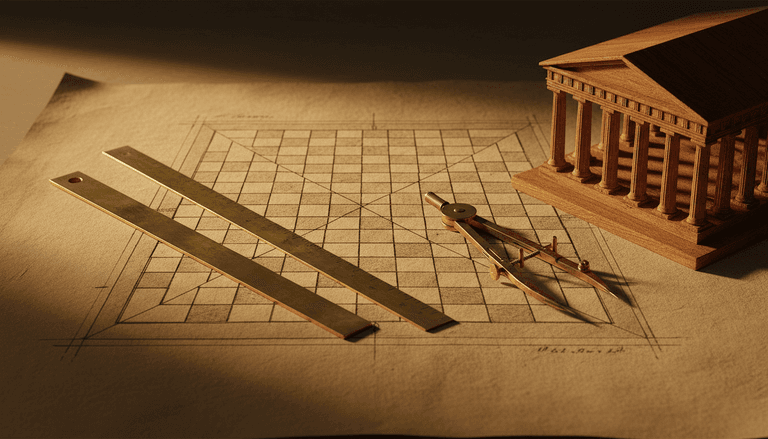
Perhaps the most revolutionary scientific advancement in Renaissance painting was the development of linear perspective. Credited largely to the architect Filippo Brunelleschi in the early 15th century, and later codified by Leon Battista Alberti in his treatise De Pictura (1435), linear perspective offered artists a mathematical method to create the illusion of three-dimensional space on a two-dimensional surface. This was not merely a stylistic choice; it was a profound application of geometry and optics.
Advertisement
The core principle of linear perspective involves the use of a vanishing point, a single point on the horizon line towards which all parallel lines in a scene appear to recede. These receding lines, known as orthogonals, provide a structured grid that systematically diminishes objects and spaces as they move further from the viewer. This scientific system allowed for a predictable and consistent depiction of depth, a stark contrast to the more intuitive, often inconsistent, spatial arrangements of earlier art. The accuracy of linear perspective allowed artists to construct architectural settings and landscapes that felt genuinely vast and receding, providing a coherent stage upon which their figures could interact with light. For a detailed explanation of linear perspective, refer to Wikipedia's entry on Perspective (graphical).
Brunelleschi's famous demonstration, where he painted the Baptistery in Florence and showed its perfect optical alignment with the actual building when viewed through a peephole and mirror, underscored the mathematical precision of his invention. Artists like Masaccio, in his Holy Trinity fresco (c. 1425), employed linear perspective with breathtaking skill, using the receding barrel vault to create an illusion of an altar niche extending deep into the wall of Santa Maria Novella. This systematic approach to space meant that light and shadow could also be rendered with greater consistency and realism, as their behavior within these geometrically defined environments could be logically extrapolated. The creation of such convincing illusionary spaces often required an understanding of spatial relationships that mirrored an architect's or engineer's perspective, emphasizing the interconnectedness of art and other scientific disciplines during this period. For more on how such historical advancements inform contemporary practice, see our article on Reading Art History as a Practicing Artist.
The elegance of linear perspective lies in its replication of how the human eye perceives distance. As objects move further away, they appear smaller, and parallel lines seem to converge. This phenomenon is a direct consequence of the laws of optical projection onto the retina. Renaissance artists, without scientific instruments like cameras, observed and then systematically recreated these visual effects, transforming painting from a craft into an intellectual endeavor heavily reliant on mathematical and optical understanding. The application of these geometric principles did not just create visual depth; it imposed a rational order on the pictorial world, mirroring the broader intellectual currents of the Renaissance that sought to understand and systematize the natural world.
Chiaroscuro and Sfumato: Sculpting with Light and Shadow
With the mastery of linear perspective establishing a foundational understanding of space, Renaissance artists turned their attention to populating these spaces with compelling forms. Here, the scientific study of light and shadow—chiaroscuro and sfumato—became paramount. These techniques were not just about rendering tonal differences; they were about using light and its absence to sculpt form, define volume, and infuse emotional gravity into a composition. Chiaroscuro, derived from the Italian words chiaro (light) and oscuro (dark), refers to the use of strong contrasts between light and dark, usually bold contrasts affecting a whole composition. It is a fundamental technique for modeling forms and creating dramatic impact, moving beyond simple outlines to give figures a tangible, three-dimensional presence.
The physics behind chiaroscuro is rooted in how light interacts with objects. When light strikes a three-dimensional form, different parts of that form will receive varying degrees of illumination. Surfaces directly facing the light source will be brightly lit, while those turned away will fall into shadow. The sharpness and extent of these shadows depend on the intensity and direction of the light source, as well as the texture and reflectivity of the object's surface. Renaissance artists observed these phenomena keenly. They understood that shadows were not merely absent light but were integral to defining the shape and volume of an object. The careful graduation from light to dark, from highlight to core shadow to cast shadow, creates the illusion of roundness and depth. For a deeper dive into the science of how light interacts with surfaces, exploring concepts like absorption, reflection, and diffusion, one might consult resources like The Physics Classroom's explanation of Light Absorption, Reflection, and Transmission, which outlines the foundational principles artists intuitively grasped.
Sfumato, a term closely associated with Leonardo da Vinci, takes the concept of chiaroscuro to a more subtle and atmospheric level. Derived from the Italian word fumo, meaning "smoke," sfumato involves the gradual blending of tones and colors without sharp outlines, creating a soft, hazy, and indeed "smoky" effect. This technique was Leonardo's genius solution to depicting the elusive nature of atmospheric light and the subtle transitions of the human form. Scientifically, sfumato acknowledges that in reality, hard edges are rare; light diffuses around objects, and the human eye struggles to perceive precise boundaries in variable illumination. By eliminating harsh lines and creating imperceptible transitions, Leonardo achieved an unparalleled sense of realism and enigmatic beauty, notably in works like the Mona Lisa. The subtle shifts in tone and color mimic how light is scattered and absorbed in the atmosphere, creating a vital sense of organic life and movement.
Advertisement
Both chiaroscuro and sfumato represent advanced applications of optical principles. Chiaroscuro relies on understanding the direct impact of a light source, while sfumato delves into the nuances of diffused light and the atmospheric conditions that soften visual information. Artists had to develop extraordinary control over their medium to achieve these effects. This often involved meticulous layering of transparent or semi-transparent paint (glazes) to build up complex tonal values gradually. The interaction of light with these layered materials, and how different pigments behave in varied binders, was a practical scientific challenge to be overcome in the studio. In fact, the very choice of painting medium, such as oil versus tempera, dramatically influenced an artist's ability to achieve such subtle transitions of light and shadow, a topic we explore further in Why Burnt Sienna Behaves Differently in Oil Than in Watercolor. The choice of medium directly impacted the optical properties of the paint film, such as its refractive index and light scattering capabilities, allowing for either crisp, defined contrasts or soft, atmospheric blends.
The psychological impact of chiaroscuro is profound. By manipulating the intensity and direction of light, artists could guide the viewer's eye, emphasize key figures or narrative points, and evoke powerful emotions. The dramatic contrasts often created a sense of tension, mystery, or spiritual awe, characteristic of works by Caravaggio, though he largely worked later than the high Renaissance. Sfumato, on the other hand, invited a more contemplative engagement. Its soft transitions and subtle ambiguities mimicked the gentle uncertainties of human perception, allowing for a more nuanced psychological portrayal and a deeper connection to the depicted subject's inner life. Leonardo’s use of sfumato, particularly around the eyes and mouth of his portraits, creates an elusive quality that seems to shift with every glance, harnessing the complexities of human vision. This mastery of light and shadow was not just about making things look real; it was about making them feel real and emotionally accessible.
The Role of Reflected Light and Atmospheric Perspective
Beyond the direct play of light and shadow, Renaissance artists demonstrated a profound, albeit empirical, understanding of more subtle optical phenomena, notably reflected light and atmospheric perspective. These elements are crucial for lending paintings an even greater sense of realism, depth, and three-dimensionality, transforming mere painted forms into believable objects existing within an immersive environment.
Reflected light describes the phenomenon where light bounces off surrounding surfaces and illuminates areas that would otherwise be in complete shadow. Without reflected light, shadows would appear as flat, impenetrable black shapes, detaching objects from their surroundings. Renaissance masters meticulously observed how light not only directly illuminated a subject but also indirectly influenced its shadowed areas. For instance, a figure standing near a red wall will have a subtle reddish hue reflected into their corresponding shadows. This indirect illumination prevents shadows from appearing dead or "muddy," instead imbuing them with luminosity and color. Scientifically, this involves principles of diffuse reflection, where light strikes a non-smooth surface and scatters in multiple directions, as opposed to specular reflection, where light bounces off a smooth surface at a predictable angle like a mirror. Artists intuited that the quality and color of reflected light were dependent on the properties of the reflecting surface and the intensity of the ambient light. This sophisticated understanding allowed them to create shadows that were rich, varied, and integral to the form, rather than being mere absences. For a broader understanding of how such subtle environmental cues influence our interpretation of color, consider exploring Color Constancy and Context: Why the Same Pigment Looks Different.
The accurate depiction of reflected light adds significantly to the sense of an object's integration into its environment, showing how objects are not isolated entities but constantly interacting with the ambient light and colors around them. This level of observational detail pushed art closer to the scientific depiction of nature, highlighting the interconnectedness of all visual elements within a scene. It also meant that shadows were never painted as pure black but were carefully modulated with touches of color, often cooler or reflecting the hues of nearby objects, making them vibrant and full of subtle information rather than mere voids.
Atmospheric perspective, also known as aerial perspective, is another cornerstone of Renaissance realism, offering a visual cue for depth that complements linear perspective. This phenomenon arises from the scattering of light particles in the atmosphere. The air is not perfectly transparent; it contains dust, water vapor, and other particles that scatter light, particularly shorter blue wavelengths (a principle known as Rayleigh scattering, which also explains why the sky is blue). As objects recede into the distance, the amount of atmosphere between the viewer and the object increases. This increased atmospheric interference results in several visual changes, which artists masterfully exploited:
- Colors become cooler and bluer: The scattering of blue light makes distant objects appear tinged with blue or purple due to the preferential scattering of shorter wavelengths.
- Values become lighter: The atmospheric haze diminishes the contrast between light and shadow and lightens darker tones, making distant objects appear less distinct.
- Details diminish: Sharp edges and fine textures become softer and less distinct. The visual information is literally "blurred" by the intervening atmosphere.
Advertisement
Artists like Leonardo da Vinci were masters of atmospheric perspective, using these subtle shifts in color, value, and detail to create vast, believable landscapes that receded convincingly into the background. His landscapes often feature distant mountains that appear a hazy blue, gradually losing their sharpness and warm tones. This was not a technique learned through a textbook on physics, but through diligent observation and experimentation. The visual effects observed in nature were systematically translated onto the canvas, imbuing artworks with an unprecedented sense of depth and three-dimensionality. The scientific basis for atmospheric perspective is well-documented in meteorological and optical sciences, offering insights into how aerosols and gases interact with light. Detailed scientific explanations can be found on reputable science education platforms, such as Britannica Kids on Aerial Perspective and UCAR's Center for Science Education on Rayleigh Scattering. Artists, through keen observation, tapped into these principles long before their formal scientific articulation, demonstrating a sophisticated empirical understanding of vision.
The combination of linear and atmospheric perspective allowed for a complete representation of three-dimensional space, both geometrically and optically. While linear perspective provided the skeleton of depth, atmospheric perspective added the flesh and nuance, creating a sense of palpable air and infinite distance. This understanding of atmospheric effects also played into artists' choices regarding color temperature, as discussed in our article, Why Warm and Cool Colors Change Everything in Your Art, where cool tones are often used to suggest distance, reflecting the impact of atmospheric scattering. The meticulous attention to these details transformed painted landscapes into immersive worlds, inviting the viewer's gaze to wander deep into the pictorial space.
The Material Science of Light and Shadow
While the theoretical understanding of optics and geometry provided the framework, the practical realization of light and shadow in Renaissance painting relied heavily on a deep, experiential understanding of art materials. The pigments, binders, and application techniques used by Renaissance masters were not secondary to their concepts; they were integral to achieving the desired optical effects. The very nature of powdered pigments, derived from minerals and organic sources, and their interaction with various binders (such as egg yolk for tempera, or linseed oil for oil paint) dictated how light would be absorbed, reflected, and transmitted. Transparency, opacity, and chromatic intensity were not just artistic choices but outcomes of material science.
For instance, the development and widespread adoption of oil paint during the Renaissance was a game-changer for depicting light and shadow. Unlike faster-drying tempera, oil paint's extended drying time allowed for smooth, gradual transitions between light and dark—perfect for sfumato. Furthermore, oil's relatively high refractive index meant that thin layers of pigment suspended in oil could be remarkably transparent, allowing artists to build up glazes. These glazes, essentially thin, translucent layers of paint applied over dried underpainting, permitted light to penetrate deeply into the paint layers, reflect off the bright ground or underlying colors, and then emerge, creating a luminous, inner glow that was impossible with opaque techniques. This optical depth made shadows appear rich and vibrant, not merely flat areas of darkness. Leonardo and other artists expertly harnessed the light-transmitting properties of oil glazes to render delicate skin tones and the subtle atmospheric veils over distant landscapes.
The selection of pigments also played a scientific role in depicting light. Some pigments, by their inherent chemical structure, were more transparent or opaque than others. Lapis lazuli, for example, when ground into ultramarine pigment, tends to be more transparent, lending itself to luminous glazes, though its cost often limited its use to specific, symbolic areas. Lead white, on the other hand, was highly opaque and reflective, making it ideal for brilliant highlights. Artists developed a sophisticated intuition for how different pigments would behave under different lighting conditions and when mixed or layered. The slight optical shifts created when different pigments with varying refractive indices interact within a paint film contribute to the overall visual vibrancy and depth of a painting. The subtle chromatic shifts and mixing properties of pigments, often influenced by their chemical composition, allowed artists to create nuanced light effects. This is further explored when examining how pigment biases affect the outcome of color mixtures in our article Color Bias and Mixing: Why Your Combinations Don't Match Your Expectations.
Even the preparation of the support – the wooden panel or canvas – was a material science endeavor. The composition and absorbency of the gesso (primer) directly influenced how subsequent paint layers would interact with light. A smoother, less absorbent gesso would allow for finer detail and greater luminosity from glazes, while a more textured, absorbent surface might be preferred for certain fresco techniques or for achieving specific tactile qualities. These foundational layers were carefully chosen and prepared to optimize the paint's optical performance, underscoring that every aspect of the painting process, from conception to final brushstroke, was informed by an empirical and often intuitive understanding of physical properties. The secrets of preparing these surfaces for optimal light interaction are often overlooked, as discussed in Surface Preparation Secrets: What They Don't Teach in Art School.
Advertisement
Vision and Perception: The Human Element of Illumination
Beyond the objective physics of light, Renaissance artists were keenly aware of the subjective nature of human vision and perception, often unconsciously harnessing psychological and physiological principles to enhance their illusions. Their understanding of how the eye and brain process visual information was empirical, derived from careful observation rather than formal neuroscience, but it was remarkably effective. Phenomena such as simultaneous contrast, adaptation, and the perception of form were intuitively manipulated to create compelling visual experiences.
Consider the phenomenon of a bright light source depicted in a painting. Rather than simply using white paint, artists might surround the light source with progressively darker tones, making the central light appear even brighter by contrast. This leverages the principle of simultaneous contrast, where the appearance of a color or value is influenced by its surrounding colors or values. Our visual system constantly makes comparisons, and placing a light against a dark makes the light seem more intense than it is in isolation. This psychological amplification of light adds to the dramatic power of chiaroscuro, making artificial light sources within a painting seem to glow with an almost supernatural intensity, as seen in many works depicting nocturnal scenes or divine presence.
The ability of the human eye to adapt to different lighting conditions was also implicitly understood. When moving from a brightly lit area to a dimly lit one, our eyes gradually adjust, allowing us to perceive details in the shadows that were initially invisible. Renaissance artists, particularly those employing sfumato, created compositions that reward prolonged viewing. The subtle gradients and ambiguous forms in sfumato-laden shadows encourage the viewer's eye to adjust and explore, revealing hidden details and creating a dynamic, immersive experience. This deliberate ambiguity engages the viewer's perceptual processes, making them an active participant in constructing the image's sense of realism and emotional depth. The mysteries inherent in some of the most famous Renaissance smiles, like the Mona Lisa's, are partly a result of this sophisticated manipulation of visual perception.
Furthermore, the way the brain interprets incomplete information was vital. Sfumato, with its softened edges, often relies on the brain's tendency to "fill in" missing details or resolve ambiguities. This means that parts of a sfumato painting might feel alive and moving, appearing slightly different each time one looks, as the brain actively constructs and re-constructs the image. This cognitive engagement creates a more profound and lasting impression than a painting with rigid, clearly delineated forms. It's an artistic trick that harnesses the brain's intrinsic functions to create a dynamic and personal viewing experience. The interplay of light, shadow, and perception leads to the idea that "you're not seeing color the same way as everyone else," a concept explored in our article You're Not Seeing Color the Same Way as Everyone Else.
In essence, Renaissance painters were not just mimicking reality; they were simulating the experience of seeing reality. Their intuitive understanding of optics, physics, and even aspects of psychology allowed them to craft illusions that were not only visually convincing but also emotionally resonant. They built their images from the ground up, using mathematical precision for space, scientific observation for light and shadow behavior, and a deep appreciation for the material properties of their craft. This multi-faceted approach cemented the Renaissance's place as a pivotal era in the history of art, where scientific inquiry and artistic expression became inextricably linked, forever altering the course of visual culture.
Understanding these profound connections between artistic endeavor and scientific principles can enrich your appreciation of masterpieces and inform your own creative practice. Consider subscribing to Beyondeveryart for regular insights into the science and history behind the art you love. We delve into everything from the geology of pigments to the physics of light, bridging the gap between artistic creation and scientific discovery.
Legacy and Continued Exploration
The legacy of Renaissance artists' scientific approach to light and shadow extends far beyond their own era. Their foundational discoveries in perspective, chiaroscuro, sfumato, and atmospheric effects became the bedrock of academic art training for centuries. Every art student since has grappled with these concepts, recognizing their power to transform a flat surface into a vibrant, three-dimensional world. Even modern and contemporary artists, who often intentionally break from traditional realism, do so with an implicit understanding of the rules established by the Renaissance masters. Their deliberate distortions or rejections of perspective and consistent lighting are often impactful precisely because they subvert deeply ingrained visual expectations rooted in the Renaissance's optical innovations.
Moreover, the scientific spirit that drove Renaissance artists to observe, experiment, and systematize their knowledge is a continuous thread throughout art history. From the meticulous optical studies of Vermeer in the Dutch Golden Age to the Impressionists' fascination with capturing fleeting light effects, and even to contemporary artists experimenting with digital light and projection, the interplay between art and the science of perception remains a fertile ground for creation. The tools have changed – from ground pigments to digital pixels, from simple lenses to complex algorithms – but the fundamental quest to understand and manipulate light for expressive purposes endures. The Renaissance did not just produce beautiful paintings; it established a paradigm of artistic inquiry that continues to inspire and challenge artists today, proving that the most profound artistic achievements often emerge from a deep engagement with the scientific realities of our world.