The Truth About Pigment Prices: What Artists Actually Paid Throughout History
Renaissance contracts reveal ultramarine cost more than gold per weight. Historical account books, guild records, and artist negotiations show how material economics shaped what got painted and where expensive colors could appear.
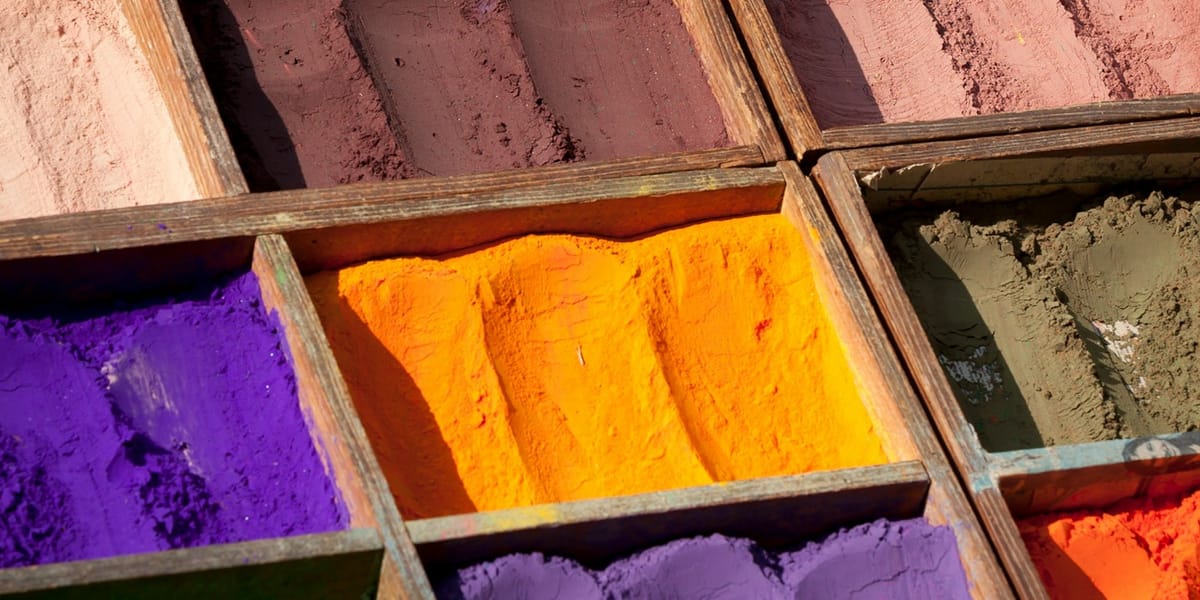
If you've ever wondered why Renaissance paintings look the way they do, the answer is partly aesthetic vision and partly brutal economics. The colors artists used weren't just creative choices. They were financial decisions, sometimes negotiated line by line in contracts that specified exactly how much of which pigment could appear where.
Understanding what artists actually paid for their materials throughout history changes how you look at paintings. That brilliant blue in a Virgin Mary's robe? That represented a significant chunk of the commission budget. The muted earth tones in a lesser saint's clothing? That's what the artist could afford after buying the expensive stuff for the important figures.
This isn't abstract art history. It's the economic reality that shaped what got painted and how. The numbers matter because they explain choices that seem purely artistic but were actually compromises between vision and budget.
Following the Money Through the Archives
We know what artists paid because some of them kept detailed account books. We also have contracts between artists and patrons that itemized material costs separately from labor. Tax records, guild regulations, and merchant inventories fill in more gaps. The picture that emerges is surprisingly detailed.
In 1408, the painter Gherardo Starnina bought ultramarine blue in Florence for 3 florins per ounce. For context, a skilled craftsman at the time earned about 40-50 florins per year. One ounce of ultramarine cost nearly three weeks of a master artisan's wages. That's roughly equivalent to spending $3,000-4,000 in today's terms for less than 30 grams of pigment.
Cennino Cennini, writing around 1400, describes ultramarine as costing "8 ducats an ounce" in Venice. The ducat and florin were roughly equivalent, so this tracks with Florentine prices. He also notes that the price varied significantly based on quality. The deepest, most vivid ultramarine commanded premium prices. Lower quality material with more impurities cost less but didn't produce the desired effects.
These weren't anomalies. They represent the normal market price for a pigment that was essential for high-status religious commissions but available only through long-distance trade from a single source in Afghanistan.
The Contract That Spelled Everything Out
One of the most illuminating documents in art history is the 1485 contract between Domenico Ghirlandaio and the prior of the Spedale degli Innocenti in Florence for an altarpiece of the Adoration of the Magi. The contract doesn't just specify the subject matter and dimensions. It itemizes the materials in extraordinary detail.
The contract requires that Ghirlandaio use "good colors, and especially ultramarine blue of the value of four florins an ounce." This isn't suggesting a budget. It's specifying a minimum quality level by price point. The patron knew that cheaper ultramarine existed and wanted to ensure he got the good stuff.
The contract also specifies gold leaf "at a cost of three and a half florins a hundred." For comparison, the entire commission paid 115 florins. The materials alone, just the ultramarine and gold, represented a substantial portion of the total budget.
This was standard practice for major commissions. Patrons provided expensive materials or reimbursed artists for them separately because trust was in short supply. An artist could substitute cheaper pigments and pocket the difference if the contract wasn't specific. The detailed specifications protected both parties.
The Ghirlandaio contract also reveals something about labor versus materials economics. The total commission was 115 florins for a major altarpiece that would take months to complete. If Ghirlandaio used even a few ounces of top-quality ultramarine at 4 florins each, plus gold leaf, the materials could easily represent 20-30% of the total budget. The artist's profit margin depended significantly on managing material costs.
What Earth Colors Cost (Almost Nothing)
The flip side of expensive blues and purples were the earth pigments that cost almost nothing. Ochres, umbers, and siennas came from dirt, literally. Artists or their apprentices could dig them from specific clay deposits, wash and grind them, and have usable pigment for essentially the cost of labor.
A 15th-century Florentine account book lists yellow ochre at approximately 2 soldi per pound. There were 20 soldi to a florin, so this means you could buy 10 pounds of yellow ochre for the price of one-tenth of an ounce of ultramarine. The price difference wasn't marginal. It was orders of magnitude.
This created a clear visual hierarchy in paintings based purely on economics. Important figures got expensive colors. Background elements, minor characters, and less significant areas got earth tones. This wasn't always an aesthetic choice. It was budget allocation.
Look at almost any Renaissance religious painting and you'll see this pattern. The Virgin Mary wears ultramarine blue. Lesser saints wear earth reds and browns. Donors or patrons who paid for the painting might get some expensive pigment in their clothing, but servants and background figures wear the cheap stuff.
The economic constraints created a visual language that we now read as symbolic. Blue meant importance partly because Christianity associated it with heaven and the Virgin Mary, but also because only important subjects justified the expense.
The Sliding Scale of Reds
Red pigments had the most complex pricing structure of any color family because the range of available materials was wider. At the bottom end, red ochres cost similar to yellow ochres, almost nothing. At the top end, fine vermilion approached ultramarine prices.
A Venetian price list from 1534 gives specific numbers:
- Red ochre: 2 soldi per pound
- Vermilion (good quality): 2 ducats per pound
- Vermilion (finest quality): 4 ducats per pound
- Lac (lake pigment from insect dye): 3 ducats per pound
For reference, this puts top-quality vermilion at nearly the same price as ultramarine per weight. The price reflected both the material costs (mercury and sulfur) and the dangerous, labor-intensive synthesis process.
The availability of different red pigments at different price points gave artists flexibility in managing costs. You could use vermilion for the most important red areas, lac for mid-tier applications, and red ochre for less critical passages. The finished painting might read as "red" throughout, but the economics were carefully calibrated.
This is why technical analysis of paintings using X-ray fluorescence and other methods reveals so much about artists' working practices. The pigment choices weren't random. They were strategic decisions based on what the budget allowed and what effects were essential versus negotiable.
Greens: The Affordable Middle Ground
Green pigments occupied an interesting economic position. They were neither dirt-cheap earth colors nor astronomically expensive rarities. Most greens were moderately priced, accessible to working artists without breaking the budget.
Verdigris, made from copper acetate, cost approximately 8-12 soldi per pound in 15th-century Florence. This put it well above earth colors but far below ultramarine or fine vermilion. The production process involved exposing copper to acetic acid (usually wine or vinegar), which any workshop could manage without specialized equipment or rare materials.
Green earth (terre verte) was cheaper, essentially an earth color, but it had limited applications due to its muted, grayish tone. For more vibrant greens, artists often mixed blue and yellow pigments rather than buying dedicated green pigments. This could be economical or expensive depending on which blue they used.
Mixing ultramarine with yellow would create a green that cost as much as pure ultramarine per unit area. Mixing cheaper azurite blue with lead-tin yellow created affordable bright greens. The mixed approach also gave more control over hue and saturation.
The moderate pricing of most greens meant they appeared more freely in paintings than expensive blues or purples. Landscape elements, clothing, and decorative details could use green without the budget concerns that came with ultramarine.
The White That Killed You Slowly
Lead white was never the most expensive pigment, but it was used in enormous quantities, making it a significant expense for any artist working in oils. The pigment served as the primary white and also mixed into virtually every other color to create tints and adjust values.
Pricing for lead white varied considerably based on quality and production method. Venetian sources from the early 16th century list lead white at 10-16 soldi per pound for standard quality. Fine-ground white for miniature painting or special applications cost more, up to 30 soldi per pound.
These prices seem modest compared to ultramarine, but consider the quantities used. A large painting might require several pounds of lead white but only an ounce or two of ultramarine. The total cost for lead white could exceed the cost for expensive blues simply due to volume.
Account books from Titian's workshop show regular purchases of lead white in multi-pound quantities. In one entry from 1548, he bought 12 pounds of lead white for 1 ducat, 10 soldi. This was a routine expense, not a special purchase. Large-scale painters went through lead white the way contemporary artists go through titanium white, constantly and in quantity.
The health costs didn't factor into the accounting, but they should have. Lead poisoning was common among painters, their apprentices, and the workers who produced the pigment. The economic expense was low, but the human expense was substantial.
When the Patron Provided the Paint
Many contracts specified that patrons would provide expensive pigments directly rather than reimbursing the artist. This arrangement protected both parties. The patron ensured that expensive materials were actually used as specified. The artist avoided carrying the cost of expensive materials during the lengthy production period.
A 1490 contract for an altarpiece in Pistoia specifies that "the said master Giovanni shall have from the said men of the company ultramarine blue worth four florins an ounce, and shall have gold and silver of the finest, and all other colors shall be the best." The patron provided the ultramarine and precious metals, while the artist covered "all other colors" from his fee.
This split arrangement was common practice. It meant that the majority of pigments, the everyday earth colors, lake pigments, and moderate-cost materials came from the artist's budget. Only the most expensive items received special provision.
The arrangement also created interesting incentives. Artists had reason to specify expensive materials in contracts because it shifted costs to patrons while elevating the perceived value of the work. Patrons pushed back, negotiating over exactly which areas would receive costly pigments and which could make do with cheaper alternatives.
Some contracts got extremely specific. A 1472 agreement for frescoes in San Gimignano specifies ultramarine "for the mantle of Our Lady and for the robe of the said Jesus Christ and for the mantle of the angel Gabriel and nowhere else." Every other blue in the composition would use cheaper azurite or smalt. The contract literally dictates color choices based on budget allocation.
The Regional Price Variations Nobody Talks About
Pigment prices varied significantly by location, driven by proximity to trade routes, local production capacity, and regional demand. Understanding these variations explains why certain artistic centers developed where they did.
Venice enjoyed significantly lower prices for materials arriving by sea. The city's position as a Mediterranean trading hub meant ultramarine from Afghanistan, cochineal from the Americas, and other imported materials arrived with fewer intermediaries and lower shipping costs.
A comparison of documented prices from 1550 shows ultramarine costing approximately 3 ducats per ounce in Venice while the same quality pigment cost 4-5 ducats in landlocked cities like Florence or Bologna. The difference represented transportation costs and additional merchant markups.
This 25-40% price difference wasn't trivial. For an artist working on multiple commissions annually, being based in Venice rather than Florence could mean significant savings on materials, allowing either higher profit margins or more liberal use of expensive colors.
The regional variations also affected color choices in ways art historians sometimes attribute to aesthetic traditions. Venetian painting's famous color richness partly reflects economic access to materials. The Venetian tendency toward warm, glowing reds and blues wasn't purely stylistic. It was enabled by better material access at lower costs.
Northern Europe faced different economics entirely. Cities like Bruges and Antwerp had sea access but longer supply chains for Mediterranean materials. Local alternatives like azurite blue from German mines or bise blue from smalt production in Saxony filled some gaps, but at different price points that shaped different aesthetic approaches.
What Synthetic Pigments Did to the Market
The development of synthetic pigments from the early 18th century onward progressively transformed the economics of color. Prussian blue, first synthesized around 1706, was the opening shot in a revolution that would eventually make all colors affordable.
Early Prussian blue cost significantly less than ultramarine but more than earth colors. An English price list from 1750 shows Prussian blue at 5 shillings per pound, while ultramarine cost 20-30 shillings per ounce. Per weight, ultramarine was roughly 100 times more expensive. Prussian blue offered a deep, stable blue for about 1% of ultramarine's cost.
This created an interesting two-tier market. Wealthy patrons still specified natural ultramarine for prestige commissions. Price-conscious artists or those working on less prestigious projects switched to Prussian blue. The color wasn't identical, Prussian blue has a slightly greenish cast compared to ultramarine's pure blue, but it was close enough for many applications.
The really dramatic shift came in the 19th century with coal tar dyes and then fully synthetic pigments. When synthetic ultramarine became available in the 1820s-30s, the price collapsed. By 1870, synthetic ultramarine cost perhaps 5-10% of natural ultramarine's price. The economic constraint that had shaped painting for centuries simply disappeared.
J.M.W. Turner's account books from the 1830s-40s show this transition in real time. Early entries list expensive natural ultramarine purchases. Later entries show synthetic ultramarine at a fraction of the cost, purchased in much larger quantities. The change in available quantity affected how Turner used blue, applying it more liberally in later works.
The Impressionists benefited enormously from cheap synthetic pigments. The movement's characteristic vivid color and experimental approach was enabled by affordable materials. When every color costs roughly the same, you can experiment freely. When some colors cost 100 times more than others, experimentation is expensive.
The Artist Who Itemized Everything
We have extraordinary insight into one artist's material expenses because he kept detailed records: the German painter Matthias Grünewald, working in the early 16th century. His account book for the Isenheim Altarpiece breaks down costs with unusual precision.
Grünewald paid 2 gulden for ultramarine, a significant expense but not the largest material cost. He spent more, 3 gulden, on gold leaf. The vermilion cost 1 gulden. Lead white, purchased in bulk, cost only 8 pfennig (there were 240 pfennig to a gulden, so this was a tiny fraction of the ultramarine cost).
The accounts also show purchases of lake pigments, verdigris, ochres, and various media (oils, resins, varnishes). The total material cost was approximately 12 gulden. The commission paid 30 gulden plus room and board during the work period. Materials represented 40% of the total compensation, a proportion that seems to have been fairly standard for major altarpieces.
What's striking is how much of that material cost went to just three items: gold, ultramarine, and vermilion. These represented maybe 50% of the total material expense despite being used sparingly compared to the earth colors and lead white that covered most of the painting's surface.
The economics explains the visual hierarchy. The brilliant golds and blues that make the Isenheim Altarpiece so striking weren't just aesthetically important. They represented half the material budget and had to be deployed strategically for maximum impact.
How Oil Changed the Economics
The adoption of oil painting in Northern Europe during the 15th century altered material economics in subtle but important ways. Oil paint required different quantities of pigment than fresco or tempera, affecting the cost calculus.
Oil paint needs less pigment per unit volume than tempera because oil binders have better optical properties. The same amount of pigment in linseed oil appears more saturated than in egg tempera. This meant artists could stretch expensive pigments further when working in oils.
The slow drying time of oils also allowed more complex working methods that made expensive pigments go further. Artists could apply thin glazes of expensive colors over cheaper underlayers, achieving rich effects with minimal expensive pigment. This wasn't possible with faster-drying tempera.
Conversely, oil painting encouraged richer color application. The medium's malleability and blending properties invited more painterly, less linear approaches. Artists used more paint overall, which increased costs for frequently used colors like lead white and earth tones while potentially saving on expensive accent colors through glazing techniques.
The net effect on pigment expenses is difficult to quantify, but oil painting clearly changed how artists thought about material use. The medium enabled different aesthetic approaches partly because it offered different economic possibilities for deploying expensive colors.
What We Pay Now (And What It Means)
Modern artists face a completely different economic landscape. The most expensive artist-grade paint available today costs perhaps $100-150 per 40ml tube. That's about $100 per ounce, roughly equivalent. But that ounce of modern cadmium red or cobalt blue is ready to use, requiring no preparation beyond opening the tube.
Compare this to historical ultramarine at $3,000-4,000 per ounce in modern equivalent, which then required grinding, mixing with medium, and careful preparation before use. The real cost reduction is even more dramatic than the direct price comparison suggests.
More significantly, the price range compression means material costs rarely constrain contemporary artistic choices. A tube of cadmium red might cost ten times more than a tube of yellow ochre, but neither represents a significant budget item for most professional artists. Historical artists faced price differences of 100 to 1 or more.
This economic freedom has aesthetic consequences. Contemporary artists can use any color anywhere without budgetary constraint. The visual hierarchies that structured historical painting, important subjects in expensive colors, minor elements in cheap earth tones, no longer make economic sense.
We've lost something in the translation, though. The scarcity of certain colors created a visual language where pigment choice carried meaning beyond aesthetics. When blue was expensive, using it signaled importance. When any color costs roughly the same, that economic semiotics disappears.
Understanding historical pigment economics doesn't just explain old paintings. It clarifies how material constraints shape visual culture. The democratization of color is one of the most significant but under-discussed shifts in art history, and it happened primarily through chemistry and industrial production rather than aesthetic revolution.
The Contracts That Got Weird
Some patron-artist negotiations over materials went beyond simple cost specifications into genuinely strange territory. A 1470 contract for a painting in Perugia specifies not just ultramarine but demands that the artist demonstrate the pigment's authenticity by burning a sample in the patron's presence. Genuine ultramarine behaves distinctively when heated, this was quality control through chemistry.
Another contract from 1489 requires the artist to allow the patron's representative into the workshop periodically to verify that specified expensive pigments were actually being used as promised. The mutual distrust was explicit and formalized.
These extreme measures reflect how much money was at stake. A major altarpiece commission might represent several years of income for a patron. The expensive pigments could represent weeks or months of wages. Neither party wanted to be cheated.
The contracts also reveal attempts to game the system. Some specify pigments by quality level and price point to prevent substitution. Others require artists to return unused expensive pigments to patrons after completion. The detailed specifications suggest that substitution and padding of material costs were common enough problems to require contractual protection.
One fascinating case from 1491 shows an artist and patron in dispute over whether the blues in a completed painting were "true ultramarine" or cheaper azurite. The matter went to arbitration, with expert painters examining the work and rendering judgment. The artist was found to have substituted azurite in areas where the contract specified ultramarine and was required to repaint those sections or forfeit part of his payment.
These weren't edge cases. The surviving documentation suggests that disputes over materials were routine, common enough that contracts evolved standardized language to prevent them.
What the Apprentices Paid For
Art historical focus on master painters sometimes obscures the economics of workshop operation. Apprentices and journeymen grinding pigments, preparing panels, and executing background passages weren't just learning their trade. They were providing labor that kept material costs manageable.
An apprentice grinding lead white for hours represented zero labor cost to the master beyond room and board. The same task performed by hired labor would have added substantially to expenses. The apprenticeship system was partly pedagogical and partly an economic arrangement that kept workshop costs down.
Pigment preparation was time-consuming and tedious. Grinding pigments to the necessary fineness could take hours. Washing earth colors to remove impurities, extracting lake pigments from dyed textiles, preparing complex pigments like ultramarine from lapis lazuli, all of this required skilled but repetitive labor.
The value of apprentice labor varied by task. An apprentice preparing lead white or ochre added relatively little value, the raw materials were cheap regardless. An apprentice processing expensive ultramarine from raw lapis lazuli added enormous value, the difference between unusable rock and precious pigment.
This is why apprenticeship contracts sometimes specified what tasks apprentices would and wouldn't perform. Working with expensive materials was both a privilege and a responsibility that came with advancement in the workshop hierarchy. First-year apprentices ground lead white and ochre. Senior apprentices might be trusted with ultramarine preparation.
The economic structure meant that material costs in successful workshops were often lower than they appeared. The labor to prepare pigments was largely absorbed into the apprenticeship system rather than paid as direct expense. This gave established masters with multiple apprentices a significant competitive advantage over independent artists working alone.
Why the Numbers Still Matter
You don't need to memorize 15th-century Florentine prices to appreciate Renaissance painting. But understanding the economic constraints that shaped what artists created changes how you see the work. Those color choices weren't just aesthetic. They were negotiations between vision and budget, between what the artist wanted and what the patron would pay for.
The history of pigment prices is ultimately about how resources shape culture. When certain colors are scarce and expensive, they acquire meanings beyond their visual properties. When technological change makes all colors affordable, those meanings shift or disappear.
Contemporary artists working with unlimited color options face a different challenge than artists working under material constraints. Neither situation is inherently better. But understanding how scarcity once functioned clarifies what freedom from scarcity makes possible and what it costs in terms of symbolic richness and formal constraint.
The prices mattered then because they determined what could be painted. They matter now because they explain why historical art looks the way it does and why contemporary art looks so different. The economics of color are part of the aesthetics of color, whether we acknowledge it or not.