Why Ceramics Struggles for Respect in Contemporary Art (And Why That's Changing)
Ceramics fights for contemporary art recognition despite persistent craft stigma. Learn why clay struggles institutionally, which artists are changing that, and how to navigate the ceramic artist's complicated professional path.
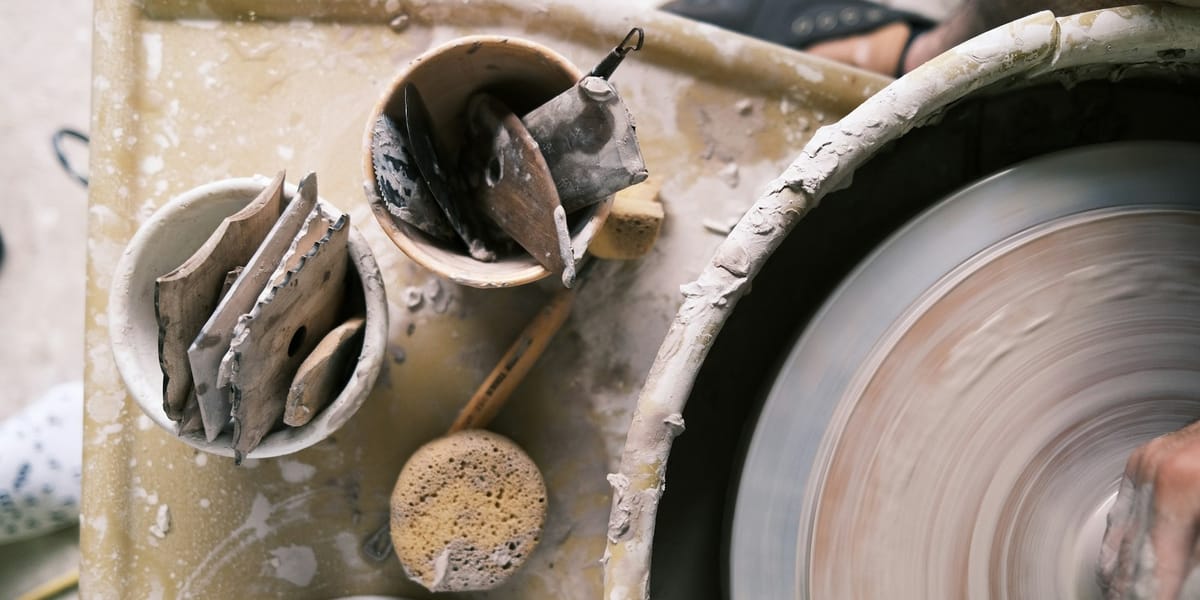
You've spent years mastering ceramics. You understand glaze chemistry, you can throw forms most potters dream of achieving, you've developed a body of conceptually rigorous work. Then you apply to a contemporary art gallery and get the polite rejection that essentially translates to "we don't show craft." The dealer didn't even look at your work seriously because clay carries baggage that painting and sculpture somehow avoid.
This isn't paranoia. Ceramics genuinely occupies an uncomfortable position in the contemporary art hierarchy, perpetually fighting for institutional recognition that other media receive automatically. The reasons are historical, economic, and ideological, and understanding them helps you navigate the ceramic artist's peculiar professional landscape.
But something's shifting. Major museums are mounting significant ceramic exhibitions, blue-chip galleries are taking on ceramic artists, and auction prices for contemporary ceramics are climbing. The change is real, though incomplete and unevenly distributed. Knowing what's changing, what isn't, and why helps you position your practice strategically rather than just hoping the art world comes around.
The Historical Craft Stigma
The division between craft and art didn't always exist, and where it does exist, it exists for specific reasons worth examining.
The fine art versus applied art split crystallized during the Renaissance when artists fought to distinguish their work from artisanal production. Painting and sculpture were liberal arts, intellectual endeavors requiring genius and education. Pottery was manual labor, a trade learned through apprenticeship. This hierarchy wasn't about the objects themselves but about the social status of their makers.
That status anxiety persisted. Academic art education from the Renaissance through the nineteenth century trained painters and sculptors in drawing, anatomy, composition, art history. Potters learned in workshops, trade schools, guilds. Different educational paths reinforced different social positions. Fine artists were gentlemen scholars. Craftspeople were workers.
The Arts and Crafts movement in the late nineteenth century tried to collapse this division, elevating craft to art status by emphasizing handwork, design quality, and the unity of beauty and function. William Morris and the movement's other leaders wanted to destroy the fine art/craft hierarchy. They failed, or rather, they created a parallel system that never fully integrated with fine art institutions.
Instead, craft developed its own infrastructure: craft schools, craft museums, craft galleries, craft publications, craft collectors. This separation protected craft from fine art's dismissiveness but also ghettoized it. Having your own institutions means not needing access to theirs, which means they don't grant you access, which reinforces the separation. The parallel infrastructure that protected ceramics also isolated it.
Modernism made things worse. Greenberg's formalist criticism valued medium specificity, but only for painting and sculpture. Clay's medium specificity was functionality, which Greenberg and his followers dismissed as applied art. Pottery couldn't be serious art because it remained tied to use value. The fact that painting served decorative functions in homes didn't disqualify it, but a cup's utility apparently did.
The studio pottery movement in mid-twentieth-century America tried to create a space for non-functional ceramics that could be taken seriously as art. Bernard Leach, Peter Voulkos, and others pushed clay toward sculpture, away from function. Voulkos's aggressive, gestural forms deliberately violated pottery conventions, asserting ceramics as fine art medium. This was strategic provocation meant to force institutional recognition.
It partially worked. Some ceramic sculptors got gallery representation, museum shows, critical attention. But they succeeded partly by distancing themselves from pottery, from craft, from the very traditions that made ceramics meaningful. The price of admission to the fine art world was often disavowing the clay community that developed your skills.
The feminist critique of the craft/art hierarchy in the 1970s pointed out that media associated with women's work, textiles and ceramics particularly, were excluded from fine art status while media associated with male artists, painting and bronze sculpture, were elevated. This wasn't coincidence but ideology. Challenging the hierarchy meant challenging gender assumptions embedded in it.
Artists like Judy Chicago deliberately used ceramics in feminist installations precisely because clay's craft associations made it radical in fine art contexts. The Dinner Party's porcelain plates forced viewers to confront why craft media were devalued and who that devaluation served. Making ceramics central to major feminist artworks started shifting institutional attitudes, slowly.
But institutional inertia is real. Museums have curatorial departments divided by medium and period. Ceramics usually lives in decorative arts, not contemporary art. Getting a ceramic work into the contemporary galleries requires fighting departmental turf wars most artists never see. The institutional architecture itself maintains the hierarchy.
Gallery economics reinforce it. Contemporary galleries sell to collectors who've learned that painting and sculpture are blue-chip investments while ceramics are decorative purchases. Changing collector attitudes requires sustained effort across many galleries simultaneously. Individual galleries making that effort risk their bottom line betting on market shift that might not materialize.
Academic art programs often physically separate ceramics from sculpture and painting studios, literally building walls between fine art and craft even when curricula claim integration. Students learn the hierarchy through spatial organization before anyone explicitly teaches it.
The result is that ceramic artists start their careers already knowing they'll face skepticism, dismissal, or outright exclusion from institutions and markets that welcome painters and sculptors. That knowledge shapes practice, career decisions, and how ceramic artists position themselves professionally. You can make the most conceptually rigorous ceramic work imaginable and still face the assumption that you're a craftsperson, not an artist.
Material Properties That Complicate Art World Acceptance
Beyond historical bias, clay has actual characteristics that make it operate differently from materials the contemporary art world more easily accommodates.
Ceramics is inherently multiple. Production pottery makes editions naturally. Even sculptural ceramics often involve mold-making and multiples. The contemporary art market values uniqueness, single works, the aura of the original. Editions and multiples get categorized as prints or commercial objects, not precious art objects. Clay's tendency toward multiples works against market expectations even when individual pieces are as laborious as unique sculptures.
The unique/multiple question in ceramics is nuanced. Yes, you can make one-of-a-kind pieces. But the mold-making potential, the ability to create series, the way glaze testing produces variations on themes all push toward multiplicity. This is a strength conceptually but a market liability practically. Collectors want scarcity, and clay resists scarcity.
Functionality haunts ceramics even when pieces aren't functional. A vessel form reads as referencing use even when the piece can't hold water, won't be used, explicitly refuses function. That ghost of utility gives critics easy dismissal: it's still basically a pot. The association with domestic objects, with kitchens and dining, makes ceramics feel middle-class and decorative in ways sculpture avoids.
Abstract sculpture references nothing but itself, or so the formalist argument goes. But a ceramic form almost always references pottery history, vessel traditions, cultural practices around clay. That reference field is rich for artists but becomes baggage in art world contexts that value radical innovation over tradition engagement.
Ceramics requires collaboration with kiln technology and glaze chemistry in ways that complicate authorship. You don't fully control the fire. Glazes do unexpected things. Results involve controlled accident and material agency. This troubles the romantic idea of artistic genius and total authorial control. Painters mix their own colors and get predictable results. Ceramicists formulate glazes and see what the kiln gives them.
For some contemporary artists, that material agency is precisely what makes clay conceptually interesting. The fire as collaborator, the unpredictability as feature, the acceptance of partial control all align with post-modern critiques of authorship. But those same qualities make ceramics feel less serious to viewers expecting the artist to dominate materials completely.
Scale limitations matter economically. Most ceramics are relatively small because of kiln size constraints and structural limits of clay. Large ceramic sculptures exist but require specialized equipment and knowledge. The contemporary art market favors large, wall-dominating painting and substantial sculpture. Small ceramic work reads as precious object or craft fair merchandise rather than major artwork.
Breakability is a real problem. Ceramic work is fragile compared to bronze or steel sculpture. This affects shipping, installation, insurance, and long-term value. Collectors hesitate to invest seriously in work that might shatter if knocked over. The fragility that makes ceramics metaphorically interesting makes it literally risky for galleries and collectors.
The crack that develops in ceramic sculpture over time might be read as beautiful aging in some contexts but damage requiring conservation in others. Painting conservation is established, expected, budgeted. Ceramic conservation is less systematized, and collectors don't always know how to handle it. This uncertainty depresses market confidence.
Ceramics also carries cultural associations that painting and sculpture don't. Clay connects to specific cultures, indigenous practices, craft traditions, domestic life in ways that feel limiting to contemporary art's pretensions to universality. A ceramic piece is always in dialogue with pottery history from multiple cultures. That historical weight is richness for artists but another excuse for dismissal from gatekeepers wanting work that feels radically new.
Contemporary Artists Using Ceramics Conceptually
Despite institutional resistance, significant contemporary artists are making ceramics central to conceptually sophisticated practices that command serious attention.
Ai Weiwei's ceramic work directly addresses both craft tradition and political critique. His colored vases made from Neolithic pottery deliberately destroyed and reassembled challenge ideas about cultural preservation and value. Using ceramics allows him to reference Chinese pottery history while subverting it. The material choice is inseparable from the conceptual content.
His Sunflower Seeds installation, one hundred million hand-painted porcelain seeds that viewers could walk on, only works as concept because of ceramics. The labor intensity, the craft skill involved in each seed, the transformation of porcelain (precious material) into something treated as worthless (walked on, crushed) all depend on clay. Bronze seeds wouldn't carry the same meaning.
Grayson Perry uses ceramics specifically because of its craft associations and its connection to domestic decoration. His elaborate narrative vases address masculinity, class, violence, and identity precisely by putting that content on pottery, in museums and galleries that typically exclude such work. The transgression is inseparable from the medium. Perry's work succeeds partly because he refuses to apologize for ceramics, embracing its craft identity while demanding fine art recognition.
Perry received the Turner Prize, Britain's major contemporary art award, for ceramic work. This wasn't ceramics being accepted despite being ceramics but partly because the medium choice itself was conceptually charged. The pottery form wasn't incidental; it was central to meaning.
Edmund de Waal works with porcelain to address memory, loss, and displacement. His installations of small porcelain vessels in museum vitrines reference museum display practices, Asian ceramic traditions, and personal family history. The work is quiet, contemplative, operating through accumulation and subtle variation. It succeeds by being ceramics-specific rather than trying to mimic painting or sculpture.
De Waal's The Hare with Amber Eyes, his memoir about his family's collection of Japanese netsuke, became a bestseller and brought serious attention to ceramics and craft objects in fine art contexts. His writing helped audiences understand why small craft objects can carry profound meaning, preparing viewers to approach his own ceramic installations with appropriate attention.
Clare Twomey's large-scale ceramic installations push clay into architectural and environmental territory. Her work Trophy, which covered gallery floors with thousands of ceramic plates that visitors had to walk on, crushing them, turns ceramics' fragility into conceptual content. The inevitable destruction was the point, addressing consumption, waste, and human impact.
Twomey's scale ambitions require institutional support and fabrication help that most ceramic artists can't access, but her success demonstrates that ceramics can operate at contemporary art installation scale when properly supported and conceptually justified.
Woody De Othello works with Black clay traditions and contemporary identity politics. His figurative ceramic sculptures address race, history, and representation through a material with specific associations to African American pottery traditions. The clay choice grounds the work in specific cultural histories while making contemporary statements about identity and belonging.
Brie Ruais creates large-scale ceramic works by pressing her body into clay at precise weights matching her body weight. The pieces record physical effort, gender, and material resistance. Using clay allows direct indexical relationship between body and material that other media wouldn't provide. The work is about ceramics, about physicality, about the effort of making.
Sterling Ruby's ceramic work emerged from his broader practice across multiple media. His clay pieces, often crude and deliberately ugly by traditional pottery standards, refuse craft virtuosity while using clay's associations with earth, body, and primal making. The ceramics operate in dialogue with his painting and sculpture, not isolated as separate craft practice.
These artists share strategies: none of them treat ceramics as neutral medium. They use clay's specific associations, limitations, and histories as conceptual content. They make work where the ceramicness matters to meaning. And increasingly, museums and galleries recognize this approach as sophisticated contemporary practice rather than craft making art pretensions.
The Gallery and Museum Landscape Now
Institutional attitudes toward ceramics are changing, but unevenly and with significant gaps remaining.
Major museums mounting serious ceramic exhibitions signals legitimacy. The Metropolitan Museum of Art, the Los Angeles County Museum of Art, the Victoria and Albert Museum, and others have staged significant shows focusing on contemporary ceramics. These aren't decorative arts displays but installations in contemporary art galleries, reviewed in art publications, treated as important exhibitions.
When the Met places ceramic work in its contemporary wing rather than its decorative arts department, that matters. Physical location in the museum communicates hierarchy. Contemporary ceramics moving into contemporary galleries rather than staying in craft galleries represents real institutional shift.
Blue-chip contemporary galleries taking on ceramic artists is another marker. Gagosian showing Sterling Ruby's ceramics, David Zwirner representing Diane Simpson (who works with clay among other materials), galleries like Perrotin and Salon 94 incorporating ceramic artists into their rosters all indicate market acceptance at the highest commercial levels.
This doesn't mean every ceramic artist can get gallery representation. The artists succeeding tend to have established reputations from other work or make ceramics as part of broader practices. Pure ceramic artists still face skepticism. But the door is opening where it was previously closed.
Auction results for contemporary ceramics are climbing. When a Grayson Perry vase sells for six figures, that sets precedent. Market value drives institutional respect in contemporary art, for better or worse. Rising prices make dealers and curators pay attention to media they previously ignored.
The secondary market for mid-century ceramic sculpture, particularly Voulkos and his contemporaries, has strengthened significantly. This retroactive validation creates context for contemporary work. If historic ceramic sculpture is worth serious money, contemporary ceramic sculpture becomes more plausible investment.
Art fairs are incorporating ceramics more deliberately. Sections dedicated to ceramics, galleries showing clay work in their booths, collector interest during fairs all demonstrate market acceptance spreading beyond gallery contexts into broader art market infrastructure.
However, significant gaps remain. Most commercial galleries still won't show ceramics. Collectors are buying more ceramic work than before but still far less than painting and sculpture. Museum collecting patterns show contemporary ceramics entering collections but not proportionally to production or quality.
Regional differences matter enormously. Los Angeles and London have relatively active contemporary ceramic scenes with institutional support. New York galleries remain more resistant. International variation means ceramic artists need to think geographically about where their work can find audience and support.
The academic world is similarly split. Some MFA programs integrate ceramics fully into sculpture or expanded practices departments. Others maintain separate ceramics programs that mostly produce skilled potters with limited exposure to contemporary art discourse. Where you study affects how your work gets read and what opportunities you access.
Criticism and publication coverage of ceramics has increased but remains far below coverage of painting and drawing. Major art magazines occasionally feature ceramic artists but don't cover ceramics systematically. Specialist ceramics publications exist but reach different audiences than mainstream contemporary art press. This split coverage reinforces the medium's marginal position.
Grants and awards increasingly recognize ceramics but often in separate craft categories rather than integrated with visual art awards. This parallel recognition system provides funding opportunities but maintains separation from fine art infrastructure.
The shifts happening are real but fragile. A few artists succeeding doesn't dismantle structural barriers. Institutional change is slow, and ceramics still faces uphill battles for recognition that other media receive easily. But the direction of change favors ceramics in ways that weren't true twenty years ago.
The Functionality Question and Its Refusal
Whether ceramic work is functional or purely sculptural shouldn't matter as much as it does, but the distinction remains loaded and contested.
Functional pottery faces immediate categorization as craft rather than art, regardless of aesthetic quality or conceptual sophistication. A beautiful yunomi (tea cup) by a master potter gets classified with dishware, not sculpture, despite requiring skills and aesthetic decisions comparable to small-scale sculpture.
This is partially market-driven. Functional pottery has practical use value that competes with its artistic value. You buy a bowl to use it or to display it, but if you're using it, you're not treating it primarily as art object. The dual use/art nature confuses the contemporary art market's need for clear categories.
But the use/art division is culturally specific and historically contingent. Japanese tea ceremony treats functional tea bowls as profound aesthetic and philosophical objects. Korean rice bowls are collected as art. The Western fine art system's insistence that use disqualifies artistic value is a particular cultural stance, not universal truth.
Contemporary ceramic artists working with function often do so deliberately, exploring the conceptual territory of use. Shoji Hamada and other mingei (folk craft) tradition potters insisted that everyday use objects could embody beauty and meaning. This philosophy challenges fine art hierarchies rather than accepting them.
Theaster Gates's ceramic practice centers on function and community use. His installations often include functional vessels, and he's trained as potter. But his work enters fine art contexts because he frames functionality as conceptual choice, not craft tradition. Using pottery to discuss race, gentrification, and community making puts function in service of concept.
The question of whether a ceramic piece could be used versus whether it's actually used versus whether it references use all create different relationships to functionality. A vessel-form sculpture that couldn't hold water is less functionally compromised than one that could but won't. But viewers read both as referencing function, which triggers craft associations.
Some ceramic artists aggressively reject function to assert art status. Making deliberately non-functional forms, pieces that can't stand upright, vessels with no openings, all signal "this is sculpture, not pottery." This strategic refusal of function aims at institutional acceptance but also abandons ceramics' particular strengths.
Sèvres porcelain, historically produced for European aristocracy, was always partly functional but always treated as art. Royal patronage and association with luxury elevated it beyond craft. This historical example shows that function doesn't inherently disqualify artistic value, but does so primarily when the functional objects serve elite rather than common uses.
The contemporary ceramic art market largely avoids functionality. Galleries selling ceramic art mostly show sculptural work. Functional pottery sells through different channels: craft fairs, online pottery marketplaces, studio sales. This market segmentation reinforces the artistic/functional divide even when individual artists work across both categories.
Artist-potters like Warren MacKenzie or Shawn Spangler who make primarily functional work achieve recognition within ceramics communities but rarely enter contemporary art conversations. Their work is beautiful, skillful, meaningful, but the functionality excludes it from fine art consideration. This exclusion says more about institutional bias than about the work itself.
Refusing to make functional work to achieve art status means ceding territory to craft, accepting that pots can't be art. Some ceramic artists resist this surrender, insisting that functional work can be conceptually sophisticated. But institutional acceptance requires playing by existing rules, and those rules disadvantage functional ceramics.
The question isn't whether function should disqualify artwork but why it does, who benefits from that classification system, and whether ceramic artists should fight it or work around it. Different artists make different strategic choices based on their goals and positions.
Why the Change Is Happening Now
Several converging factors explain ceramics' improving institutional position after decades of marginalization.
The broadening of acceptable media in contemporary art opened space for ceramics. Once video, performance, installation, digital, and other non-traditional media gained acceptance, the barrier against any particular medium weakened. If video art can be serious art, why not ceramics? The expansion of medium pluralism helps all previously excluded media.
Instagram and social media gave ceramic artists direct access to audiences without institutional gatekeeping. Potters and ceramic sculptors built substantial followings online, demonstrating market demand that galleries and museums couldn't ignore. Social media doesn't replace institutions but creates pressure on them to recognize what audiences already value.
The handmade and artisanal movements in broader culture raised clay's status. When boutique craft became culturally valued, ceramics benefited by association. This is complicated because craft valorization doesn't automatically translate to fine art acceptance, but it shifts general attitudes toward making and materiality in ways that help ceramics.
Younger collectors are less invested in traditional fine art hierarchies. Millennials and Gen Z collectors don't automatically privilege painting over ceramics. Their collecting patterns, influenced by different aesthetic values and different relationships to craft, push markets toward medium inclusivity.
Critical perspectives on Euro-American art world biases helped reframe ceramics. Recognizing that the craft/art hierarchy reflects cultural bias rather than objective quality standards opens space for reevaluating ceramics. As institutions work to address colonial histories and Western-centric canons, media excluded by those biases gain reconsideration.
Museums need fresh content and untapped areas to explore. After exhaustively covering painting and sculpture, ceramics offers relatively unexplored territory for exhibitions and scholarship. Institutional self-interest in finding new things to show works in ceramics' favor.
Major artists adopting ceramics validates the medium. When established artists with strong reputations start working in clay, that brings their credibility to the medium. Sterling Ruby, Magdalene Odundo, and others whose reputations weren't built in ceramics making significant work in clay helps legitimate the medium.
Academic programs producing more MFA-educated ceramic artists who speak contemporary art language fluently means more ceramic artists can advocate for their work in terms institutions recognize. The professionalization of ceramic art practice, for better and worse, facilitates institutional acceptance.
Market dynamics favor certain ceramics right now. Large-scale ceramic sculpture by recognized names can command prices comparable to other sculpture. Unique pieces by artists with established markets sell. This creates market incentive for galleries to engage with ceramics seriously rather than dismissively.
The conceptual sophistication of contemporary ceramic practice is genuinely stronger than previous generations. Not because past ceramic artists lacked skill but because current artists are engaging critically with the medium's histories, associations, and limitations in ways that produce more intellectually complex work.
None of these factors alone would shift ceramics' position significantly, but together they create momentum. The change isn't inevitable or permanent, but conditions are currently more favorable than they've been historically.
Navigating the Ceramic Artist's Professional Path
Understanding ceramics' complicated institutional position helps you make strategic career decisions rather than repeatedly hitting walls you didn't know existed.
Positioning yourself strategically means deciding whether to frame your practice as ceramics-centered or as contemporary art that uses ceramics. Both are legitimate, but they lead to different opportunities and audiences. Ceramics-centered practice connects you to clay communities, craft infrastructure, and collectors specifically seeking ceramic work. Contemporary art framing connects you to galleries, museums, and broader art world opportunities but requires you compete in more crowded field.
Language matters enormously. How you talk about your work affects how it's received. Emphasizing glaze chemistry and firing techniques signals craft orientation. Emphasizing conceptual framework and contemporary references signals art orientation. You can value both but need to code-switch depending on context.
Exhibition venues split along craft/art lines. Craft museums, ceramics galleries, and craft fairs provide reliable opportunities for ceramic artists but don't typically lead to contemporary art world recognition. Contemporary galleries and museums are harder to access but offer different career trajectories. Many ceramic artists work both territories, showing where opportunities exist rather than limiting themselves ideologically.
Education credentials affect opportunities. An MFA from a recognized art school provides credibility and networks in contemporary art contexts. Ceramics-specific training from craft schools provides technical excellence and craft community connections. Ideally you'd have both, but most artists get one or the other. Understanding how credentials read in different contexts helps you leverage what you have.
Building relationships with curators, critics, and collectors who specifically value ceramics is more productive than trying to convince skeptics. Find your audience rather than fighting disinterest. Institutions and individuals sympathetic to ceramics exist; identifying and cultivating those relationships matters more than broad outreach to indifferent gatekeepers.
Collaborative relationships with other ceramic artists strengthen individual positions. The ceramic community's mutual support partly compensates for institutional marginalization. Artists helping each other with opportunities, sharing knowledge, and collectively advocating for ceramics has practical career benefits beyond ideological solidarity.
Alternative economies around ceramics provide sustainable income streams outside gallery representation. Direct studio sales, online platforms, commissions, teaching, and workshops allow ceramic artists to support themselves while making work without depending on gallery sales. This independence can be strength, allowing you to make work on your own terms without market pressure.
But alternative economies also perpetuate separation from fine art markets. If you can support yourself outside gallery systems, you have less incentive to fight for gallery access, which means galleries remain ceramic-free, which reinforces the separation. This circular problem has no easy solution.
Scale and installation ambitions often require institutional support. If you want to make large-scale ceramic installation, you need museums or major galleries willing to support that. This means positioning yourself for those opportunities through smaller projects that demonstrate conceptual seriousness and build credibility.
Residencies provide access to equipment and space unavailable in typical studios. Ceramic artists strategically use residencies to make work impossible in their home studios, particularly large-scale or technically demanding projects. Building residency access into your practice expands what you can make.
Publications and documentation matter because most people encounter your work through images, not in person. High-quality photography, thoughtful documentation, and strategic use of publications and social media create visibility that leads to opportunities. Ceramics photographs differently than painting; learning to document your work well is essential.
Pricing is complicated because ceramic markets split between craft pricing and art pricing. Functional pottery follows one pricing logic based on production time and market comparisons. Sculptural ceramics follow another logic based on art market comparables and gallery commission structures. Understanding which market you're operating in affects pricing decisions.
Grants and awards often have craft-specific categories. While this maintains categorical separation, it also provides funding opportunities. Applying strategically to both craft-focused and art-focused funding sources maximizes opportunities.
Teaching provides income and community but can also typecast you as educator rather than artist. This isn't unique to ceramics but affects ceramic artists particularly because teaching positions in ceramics are relatively plentiful compared to gallery representation. Balancing teaching with exhibition activity maintains dual identity as teacher and practicing artist.
What Ceramics Offers That Other Media Don't
Instead of apologizing for ceramics or trying to make it acceptable as pseudo-sculpture, understanding what makes clay unique creates stronger work and clearer positioning.
The direct relationship between hand and material in clay is more immediate than most sculpture materials. You touch the work throughout fabrication. Your hands shape it directly. This indexical relationship to the body means clay records gesture, pressure, touch in ways bronze or steel don't. The physicality of clay working becomes conceptual content.
Transformation through fire is unique to ceramics. The chemical and physical changes during firing mean the material you work with isn't the material you finish with. This transformation, the collaboration with heat and chemistry, offers conceptual richness around change, permanence, alchemy. No other sculpture material undergoes equivalent transformation.
Glaze color exists nowhere else. The particular quality of ceramic color, its depth and luminosity, the way it sits on surface versus in it, the range of surfaces from matte to glossy creates visual possibilities specific to clay. Paint sits on surface. Glaze fuses with it. That difference matters visually and conceptually.
Cultural histories embedded in clay are deep and diverse. Every pottery tradition carries philosophical, social, practical, and aesthetic histories. Working with clay automatically engages those histories, giving you rich reference field. This can feel limiting but it's actually generative if you engage it thoughtfully.
The domestic associations of ceramics, often treated as liability, are actually opportunities. Engaging with domesticity, daily life, the kitchen, the table all connect clay to lived experience in ways sculpture doesn't automatically access. When you want to address everyday life rather than abstract aesthetic concerns, clay's associations help rather than hinder.
Fragility and permanence paradox makes ceramics conceptually interesting. Clay survives thousands of years archaeologically but breaks easily. It's simultaneously durable and fragile. This contradiction offers metaphoric richness for discussing mortality, preservation, loss, endurance. Bronze is just permanent. Glass is just fragile. Ceramics is both.
Scale flexibility ranges from miniature to monumental. While large-scale ceramics requires equipment, the material works across huge scale range. The same skills and material work for tiny detailed work and architectural scale pieces. This range is strength.
The community around ceramics is supportive in ways other art communities often aren't. Ceramicists share technical knowledge, help each other problem-solve, create mutual support networks. This comes from craft tradition emphasis on knowledge sharing and community. While this can create insular thinking, it also provides genuine support for developing artists.
The learning curve in ceramics is steep enough to create real barriers but not so steep that mastery is impossible. You can become competent relatively quickly but can spend lifetime deepening skills. This balance between accessibility and depth means you can start making meaningful work without decades of training but never exhaust the technical and aesthetic possibilities.
Moving Forward as Ceramic Artist in Contemporary Art Context
The path forward for ceramic artists requires neither abandoning clay nor apologizing for it, but strategically engaging both ceramics traditions and contemporary art discourse.
Make work where the ceramicness matters. If your piece could be bronze or plaster or 3D printed plastic without changing meaning, why are you using clay? The strongest contemporary ceramic work makes clay choice conceptually necessary rather than arbitrary. This doesn't mean every piece needs explicit conceptual justification, but understanding why clay serves your ideas better than alternatives strengthens the work.
Engage pottery history critically rather than ignoring or uncritically repeating it. You're working with material carrying thousands of years of human cultural production. That history is resource, not burden. But engagement means dialogue, critique, transformation, not just reverence or rejection.
Speak fluently in both craft and art languages. You need technical vocabulary to discuss your work with other ceramicists and to explain making processes. You also need conceptual vocabulary to discuss your work with curators, critics, and contemporary art audiences. Code-switching between these languages isn't selling out; it's communication skill.
Build relationships across institutional divides. Connect with craft organizations and contemporary art institutions. Show work in ceramic galleries and contemporary spaces. Maintain positions in multiple professional communities rather than choosing one exclusively.
Accept that institutional acceptance will remain incomplete and uneven. Some barriers will persist regardless of your work's quality. This isn't fair, but understanding it prevents wasting energy fighting unchangeable institutional structures. Focus effort where it can be productive.
Support other ceramic artists navigating similar challenges. Collective advocacy for ceramics creates better conditions for everyone than individual competition for scarce opportunities. The ceramic community's mutual support is strength, not weakness.
Make ambitious work that pushes ceramic possibilities. Technical conservatism reinforces perceptions of ceramics as safe craft. Risk-taking, experimentation, and ambition demonstrate that clay can support challenging contemporary practice. This doesn't mean abandoning craft skills but using them toward ambitious ends.
Document and write about your work and others' work. Ceramics needs more critical writing, more thoughtful documentation, more serious discourse. Contributing to that discourse helps ceramics generally and raises your own visibility.
Consider whether you want institutional acceptance or whether alternative paths serve you better. Gallery representation isn't the only measure of success. Sustainable studio practice selling directly to collectors, teaching, commissions, and other models all support ceramic artists. Choose paths aligned with your values and goals rather than defaulting to institutional validation as only option.
Remember that institutional acceptance often comes at the cost of co-optation. Once ceramics is fully accepted by fine art institutions, it may lose some of what made it valuable as outsider practice. The craft community's mutual support, technical knowledge sharing, and connections to daily life might weaken if ceramics becomes just another fine art medium. Balance ambition for recognition with appreciation for what ceramics communities already offer.
The institutional landscape for ceramics is better now than before and likely to continue improving, but the change is neither complete nor guaranteed. Understanding the historical forces that excluded ceramics, the current conditions enabling its gradual acceptance, and the strategic choices available to ceramic artists helps you navigate this shifting terrain thoughtfully rather than just hoping things work out.
Ceramics doesn't need to become like painting or sculpture to matter. It matters already, in its own terms, through its own histories and communities. The question is whether contemporary art institutions recognize that, and increasingly, despite persistent barriers and ongoing skepticism, they do.