Why Musicians Should Think Like Visual Artists About Space and Installation
Concert halls trap music in time. Installation lets sound occupy space like sculpture. Musicians who think architecturally about acoustics, visitor movement, and site-specificity create work that concerts can't accommodate.
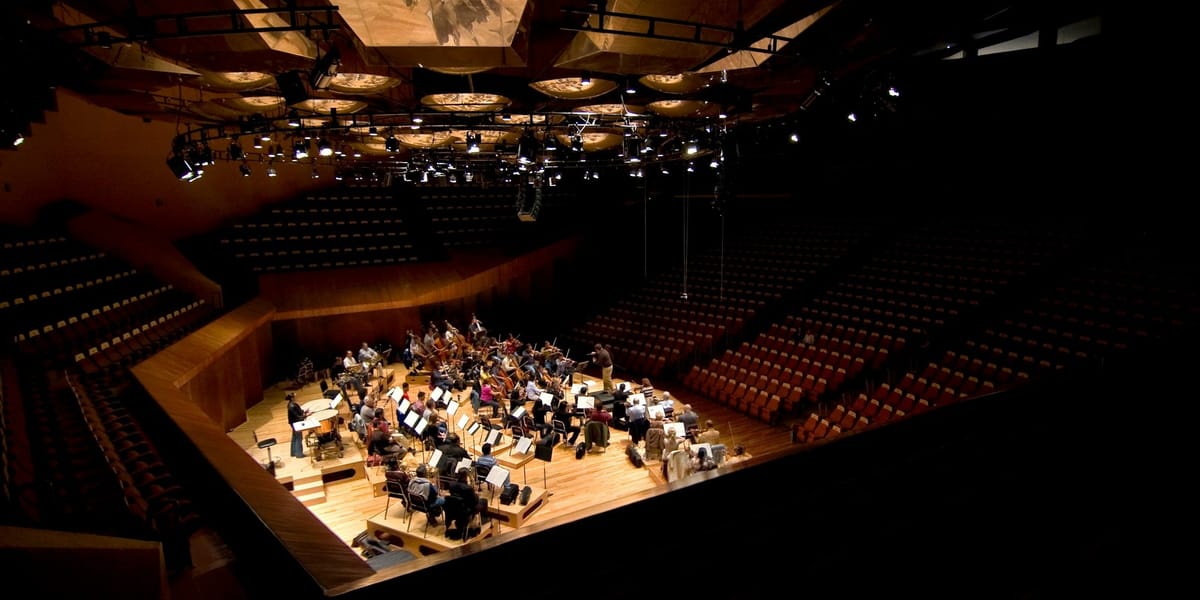
You're a musician who's always performed in standard venues: concert halls with their predictable acoustics, clubs with their PA systems, galleries during openings where your music provides atmosphere. You set up, you play, people listen or don't, you pack up and leave. The space is container for your music, not part of it.
Then you encounter sound installation work, pieces by artists like Janet Cardiff or Susan Philipsz, and something clicks. The music isn't separate from the space. The space shapes the sound. The architecture becomes instrument. Viewer movement through space becomes part of the composition. The temporal unfolds spatially. This isn't concert music relocated to a gallery. It's a completely different way of thinking about sound and how people experience it.
Musicians who understand spatial thinking gain access to installation, site-specific work, and approaches that concert presentation can't accommodate. Visual artists who incorporate sound but think spatially rather than temporally often create more successful sound work than musicians who import concert thinking into gallery contexts. The difference isn't about musical skill but about how you conceptualize the relationship between sound, space, and audience.
Understanding spatial approaches to sound doesn't replace traditional musical practice. It expands what's possible, opening territory where your musical knowledge serves installation and environmental work that functions according to different logic than performance.
How Visual Artists Think About Space
Visual artists begin with the assumption that space is not neutral container but active element affecting how work functions and what it means.
Site analysis is fundamental practice. Before making work for a space, visual artists examine the room's dimensions, proportions, lighting, architectural features, sightlines, circulation patterns. These physical facts inform what work is possible and how viewers will encounter it.
Musicians often skip this analysis, assuming good PA placement and adequate monitoring solve spatial concerns. But installation work requires understanding how sound behaves in specific architectural conditions. A piece that works beautifully in a reverberant stone chapel fails completely in a carpeted gallery with acoustic tile ceiling.
Walking through space and imagining viewer movement patterns shapes installation decisions. Where will people enter? How will they move through the room? What will they see or hear first? These questions determine placement, scale, and sequencing of elements.
Concert presentation assumes fixed seating and frontal attention. Installation assumes movement, multiple viewpoints, variable duration of engagement. This fundamental difference affects everything about how work is structured.
Negative space, the empty areas around and between elements, matters as much as occupied space. Visual artists compose the entire room, not just objects in it. For sound installation, silence and areas without speakers are compositional elements, not failures.
Scale relationships between work and space affect meaning and viewer experience. Overwhelming scale dominates viewers. Intimate scale requires approach and close attention. Medium scale exists in dialogue with architectural scale. Musicians thinking spatially consider how sound fills or doesn't fill available volume.
Temporal experience in space differs from temporal experience in performance. In concerts, everyone experiences the same temporal sequence simultaneously. In installation, each visitor creates their own temporal path through entering at different times, staying different durations, moving in different patterns.
This variable temporal experience requires different compositional thinking. You can't control the sequence people encounter sounds. You can shape probable paths and relationships but must accept that every visitor's experience will differ.
Site-specificity, making work for and inseparable from particular locations, creates different relationship between work and place than portable performance does. Some installation work exists only at specific sites and couldn't be recreated elsewhere without fundamental change.
The Architectural Acoustics That Shape Sound Installation
Understanding how architecture affects sound transforms it from obstacle to material you can work with and design around.
Reverberation time, how long sound persists after the source stops, varies dramatically between spaces. Stone churches might have reverb times of several seconds. Carpeted offices might have reverb under half a second. This fundamentally changes how music sounds and functions.
Long reverberation suits sustained tones, drones, and slowly changing material. Fast musical passages blur into mud in highly reverberant spaces. Short reverberation allows clarity and rhythmic precision but can make music sound dry and dead.
Testing your music in the actual space before finalizing composition prevents mismatches between material and acoustics. What sounds perfect in your studio might become incomprehensible in the installation site.
Reflection patterns determine where sound energy concentrates and where it disappears. Hard surfaces reflect sound, creating complex patterns of reinforcement and cancellation. Curved surfaces focus sound in unexpected places. Parallel walls create flutter echoes.
These acoustic quirks can be liabilities to fight against or features to incorporate into work. Alvin Lucier's I Am Sitting in a Room explicitly uses room acoustics as compositional element, repeatedly recording and re-recording speech until room resonances dominate.
Standing waves occur at certain frequencies in enclosed spaces, creating areas where those frequencies are louder or quieter depending on position. Testing these frequency-dependent variations in your installation space reveals sweet spots and dead zones.
Some artists fight acoustic irregularities through speaker placement, EQ, and acoustic treatment. Others embrace them, making the space's particular sonic character part of the work. Neither approach is wrong but they require different strategies.
Directionality matters when you have multiple speakers. Omnidirectional speakers spread sound evenly. Directional speakers focus it. Mixing both creates zones of different sound character within one space.
Consider whether you want sound to fill the space uniformly or create distinct sonic zones that visitors move between. The choice shapes both speaker selection and composition.
Masking, where louder sounds obscure quieter ones, affects how layered sound reads in space. In concert, mix balance controls what listeners hear. In installation with multiple speakers, physical position determines mix. Moving closer to one speaker changes the balance.
This spatial mixing means you compose relationships between sound sources knowing that listener position will vary those relationships continuously. Some sounds need to be audible from anywhere. Others can be location-specific discoveries.
Outdoor acoustics present entirely different challenges. Without room boundaries, sound disperses quickly. Wind carries it unpredictably. Background noise from traffic, nature, or human activity competes with your work.
Max Neuhaus's sound installations in public spaces work with urban ambient sound, adding synthesized drones that merge with traffic and city noise. The work doesn't fight context but becomes part of the existing soundscape.
Composition for Movement Through Space
When listeners walk through sound rather than sitting before it, compositional structure must accommodate variable paths and durations.
Looping becomes practical necessity for installations running hours or days. But loops must work whether someone hears them from the beginning, middle, or joins partway through any cycle. Traditional musical structures with clear beginnings and endings don't serve this context.
Seamless loops with no discernible start/end point allow entry at any moment. Gradual evolution across long cycles creates change without requiring complete listening. Modular systems that recombine elements differently each cycle maintain interest through variation.
Brian Eno's ambient music explicitly addresses this, creating music that functions whether you pay attention or let it recede to background. The music works both as focused listening and as atmosphere.
Layered loops at different cycle lengths create complex patterns through phasing and recombination without repetitive predictability. Steve Reich's early phase works demonstrate this principle applied to installation contexts.
Multiple zones with different sound content allow visitors to create their own mix by moving between areas. Cardiff's audio walks layer her recorded voice with environmental sounds, creating zone-based experience as you walk specific paths.
The compositional question becomes: what do you encounter in this spot versus that spot? How do zones relate? Can you hear one zone from another, creating dialogue between areas?
Reactive or generative systems respond to visitor presence or behavior, creating unique experiences. Sensors trigger sounds based on movement. Algorithms generate variations. Interaction becomes compositional element.
But interaction must be musically meaningful, not just technological demonstration. The response relationship should make musical sense and add value to the work beyond novelty.
Silence and quiet passages function differently in installation than concert. Dead air in concert feels awkward. Silence in installation is just absence of your sound, allowing environmental sounds and creating breathing room.
Composing silence as active element rather than absence gives visitors space to listen to the room itself, to notice how your work changes their attention to the space.
Density and activity levels affect engagement. Constantly active sound can become exhausting in installation where visitors might spend extended time. Sparse material allows sustained listening without fatigue.
Finding balance between enough activity to maintain interest and enough space to prevent overwhelm requires testing in context with real visitors, not just studio work.
Entrance and exit experiences matter because visitors don't have program notes telling them when music starts and ends. How do they discover the work? What indicates it's over or that they're free to leave?
Some installations create clear threshold experiences marking entry into the sound space. Others blur boundaries, making it unclear when you've entered the work and when you've left it.
Speaker Placement as Compositional Element
In concert, speakers amplify and project sound but aren't usually compositional concern. In installation, speaker placement is fundamental compositional decision.
Single speaker placement is simplest but most limited. It creates one sound source that fills space more or less uniformly depending on speaker characteristics and room acoustics.
Even single speaker installations require thought about height, orientation, whether it's visible or hidden, how far from walls or corners, all of which affect sound character and dispersion.
Stereo imaging requires careful placement to create stable phantom center and proper soundstage. But installation listeners rarely sit in sweet spot, so traditional stereo often fails in gallery contexts.
Some artists abandon stereo entirely, using multiple mono sources. Others use stereo but accept that the imaging only works from certain positions, making listener position a discovery element.
Multichannel surround configurations offer spatial localization and movement. Quadraphonic, 5.1, 7.1, or custom multichannel arrays let you place sounds in three-dimensional space around listeners.
Composing for multichannel requires thinking about sound location and movement as musical parameters, not just frequency and rhythm. Where sound comes from becomes part of what it means.
Distributed speakers throughout space rather than clustered at one end create multiple local sound sources. Some might play identical material. Others might have unique content. Visitors discover different sounds by moving around.
This distributed approach works well for large spaces or outdoor installations where single source can't cover the area effectively.
Hidden versus visible speakers affect how installation reads. Hidden speakers can make sound seem to emerge from space itself, creating mystery about its origin. Visible speakers acknowledge technological mediation and become part of the visual composition.
Neither is automatically better. The choice depends on whether you want visitors to question where sound comes from or to understand the system clearly.
Speaker aesthetic matters when they're visible. Consumer electronics, professional audio gear, custom fabricated enclosures, all communicate different things. The speakers become sculptural elements.
Some artists use vintage equipment for aesthetic reasons. Others custom-build speaker enclosures that integrate with installation design. A few make the speakers themselves the sculptural focus.
Directional speaker arrays using many small drivers to create tight beams of sound enable location-specific sonic experiences. Visitors step into a beam and hear content unavailable elsewhere in the room.
This creates private listening experiences in public space, which has interesting conceptual implications about shared versus individual experience.
Duration and Temporal Structure Without Audience Captivity
Installation visitors aren't captive audiences sitting through complete performances, so temporal structure must work without guaranteed complete listening.
Short total duration pieces that loop completely allow visitors to potentially hear everything if they stay long enough, but most won't. You're composing for both complete and partial listening.
Loops under five minutes feel obviously repetitive. Loops over thirty minutes hide their cyclical nature better but require more material. Finding the right cycle length balances production effort against perceived repetition.
Very long durations measured in hours or days create pieces that no individual hears completely. The work exists in its totality across time, but each visitor experiences a fragment.
Jem Finer's Longplayer, designed to play for 1000 years without repetition, takes this to extreme. The work's complete temporal structure exceeds any listener's lifespan, making complete listening impossible.
Generative systems produce continuously varying output without exact repetition, creating infinite duration from finite compositional rules. Algorithms, chance operations, or rule systems generate material within parameters.
Brian Eno and Peter Chilvers' generative music apps demonstrate accessible generative approaches. The composer sets up systems that create music but doesn't compose every moment explicitly.
Event-based structures where things happen at intervals rather than continuous sound create temporal rhythm across hours or days. Something occurs every hour, or three times a day, or in response to external triggers like sunrise.
This event structure means most visitors won't encounter the event, but those who do get distinct experience. The work exists partly in anticipated or remembered events, not just current sound.
Timed sequences that run on schedules create predictability for repeat visitors but randomness for first-time visitors. The 2 PM sound differs from the 5 PM sound, creating reason to return.
Some installations create day/night variations, dawn/dusk transitions, or weekly cycles, embedding temporal structure into the work's extended duration.
Accepting incomplete listening as norm rather than failure changes compositional priorities. You're not building toward climax or resolution. You're creating sound environment that works at any entry or exit point.
This doesn't mean structure doesn't matter. It means structure serves browsing and fragmentary engagement rather than complete linear attention.
Working With Environmental Sound
Installation spaces aren't silent. Ambient sound from HVAC, traffic, people, and building systems forms acoustic context your work exists within.
Fighting ambient sound through volume, frequency masking, or acoustic isolation creates separate sonic world. The installation overpowers environmental sound, demanding attention and creating controlled acoustic experience.
This approach works in properly controlled gallery spaces but fails in noisier public contexts where competing with environment becomes exhausting arms race.
Working with ambient sound incorporates or references environmental sounds, creating dialogue between your work and existing soundscape. Max Neuhaus's Times Square installation adds synthesized drone that blends with traffic noise.
This collaborative approach requires analyzing what sounds already exist, what frequencies dominate, what rhythms and patterns emerge from environment. Your composition responds to or complements these existing elements.
Silence or very quiet work foregrounds environmental sound, making ambient noise the content by directing attention to it. Cage's 4'33" principle applies: framing listening without adding sound.
Quiet installations require controlled spaces where environmental sound is minimal enough that directing attention to it reveals interesting material, not just annoying distraction.
Masking environmental sound through similar-frequency content makes ambient noise less noticeable without overwhelming it. Pink noise or broadband texture can smooth over distracting sounds without requiring high volume.
This creates acoustic comfort zone where your work is clearly audible but doesn't feel like it's shouting over the environment.
Reactive systems that respond to environmental sound create living relationship with context. Microphones feed ambient sound into processing that generates response, making the installation actively engage with its acoustic surroundings.
This responsiveness means the work sounds different at different times, quiet when environment is quiet, more active when environment is louder or more complex.
Visual Artists Who Work With Sound Successfully
Understanding how established artists bridge music and installation clarifies what works and what doesn't when musicians enter gallery contexts.
Janet Cardiff's audio walks layer her voice with field recordings, creating augmented reality experiences where you hear her recorded voice describing or narrating while experiencing the actual location. The work is intensely site-specific and couldn't exist without the spatial component.
Cardiff's background in visual art shows in how she thinks about viewer/listener movement, site relationships, and the work existing in specific locations rather than as transferable performances.
Susan Philipsz plays her unaccompanied singing in public spaces, often under bridges or in architecturally significant locations. The singing is musically straightforward but the spatial context and site relationships create the work's meaning.
Philipsz won the Turner Prize for sound work, marking acceptance of sound installation in visual art contexts. The work succeeds by thinking spatially about sound placement rather than primarily about musical performance.
Bill Fontana creates sound installations using microphones at one location transmitting to speakers at another, collapsing spatial and temporal distance. He might broadcast harbor sounds into an inland museum or overlay soundscapes from different cities.
The work addresses place, listening, and how sound can transport us imaginatively. Musical content is less important than conceptual framework about location and listening.
Alvin Lucier's I Am Sitting in a Room uses room acoustics as compositional material, exploiting the space's resonant frequencies until they dominate the original spoken text. The work makes space itself audible.
Lucier's background in experimental music shows, but the piece succeeds in installation contexts because it's about the specific room it's performed in, making site-specificity essential.
Christian Marclay's The Clock uses appropriated film clips showing clocks and timepieces to create 24-hour loop synchronized to actual time. Sound comes from the film clips, creating continuously varying soundtrack.
The work is simultaneously cinema, installation, and durational performance. Its success comes from thinking about duration, space, and audience movement rather than traditional screening logic.
Ryoji Ikeda creates audiovisual installations using pure data aesthetics, sine waves, and mathematical patterns. The work is intensely precise and loud, creating immersive environments.
Ikeda bridges electronic music and installation through scale, intensity, and visual/sonic integration. The work wouldn't function as audio-only concert piece or silent visual installation.
These artists share approach: they prioritize space, site, duration, and visitor experience over traditional musical concerns like harmonic development or rhythmic complexity. The music serves spatial and conceptual needs rather than operating as autonomous composition.
Technical Infrastructure for Long-Duration Work
Installation running hours, days, or weeks requires different technical approach than live performance.
Playback reliability becomes critical. Computer-based systems must run unattended for extended periods. Crashes, software updates, or hardware failures destroy installation. Redundancy and stability matter more than features.
Dedicated playback computers running minimal systems reduce failure points. Raspberry Pi, small media players, or purpose-built installations computers are more reliable than general-purpose computers with lots of running processes.
Testing systems for days before installation reveals instabilities. If the system crashes after 36 hours in testing, it'll crash during installation. Run it long enough to find problems before going live.
Power management prevents issues during brief outages or brown-outs. UPS systems protect computers from power fluctuations. Settings that prevent sleep or hibernation keep systems running.
Some installations use analog systems, turntables, tape loops, or mechanical devices that don't depend on computers. These have their own maintenance needs but avoid digital system vulnerabilities.
Remote monitoring allows checking system status without physical presence. Network-connected systems can send alerts if problems arise or allow remote restart if needed.
This isn't always possible in galleries without network access, but when available it prevents installation going silent for hours or days before someone notices.
Scheduled restarts can prevent memory leaks or software drift that causes problems over long runs. Daily or weekly automated restarts clear temporary issues before they become failures.
Audio interfaces, cables, and connectors must be reliable for long-term installation. Consumer-grade equipment might work for performances but can fail in constant-use scenarios. Professional equipment costs more but prevents failures.
Physical security for equipment in public-accessible installations requires housing speakers and electronics where visitors can't tamper with them, unplug cables, or steal equipment.
Climate control affects electronics reliability. Overheating causes failures. Humidity damages circuits. Gallery climate must protect both artwork and technical systems.
Translating Musical Thinking to Spatial Context
Musicians bring valuable skills to installation but must adapt approaches for spatial contexts.
Harmonic and timbral vocabulary translates directly. Your understanding of frequency relationships, texture, color, all serve installation composition. The musical content you create still matters.
What changes is how that musical material gets structured, distributed, and experienced. The music itself can be as sophisticated or simple as your compositional skills allow.
Rhythmic and metric structure might need loosening for installation contexts. Strict tempo and meter work in some installations but flexible, ambient, or ametric approaches often suit spatial work better.
Consider whether maintaining pulse serves your installation goals or whether more fluid temporal organization better supports varied visitor engagement durations.
Formal structures from musical practice can inform installation but need adapting. Sonata form doesn't make sense in looping context. Theme and variation works across long durations. Minimalist process pieces suit installation well.
Think about how musical form you know can be modified for installation's different temporal and spatial logic rather than abandoning it entirely.
Performance energy and dynamics translate to installation presence. Music can be quiet and intimate or loud and overwhelming. The energetic qualities you'd bring to performance can shape installation character.
But recognize that installation's extended duration affects how energy is perceived. What feels appropriately intense in a 10-minute performance might be exhausting across hours.
Arrangement and orchestration thinking applies to multichannel work. Distributing different musical elements across speakers is like orchestrating for different instruments. Your arrangement skills serve spatial composition.
Consider which sounds work together versus separately, what should be everywhere versus location-specific, how sounds combine when heard from different positions.
Improvisational thinking helps when working with generative or reactive systems. Setting up rules and constraints within which variation occurs draws on improvisational frameworks about structure and freedom.
Your experience listening and responding to musical situations informs how you design systems that create variation while maintaining coherence.
When Not to Make Sound Installation
Understanding when installation isn't the right approach saves time and prevents weak work.
If your music relies on precise timing, ensemble coordination, or performance energy that requires live execution, installation isn't serving your work. Make it a performance instead.
Installation suits music that functions without performance presence, music that can exist autonomously in space without performer mediation. If you need to be there for it to work, it's a performance.
When visual or spatial elements don't add to musical experience, putting music in gallery doesn't make it installation art. It's just concert music in wrong venue. Make sure spatial context serves the work.
If the music stands alone and space is just container, then present it as music. Adding gallery context just to claim installation status doesn't strengthen work that's primarily sonic.
Complex rhythmic or melodic material that requires focused attention might not suit installation where listening is often partial and distracted. Save intricate musical ideas for concert contexts where they'll be heard properly.
Installation works better with material that rewards both focused listening and peripheral awareness, music that functions whether you're paying close attention or letting it be background.
When you're interested in performer-audience relationship, dialogue, or live energy exchange, performance is the form. Installation removes those dynamics. Don't sacrifice what makes your work vital to fit it into installation format.
If funding or practical resources favor performance, make performances. Installation often costs more and reaches smaller audiences than concerts. Pragmatic considerations matter.
When you don't have good installation venue or your work doesn't suit available spaces, waiting for right opportunity is better than forcing work into wrong context.
Building Your Installation Practice
Developing installation work alongside or instead of performance practice requires new skills and different thinking.
Visit sound installations and pay attention to spatial relationships, speaker placement, how visitors engage, what works and what doesn't. Seeing successful installation teaches more than reading about it.
Notice how spaces affect sound. Listen to rooms differently. Start hearing architectural acoustics as compositional material. This attentional shift develops spatial hearing.
Collaborate with visual artists who understand installation. They can teach spatial thinking while you bring musical knowledge. Cross-disciplinary collaboration strengthens both practices.
Find opportunities for small installation experiments. Gallery shows, pop-up spaces, temporary installations, all allow testing ideas without major commitment. Start small and learn.
Document your installations thoroughly because most people won't experience them directly. Photos, video, and recordings document the work but never fully capture it. Accept that limitation.
Accept that installation reaches smaller audiences than concerts but often reaches them more deeply through longer engagement and physical presence in the work.
Develop technical skills for installation-specific needs: multichannel audio, Max/MSP or other programming environments, working with sensors or responsive systems. These tools enable spatial work.
Budget for installation differently than concert. Equipment costs, installation time, testing, maintenance, all exceed typical performance budgets. Plan accordingly.
Build relationships with galleries and curators interested in sound work. These connections create opportunities and help you understand what institutions look for in installation proposals.
Accept that much sound installation work doesn't generate income directly. It builds reputation, develops your practice, and sometimes leads to commissions or other paid opportunities.
Musicians who think spatially about sound gain access to installation, public art, and site-specific work that concert practice can't accommodate. The musical skills you've developed serve this work, but the conceptual framework comes from visual art's spatial thinking. Understanding both musical and spatial logic, being fluent in temporal and architectural approaches to sound, creates practice richer than either discipline alone offers. Your music becomes sculpture. Your sculpture sounds. The space between disciplines is where the most interesting work happens.