Why Some Pastels Smudge More Than Others
Why some pastels smudge more than others through pigment-to-binder ratios, particle hardness, and paper tooth interaction. The materials science behind pastel adhesion.
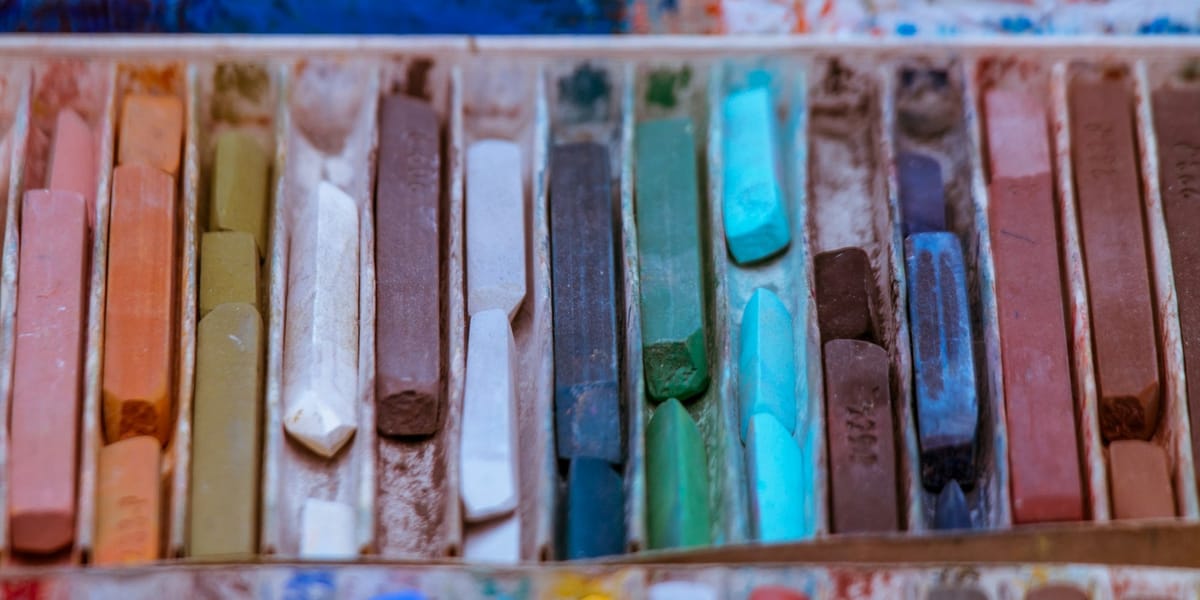
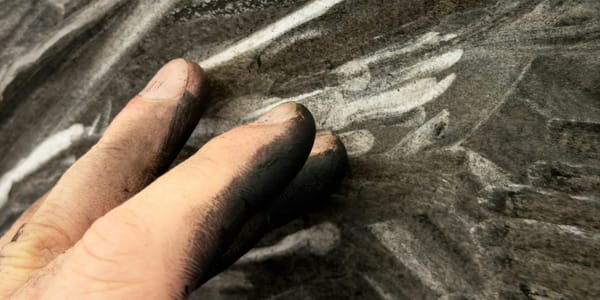
The pastel stroke across textured paper deposits powdery color that clings to the surface through mechanical grip rather than adhesive bonding. Touch the mark and pigment transfers to your finger. Brush against it accidentally and the color smears across the paper, destroying crisp edges and mixing with adjacent colors.
This isn't defect or poor technique. It's fundamental property of the medium.
Pastels smudge because they consist of pigment particles held together with minimal binder, leaving much of the pigment as loose powder on the paper surface. The degree of smudging varies dramatically between brands, formulations, and individual colors based on pigment-to-binder ratio, particle size and hardness, and how effectively the paper's texture mechanically grips the particles.
Understanding why pastels behave differently requires examining the chemistry of pastel formulation, the physics of particle adhesion to paper, how different pigments affect binder requirements, and why the trade-offs between smudge resistance and color intensity shape what's commercially available.
The practical implication affects every pastel artist's workflow. Some pastels require fixative after every layer to prevent smudging. Others remain relatively stable, allowing building layers without intermediate fixing. The choice between vibrant but fragile soft pastels and stable but less intense hard pastels reflects this fundamental materials science constraint.
The romanticized notion that pastels' fragility adds to their charm obscures the real frustration of destroyed passages from accidental smudging. The material demands specific handling, surface choices, and protective measures that oil or acrylic painting don't require.
The Chemistry of Pastel Formulation
Pastels consist of pigment particles bound with minimal adhesive, creating the characteristic powdery texture and intense color.
The pigment provides the color and constitutes the majority of the pastel's mass—typically 60-90% by weight depending on formulation. The high pigment content creates intensity impossible in paint where binders dilute the pigment substantially.
The binder holds pigment particles together in stick form and provides minimal adhesion to paper. Traditional binders include gum tragacanth, methylcellulose, or synthetic polymers. The binder percentage determines hardness and smudge resistance.
The filler materials like chalk, clay, or talc extend expensive pigments while modifying texture and opacity. The fillers affect particle size distribution and how the pastel deposits on paper.
The water used during manufacturing hydrates the binder, allowing the mixture to be formed and pressed into sticks. The water evaporates during drying, leaving the finished pastel.
The balance between pigment and binder creates the fundamental trade-off: more binder increases smudge resistance but reduces color intensity and creates harder pastels. Less binder maximizes color saturation but creates fragile, easily smudged marks.
Soft pastels use minimal binder (5-10% of total mass), creating intense color and buttery application that smudges readily. Hard pastels contain more binder (15-30%), producing less intense color but greater smudge resistance and ability to hold fine points.
The individual pigment properties affect required binder amounts. Some pigments naturally cohere well and need minimal binding. Others require more binder to form stable sticks. This explains why different colors from the same manufacturer may smudge differently.
Particle Size and Surface Area
The size of pigment particles fundamentally affects how pastels interact with paper and how readily they smudge.
Fine particles (under 1 micrometer) create smooth application and intense color but have high surface area relative to mass. The high surface area means more particle-to-particle and particle-to-paper contact points, affecting adhesion.
Coarse particles (over 10 micrometers) create grainy texture and reduced color intensity but may lodge more securely in paper tooth through mechanical interlocking. The larger size provides more mass per particle, requiring stronger forces to dislodge.
The particle size distribution affects packing density on paper surface. Mixtures of particle sizes pack more tightly than uniform sizes, potentially creating more stable deposits less prone to smudging.
The grinding process during pigment manufacture creates characteristic size distributions for each pigment type. Organic pigments typically grind finer than mineral pigments, affecting their behavior in pastel formulations.
The specific surface area (surface area per unit mass) varies from under 1 square meter per gram for coarse particles to over 100 square meters per gram for ultra-fine pigments. This enormous variation affects binder requirements and smudge behavior.
Fine particles require more binder to coat adequately because the high surface area demands more binder molecules to cover. Without sufficient binder, fine-particle pastels crumble or smudge excessively despite appearing well-formed.
The particle shape also matters. Spherical particles roll and smudge more easily than platelets or needles that create mechanical interlocking. The crystal habit of each pigment determines its particle shape.
Paper Tooth and Mechanical Grip
The paper's surface texture determines how effectively it grips pastel particles through mechanical interlocking rather than chemical adhesion.
The tooth refers to surface roughness created by paper fibers, sizing, and manufacturing processes. Deep tooth provides more surface area and mechanical grip for pastel particles.
The fiber structure in quality pastel papers includes protruding fibers creating three-dimensional texture. The pastel particles lodge between and around these fibers, held mechanically rather than through adhesive bonding.
The sizing materials (gelatin, starch, or synthetic) coat paper fibers and affect how pastel adheres. The sizing creates slightly tacky surface that can help grip particles, though the effect remains minimal compared to mechanical interlocking.
The sandpaper-like surfaces (pumice paper, velour, sanded pastel paper) provide extreme tooth that grips pastel particles very effectively. These surfaces hold more layers of pastel with less smudging than smooth papers.
The cotton fiber papers tend to have softer, more compressible tooth than wood pulp papers. The compression allows pastel particles to embed slightly into the surface, increasing grip.
The surface coating on some pastel papers (pumice, marble dust, ground glass) creates uniform rough texture optimized for pastel adhesion. The coating provides consistent tooth across the entire surface.
The relationship between particle size and paper tooth determines how securely pastel deposits. Very fine particles may fall into valleys between texture peaks, while larger particles lodge on the peaks. The optimal match depends on specific paper and pastel combination.
Pigment Hardness and Abrasion Resistance
The inherent hardness of different pigments affects both how they grind during manufacturing and how they behave when applied and subsequently handled.
The Mohs hardness scale measures mineral hardness from 1 (talc) to 10 (diamond). Pigments range from about 2 (some organic pigments) to 6-7 (certain inorganic minerals).
Soft pigments like ultramarine or organic quinacridones deform under pressure rather than fracturing. This creates smoother application and potentially more smudging as particles can slide past each other.
Hard pigments like chromium oxide or cadmium compounds resist deformation and may fracture into sharp edges during application. The angular fragments can mechanically interlock more effectively, potentially reducing smudging.
The abrasion resistance determines how easily pastel marks wear away through contact with hands, tools, or other paper surfaces. Hard pigments resist abrasion better than soft pigments.
The lightfastness ratings that pastel manufacturers provide often correlate with pigment hardness because both relate to chemical stability. The stable pigments resistant to light damage also tend toward harder, more abrasion-resistant formulations.
The mixing of hard and soft pigments in single pastel stick creates complex behavior. The softer pigment may smudge while the harder pigment remains more stable, creating partial smudging that's difficult to control.
Brand Formulation Differences
Different pastel manufacturers use distinct formulations creating dramatically different smudge characteristics even for nominally similar colors.
Sennelier soft pastels contain extremely high pigment content and minimal binder, creating legendary color intensity and notorious smudge-ability. The sticks are soft enough to break easily but deposit rich color that requires careful handling.
Rembrandt soft pastels use slightly more binder than Sennelier, creating firmer sticks that smudge less while maintaining good color saturation. The moderate approach balances workability against stability.
Nupastel hard pastels contain substantial binder creating very hard sticks that resist smudging and hold fine points. The color intensity suffers compared to soft pastels but the smudge resistance allows detailed work without fixative.
Conté à Paris pastels (the square hard pastels) use even more binder, approaching colored pencil hardness. The smudge resistance is excellent but the color muted compared to soft pastels.
The proprietary binder formulations remain trade secrets, but the visible differences in stick hardness, color intensity, and smudge behavior reveal the underlying chemistry variations.
The quality variations within brands mean that professional-grade pastels typically smudge less than student-grade versions. The student formulations use more filler and cheaper pigments, affecting adhesion characteristics.
The individual color variations within single brand reflect different pigments' requirements. The cadmium red may smudge less than cobalt blue in the same product line because cadmium's properties allow using less binder.
Humidity and Environmental Factors
Environmental conditions affect pastel smudging through changing paper properties and potentially affecting the minimal binder in the pastel.
High humidity softens paper fibers slightly, potentially reducing mechanical grip on pastel particles. The moisture may also make some binders stickier, though the effect remains subtle given pastels' minimal binder content.
Low humidity creates static electricity buildup that can actually increase smudging as charged particles repel each other and lift from the surface more readily.
Temperature affects binder plasticity in pastels containing wax or other temperature-sensitive materials. Warm conditions soften these binders, potentially increasing smudging. Cold hardens them, maybe reducing smudging.
The handling creates localized warming from hand contact. The warmth can soften pastels during application, affecting how they deposit and potentially increasing subsequent smudging.
The atmospheric dust and oils from handling contaminate pastel surfaces and paper, affecting adhesion. Clean conditions reduce these contaminants, potentially improving pastel stability.
The seasonal variation in studio conditions means pastels may behave differently winter versus summer. The humidity and temperature changes affect both the pastels and the paper substrate.
Layering and Tooth Saturation
The paper's limited tooth means it can only hold finite amount of pastel before the surface saturates and additional layers smudge easily.
The first layer embeds into paper tooth most securely because the texture is available to grip particles. The adhesion is maximum for this initial layer.
Subsequent layers deposit on top of previous pastel rather than directly on paper. The particle-to-particle adhesion is much weaker than particle-to-paper grip, making later layers more prone to smudging.
The tooth saturation occurs when paper texture fills completely with pastel particles. Additional applications have nowhere to mechanically lodge and remain only loosely attached.
The fixative application between layers stabilizes existing work and refreshes the tooth slightly by creating new textured surface to receive additional pastel. This allows continuing beyond what unfixed layering permits.
The scraping or brushing off excess pastel to clear tooth works for some techniques but removes color and changes the appearance. The decision involves trade-offs between desired surface quality and ability to continue layering.
The tooth depletion happens faster with soft pastels depositing heavy layers than with hard pastels applying light marks. The soft pastel artists reach saturation in fewer layers, requiring more frequent fixing.
Fixative Chemistry and Trade-offs
Fixatives stabilize pastel through adhesives that bind particles to paper and each other, but the application changes the pastel's appearance and surface qualities.
The fixative composition typically includes acrylic or vinyl resin dissolved in solvent (alcohol or hydrocarbon). The solvent evaporates after application, leaving resin coating that glues pastel particles in place.
The spray application deposits fine mist that penetrates between particles before the solvent evaporates. The penetration allows the resin to coat particles and create bridges between them without forming thick surface film.
The darkening effect occurs because the resin has different refractive index than air. When resin fills spaces between particles, the optical properties change, making colors appear slightly darker and more saturated.
The surface texture changes as the resin coating reduces the matte, velvety quality that characterizes unfixed pastel. The fixed surface becomes slightly glossier and less receptive to additional pastel layers.
The archival concerns center on whether fixatives yellow or degrade over time. Modern synthetic fixatives claim better stability than older formulations using natural resins, but long-term testing remains incomplete.
The application technique affects results dramatically. Heavy fixative application can create visible drips or pools that destroy the surface. Multiple light coats work better than single heavy application.
The workable fixatives allow applying additional pastel after fixing by remaining slightly soft rather than forming hard shell. These enable layering techniques that unworkable fixatives prevent.
The no-fixative approach used by some pastel artists accepts the fragility in exchange for maintaining the purest possible surface quality. The work requires careful handling and framing under glass to protect the unfixed surface.
Framing and Long-term Protection
The inherent instability of unfixed or minimally-fixed pastel requires specific framing approaches preventing surface contact and environmental damage.
The spacer or mat creates gap between pastel surface and glazing, preventing direct contact that would smudge the work. The spacer depth typically ranges from 3-6mm depending on pastel thickness.
The glazing options include glass (traditional but heavy and breakable) or acrylic (lighter but prone to static that can pull pastel particles off the surface). The anti-static acrylic treatments reduce but don't eliminate this problem.
The sealed backing prevents environmental contaminants from reaching the pastel from behind. The acid-free materials prevent chemical degradation over time.
The vibration and impact during transport or handling can cause smudging even in properly framed work. The pastel particles can shift despite not touching the glazing, creating subtle changes over time.
The orientation matters—horizontal storage risks gravity pulling particles off the surface over years. Vertical storage is safer though not perfect.
The humidity control in exhibition and storage environments affects paper expansion/contraction that can disturb pastel adhesion. The stable conditions prevent mechanical stress from dimensional changes.
The light exposure concerns extend beyond fading to include heat buildup under glazing that might affect binder properties or cause paper expansion disturbing the pastel layer.
Teaching Pastel Handling to Prevent Smudging
Art instruction must address smudge prevention as fundamental technique requirement, not just aesthetic preference.
The hand position training teaches working from top to bottom and left to right (for right-handed artists) to avoid resting hands on completed passages. The mahl stick or bridge supports hands without touching the work surface.
The protective paper between hand and artwork prevents direct contact that smudges. The glassine or tracing paper works better than regular paper which can itself deposit particles.
The fixative demonstration shows proper application distance (12-18 inches), angle (slight diagonal rather than perpendicular), and motion (continuous sweeping rather than focused spraying). The students learn through doing, often ruining test pieces before mastering the technique.
The paper selection education helps students understand how tooth affects smudge resistance and technique possibilities. The cheap smooth paper frustrates students as pastels won't adhere properly.
The storage instruction addresses keeping works separated, using glassine interleaving, and avoiding stacking that can transfer particles between surfaces.
The material quality discussion helps students understand why professional-grade pastels perform differently than student materials. The cost justification becomes clearer when smudge behavior is explained.
The cleanup practices including washing hands frequently prevent oil and dirt transfer that affects pastel adhesion. The contamination from dirty hands creates obvious problems students can observe and correct.
Comparison to Other Dry Media
Understanding pastel smudging requires comparing to other dry media that solve similar material challenges differently.
Charcoal and graphite both create marks through particle deposition but use different materials. Charcoal smudges more readily than hard pastels. Graphite actually burnishes into paper fibers rather than just sitting on the surface, creating more permanent marks.
Colored pencils use wax or oil binder creating hard matrix that deposits minimal loose particles. The smudge resistance is excellent but the color intensity lower than soft pastels because of high binder content.
Conté crayons represent intermediate between pastels and colored pencils—more binder than pastels, less than colored pencils. The smudge behavior reflects this intermediate formulation.
Oil pastels use oil and wax binders creating completely different material from traditional pastels. The oil pastels don't smudge through particle transfer but can smear through the oils remaining wet or soft.
Chalk produces marks through particle deposition like pastel but the calcium carbonate particles behave differently than artist pigments. The classroom chalk's smudge behavior differs from artist pastels.
The comparison reveals that pastels' particular combination of high pigment content, minimal binder, and resulting smudge susceptibility creates specific material constraints that alternatives solve through different chemistry—always with trade-offs in color intensity, texture, or application qualities.
The Economic Reality of Formulation
The commercial pastel market reflects economic pressures affecting formulation decisions that determine smudge characteristics.
The pigment costs vary enormously. Cheap pastels use synthetic organic pigments or fillers that cost cents per pound. Premium pastels include expensive mineral pigments costing hundreds per pound.
The binder costs remain relatively constant regardless of formulation. The economic incentive pushes toward minimal binder regardless of pigment type, creating smudge-prone formulations across price ranges.
The consumer expectations demand intense color, which requires high pigment content and low binder. The market rewards color saturation over smudge resistance, incentivizing formulations that smudge readily.
The professional artists willing to pay premium prices for best color accept the smudging as necessary trade-off. The high-end market therefore uses minimal-binder formulations.
The student market seeks cheaper materials but still expects reasonable color. The formulations use more filler, affecting both color and smudge behavior in ways distinct from pigment-to-binder ratio alone.
The shelf stability requirements mean manufacturers can't use binders that degrade or harden over time. This limits binder choices to materials that remain relatively stable, which may not include optimal anti-smudge formulations.
The manufacturing processes favor simple formulations that scale to mass production. The complex multi-component binder systems that might reduce smudging while maintaining color prove too expensive or difficult to manufacture consistently.
Conservation of Historic Pastel Artworks
Museum conservators face unique challenges preserving pastel works where smudging represents existential threat to the artwork's integrity.
The examination documentation photographing the current state provides baseline for detecting future changes from vibration, temperature fluctuations, or handling incidents causing smudging.
The stabilization decisions involve weighing whether to apply fixative (changing appearance) versus maintaining original unfixed state (accepting ongoing fragility risk).
The display conditions require analyzing vibration from foot traffic, building systems, or nearby construction. The isolation mounting can reduce vibration transmission to the artwork.
The transport protocols demand specialized crates with shock absorption, climate control, and securing methods preventing any surface contact with the pastel. The courier requirements often include hand-carrying rather than standard shipping.
The restoration of smudged passages presents impossible challenges. Lost pastel can't be perfectly replaced because matching original colors, application pressure, and integration with remaining work exceeds conservation ethics and practical capability.
The preventive conservation focuses on environmental control, proper framing, limited exhibition duration, and strict handling protocols since restoration options are essentially nonexistent.
The digital documentation through high-resolution photography provides permanent record of artwork's current state. As pastels inevitably change over decades or centuries, the documentation becomes increasingly valuable.
Specific Pigment Smudge Characteristics
Individual pigments create predictable smudge patterns that experienced pastel artists learn to anticipate and accommodate in their working methods.
The cadmium pigments (reds, yellows, oranges) generally smudge less than organic equivalents because the heavy metal particles have greater mass and the crystalline structure creates mechanical interlocking. The cadmium pastels often feel slightly grittier during application.
The ultramarine blue smudges readily due to fine particle size and soft mineral structure. The synthetic ultramarine used in modern pastels grinds to very fine powder that doesn't grip paper tooth as effectively as coarser pigments.
The earth colors (ochres, siennas, umbers) show variable smudging depending on particle size and clay content. The finely ground versions smudge more than coarsely ground formulations from the same mineral source.
The chromium oxide green resists smudging due to hard, angular particles that mechanically interlock well. But the color intensity often appears muted compared to organic green pigments that smudge more readily.
The quinacridone pigments (magenta, violet, red) create smooth, intensely colored pastels that smudge very easily. The organic molecules produce fine particles with low inherent cohesion.
The titanium white and zinc white behave differently despite both being white. Titanium has larger particle size generally smudging less. Zinc grinds finer, creating more smudge-prone formulations.
The carbon blacks from different sources (lamp black, bone black, ivory black) show varying smudge resistance based on particle size and structure. The lamp blacks tend toward finest particles and maximum smudging.
The mixed colors blending multiple pigments show smudging characteristics reflecting whichever pigment dominates the mixture. A small amount of ultramarine in predominantly cadmium mix won't increase smudging much.
The artist's experience with specific brands and colors builds empirical knowledge about which pastels require extra care and which allow more aggressive handling. This tacit knowledge develops through years of practice and occasional disasters from unexpected smudging.
Professional Techniques Minimizing Smudging
Experienced pastel artists develop working methods that accommodate the medium's smudge susceptibility while minimizing problems.
The directional working from top to bottom prevents hand contact with completed areas. Right-handed artists work left to right within each horizontal band. Left-handed artists reverse this pattern.
The mahl stick or bridge support tools hold the working hand above the surface without touching previously applied pastel. The traditional mahl stick extends from the canvas edge. Modern alternatives include dedicated bridge tools.
The glove or finger guard on the working hand's heel protects against accidental contact. Some artists wear light cotton gloves leaving fingertips exposed for precise pastel control.
The incremental fixing after each major layer stabilizes work before adding subsequent passages. The light fixative coats allow continuing to build while preventing catastrophic smudging from single careless touch.
The blending tool selection affects smudging risk. Tortillons, chamois, and soft brushes blend without adding hand oils that increase smudging. Direct finger blending deposits skin oils that affect subsequent pastel adhesion.
The erasure techniques using kneaded eraser lift excess pastel without spreading it across the surface as harder erasers would. The kneaded eraser absorbs particles rather than abrading them across paper.
The masking during application prevents straying into completed areas. The templates, shields, or simply placed paper protect vulnerable passages while working on adjacent areas.
The storage between working sessions with glassine interleaving prevents smudging from stacking or accidental contact. The vertical storage orientation prevents gravitational settling of loose particles.
The transport preparation includes securing work in rigid supports and adding protective coverings before any movement. The seemingly stable studio work becomes vulnerable during transport without proper precautions.
Future Material Developments
Research into improved pastel formulations seeks reducing smudge susceptibility while maintaining traditional material qualities.
The nanoparticle binders using extremely fine particles might coat pigment more evenly with less total binder, potentially improving both color saturation and smudge resistance simultaneously.
The bio-based binders from renewable sources might offer different adhesion properties than traditional materials while addressing environmental concerns about petroleum-based synthetics.
The electrostatic treatments of paper surfaces could enhance particle adhesion through electrical attraction rather than purely mechanical grip. The technical challenges include maintaining static charge over time.
The microencapsulation technologies surrounding individual pigment particles with thin binder shells might prevent smudging while maintaining color intensity. The manufacturing costs currently prevent commercial application.
The smart materials responding to environmental conditions (humidity, temperature) by changing adhesion properties could theoretically create pastels that resist smudging under handling while remaining workable during application.
The realistic assessment recognizes that fundamental trade-off between pigment content and binder content likely can't be eliminated. The chemistry and physics impose constraints that material science can improve but not transcend entirely.
The market conservatism means artists resist changes to familiar materials. Even improved formulations might struggle for acceptance if they alter traditional working properties in pursuit of smudge resistance.
The ultimate reality acknowledges that pastels will likely continue smudging more than many artists would prefer. The medium's characteristic intensity and matte surface quality derive from the same minimal-binder formulation that creates the smudge susceptibility. Accepting this limitation while developing skills to work within it remains more practical than waiting for material science breakthroughs that may never arrive or may compromise the qualities that make pastels distinctive among artistic media.