Free and Always Has Been: The Story Behind the NGV
Australia's oldest public gallery started as a room in a library, grew on a single 1904 fortune, survived a fight over its own front door, and has never once charged for entry.
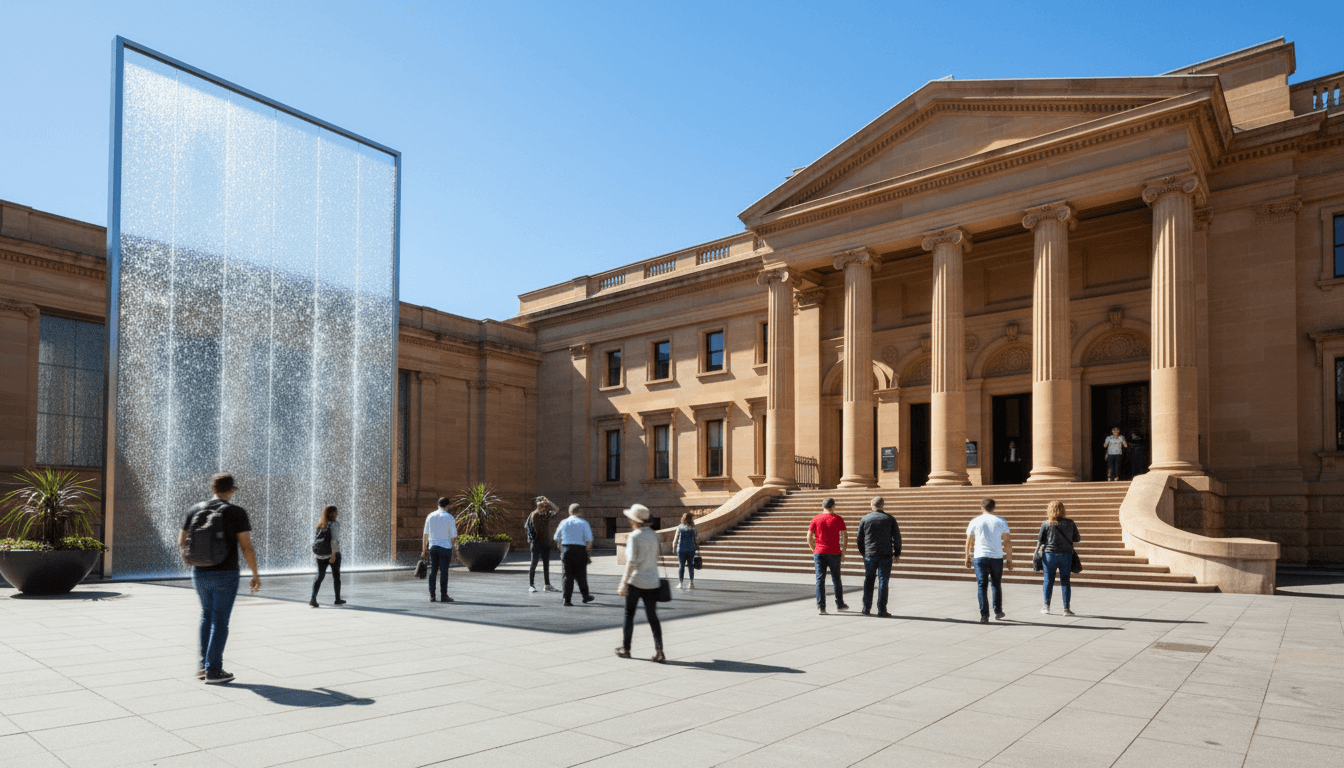
Step through the entrance of NGV International on St Kilda Road and you pass a wall of falling water two storeys high — a sheet of it cascading over glass, recycled endlessly from rainwater collected off the building's own roof. In 1984, Keith Haring painted a mural across the glass of the original wall, with the water switched off while he worked. The gallery behind it has been growing and rebuilding itself for over a century and a half, and the Waterwall is the one feature that's been there, in some form, since the beginning of its purpose-built life.
Birth: a room in a library
The National Gallery of Victoria was founded on 24 May 1861, when Victoria had been a self-governing colony for only a decade and the gold rush had made it, briefly, the richest part of Australia. It didn't start as a building of its own — the collection began as a small exhibition space inside the Victorian State Library on Swanston Street, built on donations from a colony flush with new money and eager to prove it had culture to match.
Growing an identity: a school, and a fortune
In 1867, the gallery opened its own art school, and the roll call of its early students reads like a list of the artists who would go on to define Australian landscape painting — Fred McCubbin, Tom Roberts, and Arthur Streeton among them, the core of what became known as the Heidelberg School. Then, in 1904, a Melbourne businessman named Alfred Felton died and left a bequest of £383,163, with half the interest it earned reserved specifically for buying art for the gallery. The Felton Bequest is still funding acquisitions today, over a century later — a single nineteenth-century fortune that has quietly shaped the collection for four generations of curators who never met the man who made it possible.
A permanent home, and the wall that survived a fight
Under the National Gallery of Victoria Act 1966, the gallery was formally established at a new site on St Kilda Road, in a building designed by the architect Sir Roy Grounds. It opened on 20 August 1968, and it introduced two features that instantly became the gallery's signature: the Waterwall at the entrance, and, inside, a stained-glass ceiling by Leonard French so large it was, for a time, among the biggest suspended glass ceilings anywhere in the world. When the building underwent a major redevelopment by the architect Mario Bellini beginning in 1999, the original plans called for removing the Waterwall entirely — until public protests organised by the National Trust of Victoria forced a change, and a new water wall was built slightly forward of the old one instead. The building reopened as NGV International in 2003.
Advertisement
Splitting in two: a second site for Australian art
In 2002, the NGV opened a second home a short walk away: the Ian Potter Centre, NGV Australia, at Federation Square, designed specifically to house the gallery's Australian collection separately from the international one back on St Kilda Road. It was the first time in the gallery's history that "Australian art" and "international art" had distinct buildings of their own, rather than sharing a single set of galleries.
Where it stands now
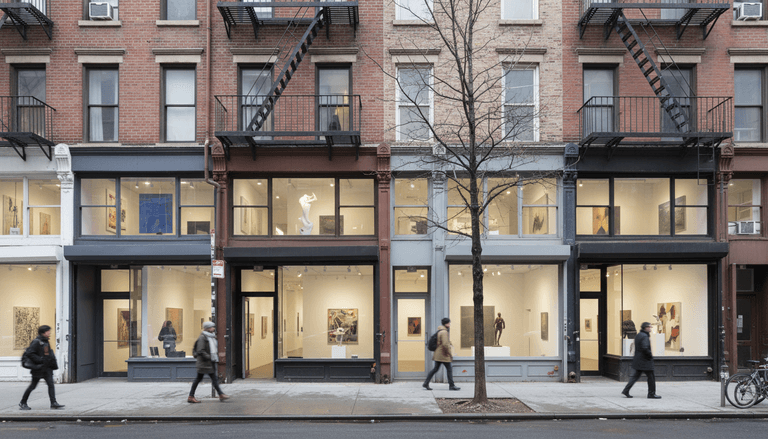
The NGV has never charged general admission to its permanent collection, a policy old enough that most Victorians have simply never known the gallery any other way — special exhibitions carry a ticket price, the collection itself never has. Today it's Australia's oldest and most visited art museum, splitting its identity across two buildings and, by some counts, over 75,000 works, on a scale the small commercial galleries a short walk away could never match, even though spaces exactly like them are where most of what eventually enters a collection like this one gets its actual start. The Waterwall is still running, rebuilt a little forward of the glass Keith Haring painted on and still recycling the same rain that falls on the roof above it, the one constant a visitor from 1968 would still recognise walking in today — not far, either, from Melbourne's own dense cluster of private galleries on Flinders Lane, running on an entirely different, much smaller economics.