
JournalTopics
Topic
Science of Art Materials
The chemistry and physics of art materials: how paint dries, why pigments behave as they do, and how surfaces age.
November 2026
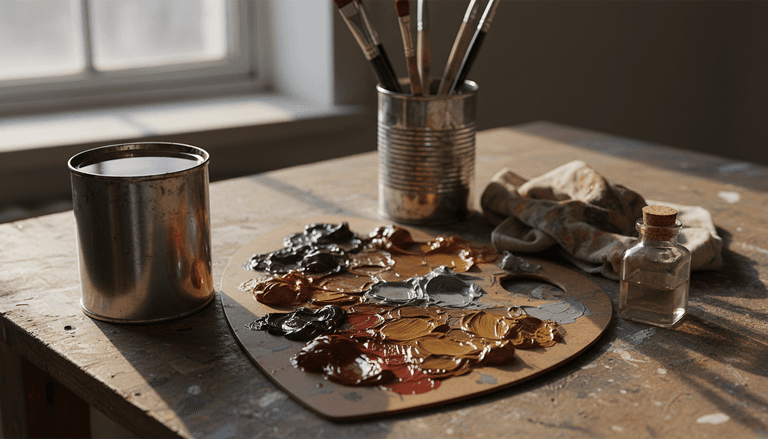
Magna: The Acrylic Paint That Needed Turpentine
In Whaam!, three paints share one surface and look almost identical. One is Magna, the first acrylic made for artists, and mineral spirits can easily damage it.
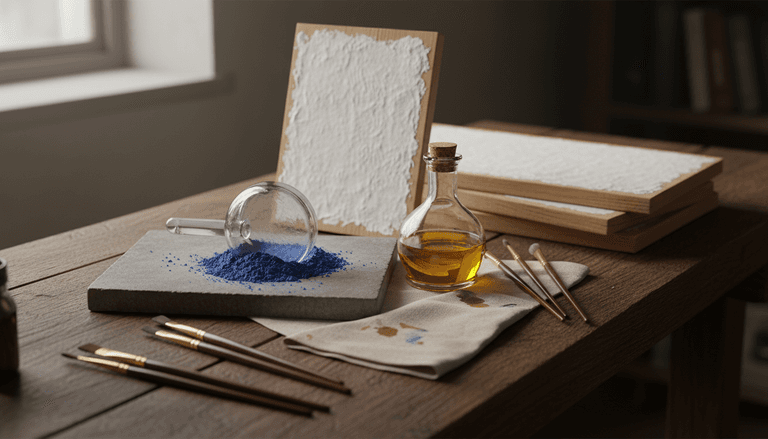
Did Jan van Eyck Invent Oil Painting?
Vasari credited Jan van Eyck with inventing oil painting. Evidence from about 1125 says otherwise. What the National Gallery's portraits show instead.
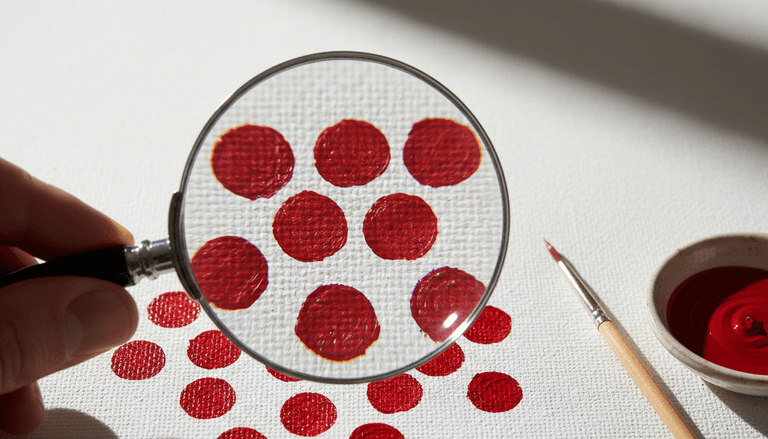
Lichtenstein's Dots Weren't Printed: How the Whitney Show's Signature Look Was Made
Lichtenstein's dots look printed, but they were painted: placed by hand, then brushed through a metal screen, in oil and Magna. Now on view at the Whitney through 10 May 2027.
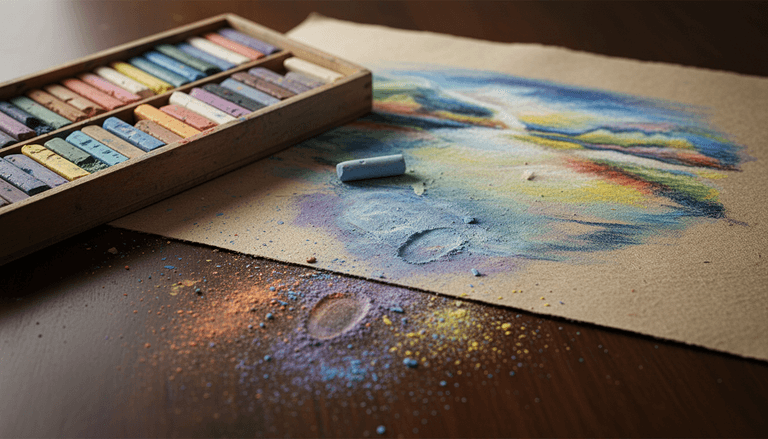
The Medium That Never Actually Dries
Touch a centuries-old pastel and colour still comes off on your finger. That's not decay — pastel never had enough binder to actually dry, and Degas spent years fighting exactly that problem.
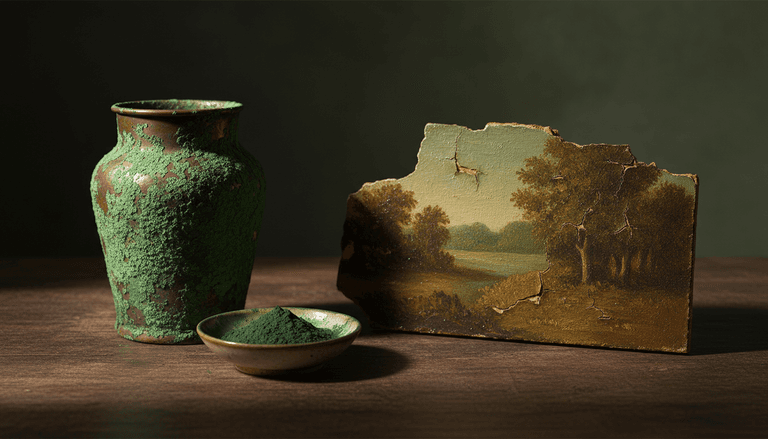
Why Verdigris Slowly Destroys the Art It Colors
That dull brown foliage in an old master painting was very likely a vivid green once. Here's why verdigris and copper resinate degrade, and why standard cleaning treatments can make it worse.
October 2026
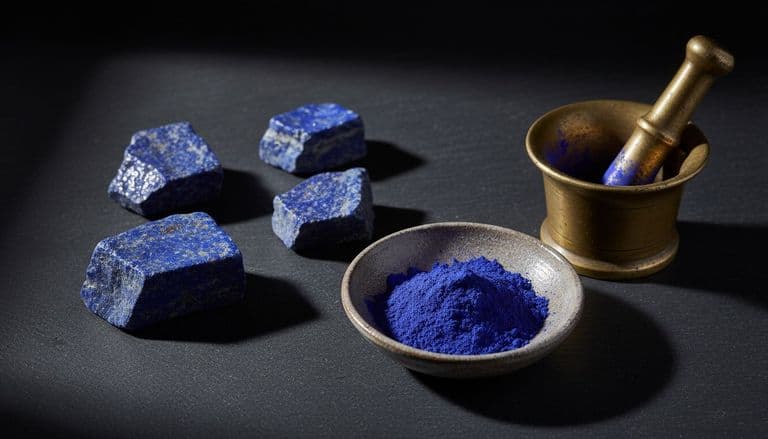
How Much Did Ultramarine Cost? The Blue Priced Above Gold
Lapis-derived ultramarine was priced by the ounce, above gold — not because the stone was rare, but because the yield was dreadful and the labour was skilled. Then Guimet made it in a furnace, and the most meaningful blue in painting became just another pigment.
Advertisement
More from the journal
- Why Your Paintings Look Muddy and How to Fix Color Mixing ProblemsWhy paintings look muddy and how to fix color mixing problems. The science of chromatic neutralization, pigment transparency, and value control in mixing.
- How Pointillism Exploits Optical Mixing vs Pigment MixingThe science behind pointillism's optical color mixing. Why Seurat's dots work at distance but fail up close, and what retinal mixing actually achieves versus theory.
- Why Titanium White Behaves Differently Than Lead WhiteThe chemistry behind titanium white vs lead white in oil painting. Why particle size, opacity mechanisms, and drying chemistry create fundamentally different paint behavior.
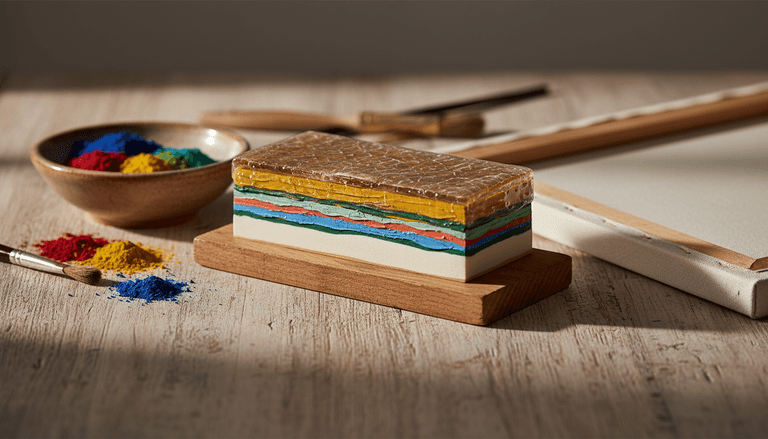
How a Painting Is Actually Made: A Complete Guide to Mediums, Grounds, and Technique
Every painting is a stack of decisions made in order — support, ground, binder, technique — and each one constrains everything after it. Here's the complete physical process, from bare panel to a five-hundred-year-old surface still slowly curing.
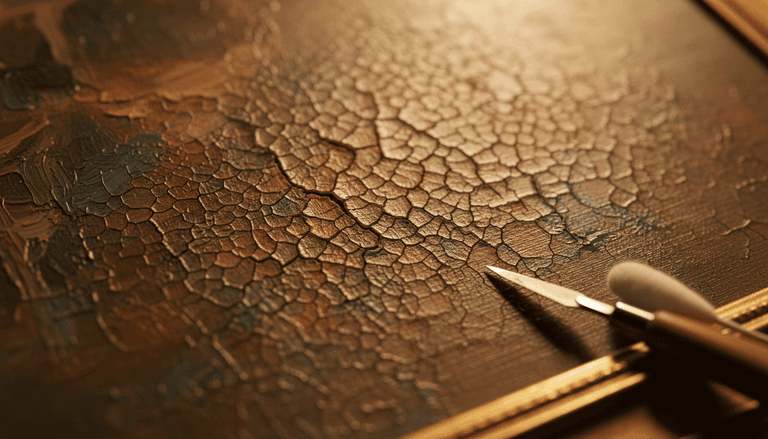
Why Paint Cracks: Flaking, Craquelure, and Age
Cracks in old paintings are not simply a sign of age. They are a record of movement — the support, the ground, and the paint film pulling against each other.
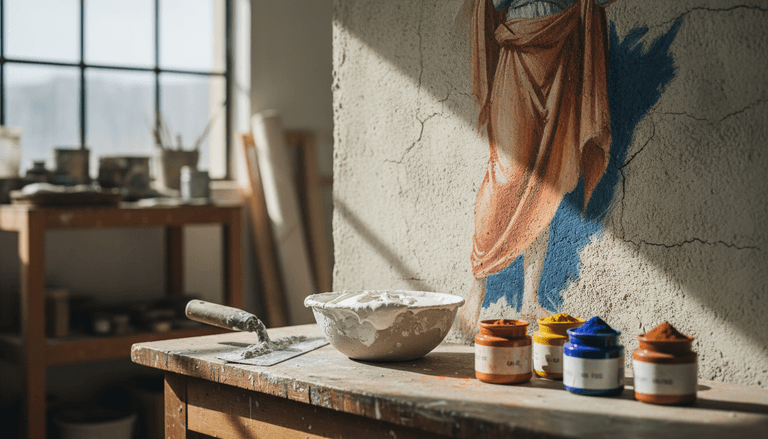
Why Michelangelo's Ceiling Survived and Leonardo's Wall Didn't
Michelangelo's ceiling is as vivid as ever. Leonardo's Last Supper started falling apart in his own lifetime. Both are "frescoes" — but only one uses a chemical reaction that locks pigment permanently into the wall.
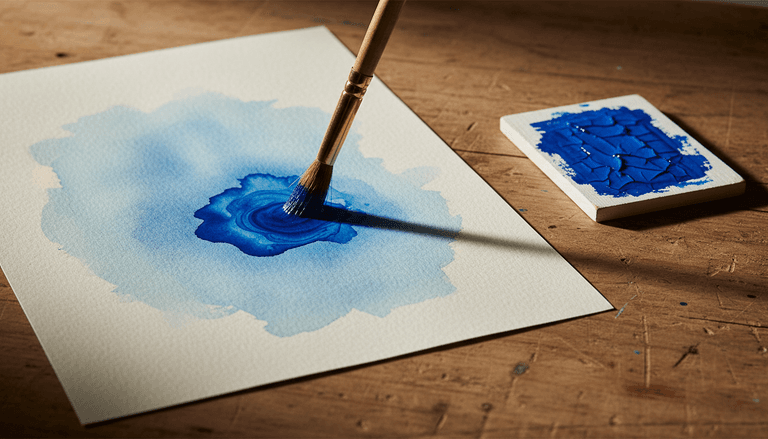
Why Watercolor Lifts and Acrylic Doesn't
Watercolour lifts because gum arabic stays water-soluble; acrylic does not because it forms a plastic film. The difference is chemistry, and it changes how you paint.
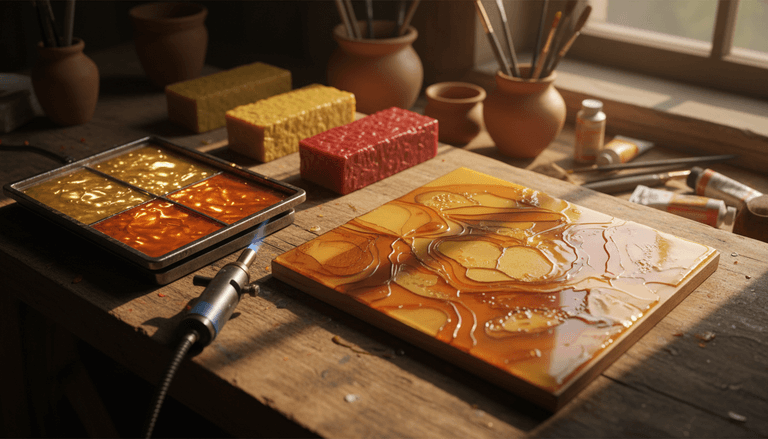
The Chemistry of Encaustic Wax Painting
Encaustic uses molten wax as its binder, which is why it is fused with heat and why it can last two thousand years. The chemistry is simple and unforgiving.
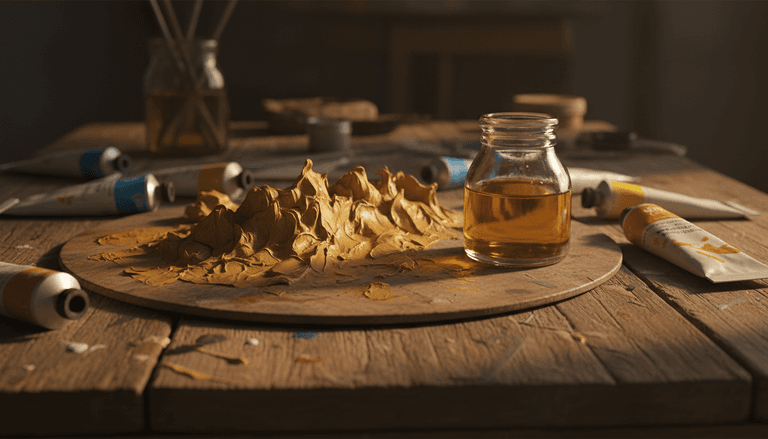
How Oil Paint Dries: Oxidation, Not Evaporation
Oil paint does not dry the way watercolour does. It cures by reacting with oxygen, which is why it stays workable for days and why thick layers can wrinkle.
Advertisement
More from the journal
- Why Your Paintings Look Muddy and How to Fix Color Mixing ProblemsWhy paintings look muddy and how to fix color mixing problems. The science of chromatic neutralization, pigment transparency, and value control in mixing.
- How Pointillism Exploits Optical Mixing vs Pigment MixingThe science behind pointillism's optical color mixing. Why Seurat's dots work at distance but fail up close, and what retinal mixing actually achieves versus theory.
- Why Titanium White Behaves Differently Than Lead WhiteThe chemistry behind titanium white vs lead white in oil painting. Why particle size, opacity mechanisms, and drying chemistry create fundamentally different paint behavior.
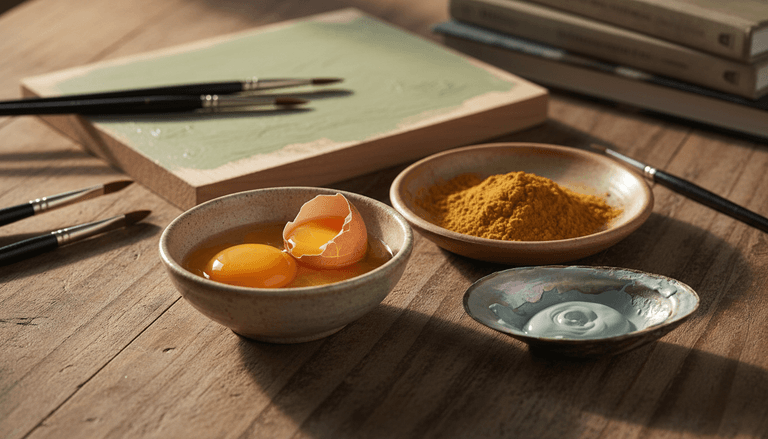
The Paint That Oil Replaced
Egg yolk carried Western painting for a thousand years before oil paint existed. Its inability to blend forced painters to invent verdaccio underpainting — and it never actually disappeared.
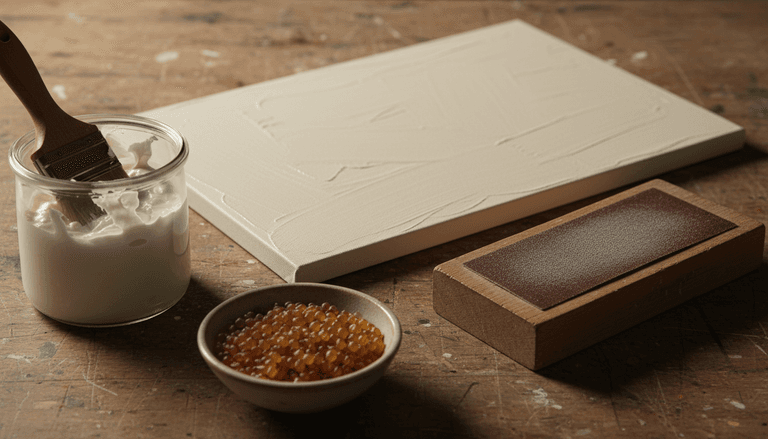
Gesso, Grounds, and Surface Preparation
The ground is the invisible layer that decides whether a painting holds together. Gesso, oil grounds, and acrylic grounds each behave differently — and the choice matters.
May 2026
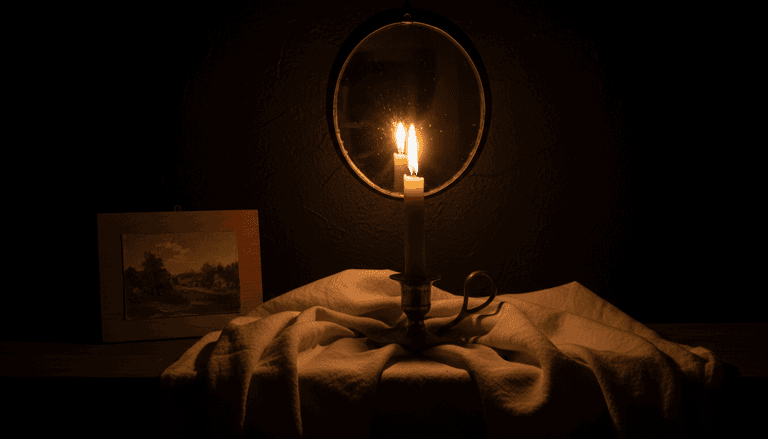
The Luminous Illusion: Physics of Light & Shadow in Renaissance Art
Chiaroscuro, sfumato, and linear perspective were optics reverse-engineered by hand. How Brunelleschi, Alberti, Masaccio, and Leonardo turned the physics of light and shadow into painted realism.
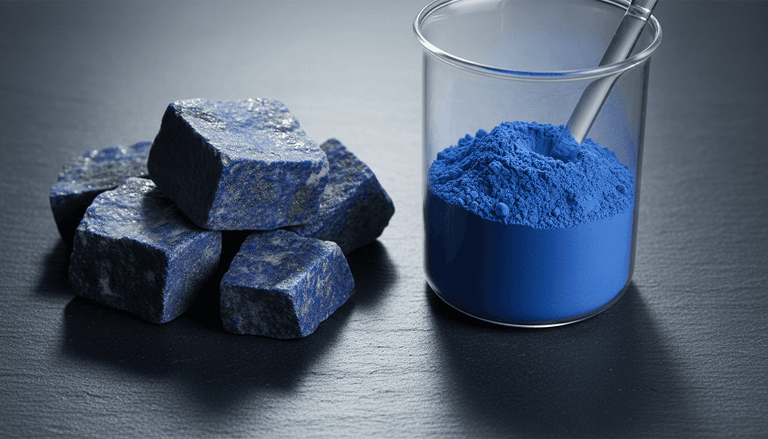
What Is Ultramarine Made Of? The Chemistry of Art's Most Precious Blue
Ultramarine's blue comes from a single molecule — three sulfur atoms trapped in a crystal cage. The chemistry behind art's most precious blue, and why the lapis version still costs 35 times more.
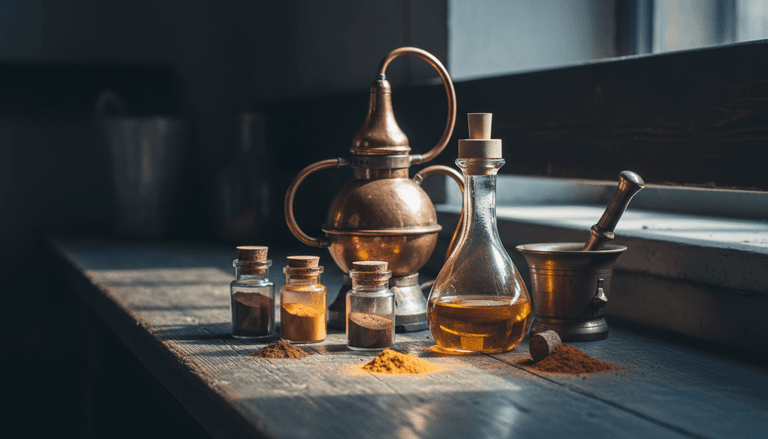
The Alchemical Canvas: Unveiling the Deep Chemistry of Oil Paints
Oil paint doesn't dry by evaporating — it oxidizes and cross-links into a film. How drying oils, reactive pigments like lead white, cobalt and manganese driers, and metal soaps decide how a painting ages.