How Long Does a Sculpture Actually Last?
A sculpture's lifespan is decided before it is installed — by the material's chemistry and the climate it lands in. Here is how long each material really lasts, and why.
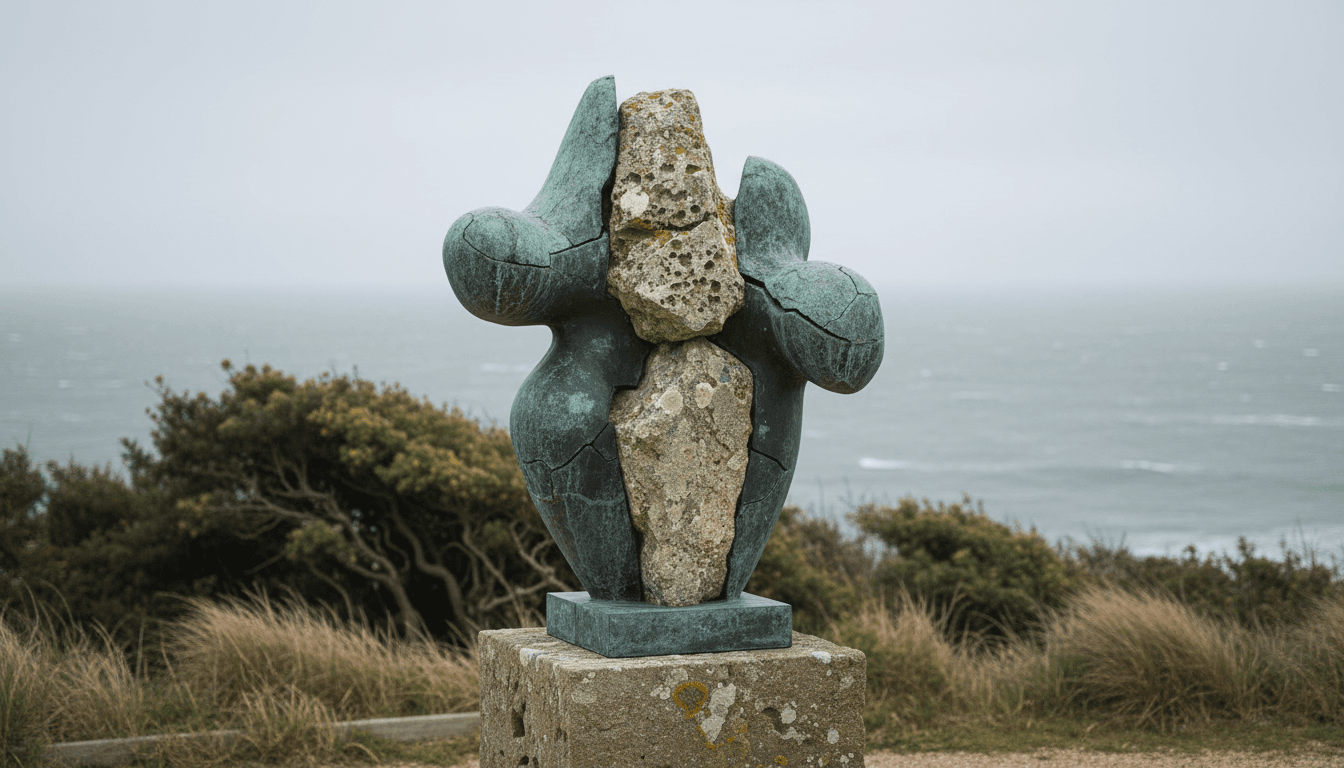
A bronze horse and a concrete bench can be installed the same afternoon, in the same park, by the same crew. Two hundred years from now, the bronze will still be standing, wearing a green skin. The bench will be gravel. If you're choosing a material for an outdoor sculpture that has to last, that gap is the whole problem you're solving — and almost all of it is decided before the piece ever leaves the studio.
The short answer, by material
| Material | Typical outdoor lifespan | What ends it |
|---|---|---|
| Granite | centuries to millennia | slow surface erosion |
| Bronze | 200+ years | chloride attack ("bronze disease") |
| Stainless steel (316) | 50–100+ years | chlorides, weld corrosion |
| Weathering steel | 50–100+ years | coastal salt, poor detailing |
| Marble / limestone | 50–200 years | acid rain converting calcite to gypsum |
| Concrete | 20–50 years | freeze–thaw, rebar corrosion |
| Fiberglass / resin | 20–50 years | UV breakdown of the resin |
| Untreated wood | 5–20 years | rot, insects, UV |
These are outdoor, temperate-climate figures. Move to a coast, a desert, or a freeze–thaw belt and every number shifts.
The three forces that decide everything
Strip away the material differences and three variables do most of the work: water (nearly every failure mode needs it present); salt (chlorides accelerate metal corrosion and stone decay more than any other single factor); and thermal cycling (the number of freeze–thaw cycles matters more than the coldest temperature reached). Match a material against these three for the actual site, and you have most of the answer before you've picked up a single spec sheet.
Bronze: the two-century default, and its one real enemy
Bronze forms a patina of copper carbonates and sulfates — the same green as the Statue of Liberty — and that patina isn't damage, it's a mineral crust that slows further corrosion to a crawl, the last stage of the same casting process that shapes the metal in the first place. The one exception is chloride: near the sea, or where de-icing salt is used, chlorides trigger a self-sustaining reaction conservators call bronze disease, producing acid that eats fresh metal and generates more chloride in turn. It's treatable if caught early — washing, chemical conversion, a protective coating — and difficult if it isn't.
Stone: three different clocks
"Stone" isn't one material. Granite is close to inert — its enemy is slow physical erosion, not chemistry. Limestone and sandstone are porous, and they fail through salt crystallisation: water carries dissolved salt into the pores, and the salt crystallises as the water evaporates, prying the stone apart from inside. Marble is calcium carbonate, and it reacts directly with acid — clean rain is mildly acidic on its own, industrial rain worse — converting hard calcite into soft, soluble gypsum, a process conservators call sugaring.
Weathering steel: rust that's supposed to happen
Weathering steel (the Cor-Ten family) is engineered to rust well: small additions of copper, chromium, and nickel make the first rust layer dense and adherent rather than flaky, and that layer then starves the steel beneath of oxygen. It's genuinely maintenance-free — but only where it can wet and dry out. Where water sits, or chlorides are present, the protective layer never stabilises and corrosion just continues.
Advertisement
Concrete: betrayed by its own reinforcement
Concrete's alkalinity normally passivates the steel reinforcing it. Carbon dioxide from the air slowly lowers that alkalinity — a process called carbonation — and once the pH drops far enough, the rebar starts corroding and expanding, cracking the concrete from the inside. This is why a twenty-year-old concrete sculpture can be structurally finished while a granite piece from the same year looks untouched.
Case study: the Statue of Liberty
The Statue of Liberty, one of the most famous examples of a large-scale sculpture anywhere, is the clearest lesson in this entire field: the sculpture's own visible material is rarely what fails first. Its 2.4-millimetre copper skin was largely intact after a century, protected by its patina. What nearly destroyed the statue was the iron armature hidden behind it — copper and iron in contact, with moisture present, form a galvanic couple, and the iron corroded until the copper lost its support. The 1980s restoration replaced the iron with stainless steel and isolated the two metals. Look for problems in the hidden structure and the fixings, not the surface everyone can already see.
Predicting lifespan before you build
You don't have to guess. Exposure coupons — small, weighed samples of the actual material, placed at the actual site for a year — are slow but honest, and catch site-specific surprises no table anticipates. Accelerated lab tests (salt-spray, UV-and-condensation cycling, freeze–thaw cycling) compress years into weeks for ranking materials against each other, though they're approximations. The international standard ISO 9223 sorts environments into corrosivity categories from C1 (very low, dry indoor) to CX (extreme, coastal or heavily polluted) — if your site resembles a monitored one, you can borrow its numbers rather than start from zero.
Extending a sculpture's life
| Action | Frequency | What it buys |
|---|---|---|
| Inspect for water traps and corrosion | annually | catches bronze disease and rebar corrosion early |
| Wash to remove salt and pollutants | every 1–3 years | removes the reactants before they can work |
| Reapply protective coating | as specified | slows surface reaction, but adds a maintenance obligation |
| Check fixings and joints | every 2–5 years | prevents galvanic and mechanical failure |
| Document condition | continuously | makes future conservation planning possible |
A word on coatings specifically: a barrier coating (wax, acrylic, lacquer) blocks water while intact, then fails — sometimes trapping moisture underneath and making things worse. If the budget can't fund renewing it on schedule, it's often worse than no coating at all.
Specifying for lifespan: a checklist
- Match the material to the site's actual corrosivity category, not the region's average climate.
- Design for drainage. No flat tops, no upward-facing crevices, no water traps.
- Isolate dissimilar metals with insulating washers or compatible fasteners.
- Oversize the fixings — they're the weakest link and the hardest to inspect.
- Fund a maintenance regime you'll actually carry out, not an ideal one that never happens.
- Calculate whole-life cost, not purchase price — a cheap material with heavy upkeep can cost more over a century than an expensive one that just sits there.
FAQ
How long does a bronze sculpture last outdoors?
Two centuries or more in most temperate climates, provided chlorides are kept away — bronze disease can cut that drastically near the coast.
Why does marble dissolve?
It's calcium carbonate, which reacts with acid in rain, converting to softer, slightly soluble gypsum over time.
Is weathering steel really maintenance-free?
Only where it can dry out and drain properly. Standing water or salt exposure stops the protective rust layer from ever stabilising.
Does concrete last forever?
No — the concrete itself can hold up, but the rebar inside it corrodes once carbonation lowers the surrounding alkalinity, and the expanding rust cracks the piece from within.
What lasts longest outdoors?
Granite, followed by well-maintained bronze — both fail so slowly that other concerns (theft, changing taste, budget) usually arrive first.