Why the Lower East Side Replaced Chelsea as NYC's Real Gallery District
Chelsea still has the money, but the actual churn of the New York art world moved to the Lower East Side years ago. Here's the SoHo-to-Chelsea-to-LES story, and why it keeps happening.
Ask someone who doesn't follow the New York art world where to find the city's real gallery scene, and they'll say Chelsea — acres of white-cube warehouses between 10th and 11th Avenue, famous, well-funded, easy to find on a map. That's not wrong exactly, but it's out of date. The actual churn of the New York art world — new artists, first institutional looks, dealers still building a reputation — moved somewhere else years ago, and Chelsea had very little to do with the move.
At a glance
| Era | Roughly | Defining trait |
|---|---|---|
| SoHo | 1968–late 1990s | Where it started: cheap lofts, cast-iron buildings |
| Chelsea | Late 1990s–2010s | Where the money went: large industrial spaces, major capital |
| Lower East Side | 2010s–now | Where the churn is: dense, walkable, small storefronts |
Where it actually started
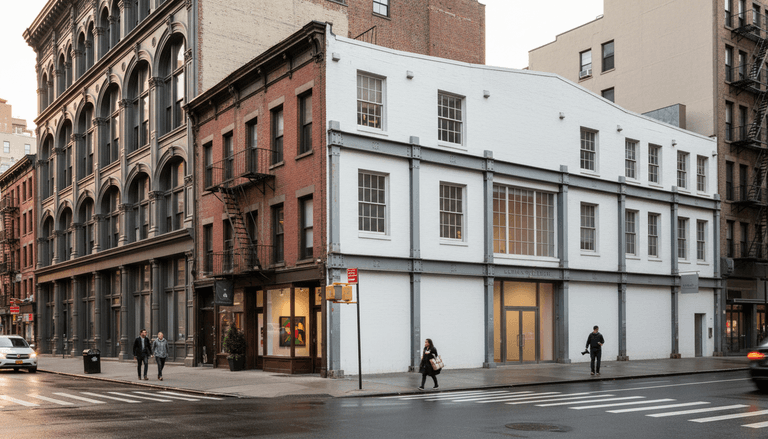
New York's gallery world didn't begin in Chelsea at all. SoHo was the original arts district, and it has an identifiable starting point: the dealer Paula Cooper opened a gallery at 96 Prince Street in 1968, drawn by the same thing that drew artists there in the first place — vacant cast-iron loft buildings, left behind as the garment industry moved out, going for next to nothing. Other dealers followed, including Leo Castelli, and the numbers tell the rest: roughly 85 galleries by 1975, over 100 by 1980. SoHo became the place new art actually got shown.
Why SoHo couldn't stay SoHo
The cycle that ended SoHo's run as a gallery district has a name art historians still use: the SoHo Effect. Cheap rent draws in artists; artists draw in galleries; galleries draw in boutiques, restaurants, and foot traffic; foot traffic draws in the retail money that can outbid a gallery for the same square footage. By the late 1990s, SoHo had gentrified into exactly what it is today — a fashionable shopping district — and the galleries that couldn't or wouldn't pay retail rent moved on. Most of them went to Chelsea.
Why Chelsea became the destination, not the source
Chelsea absorbed the exodus because it offered what SoHo no longer could: large, raw industrial spaces, still relatively cheap in the 1990s, well suited to the bigger, more expensive art the market was producing. Over the following two decades, though, the same economics that pushed galleries out of SoHo caught up with Chelsea too — rents climbed, and the district increasingly became a place built for galleries with real capital behind them rather than a starter space for someone new. Chelsea didn't stop mattering. It just stopped being where an unrepresented artist was likely to get a first look — the same institutional caution behind why museums confirm reputations rather than build them is, on a smaller scale, exactly what happened to Chelsea's own galleries as their overhead grew.
Advertisement
Why the Lower East Side is where the energy actually is now
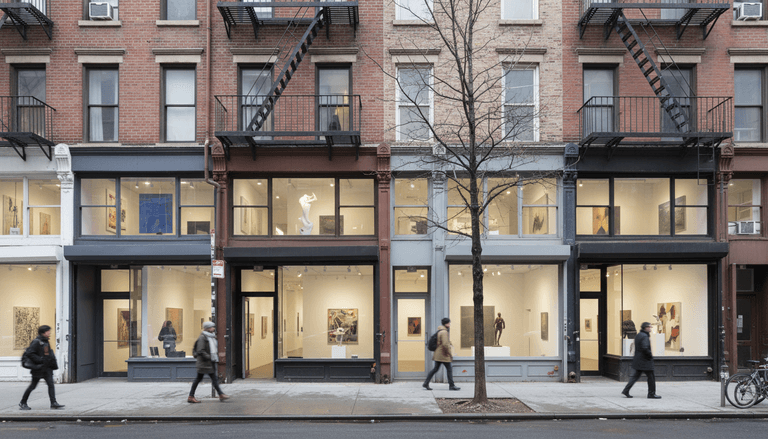
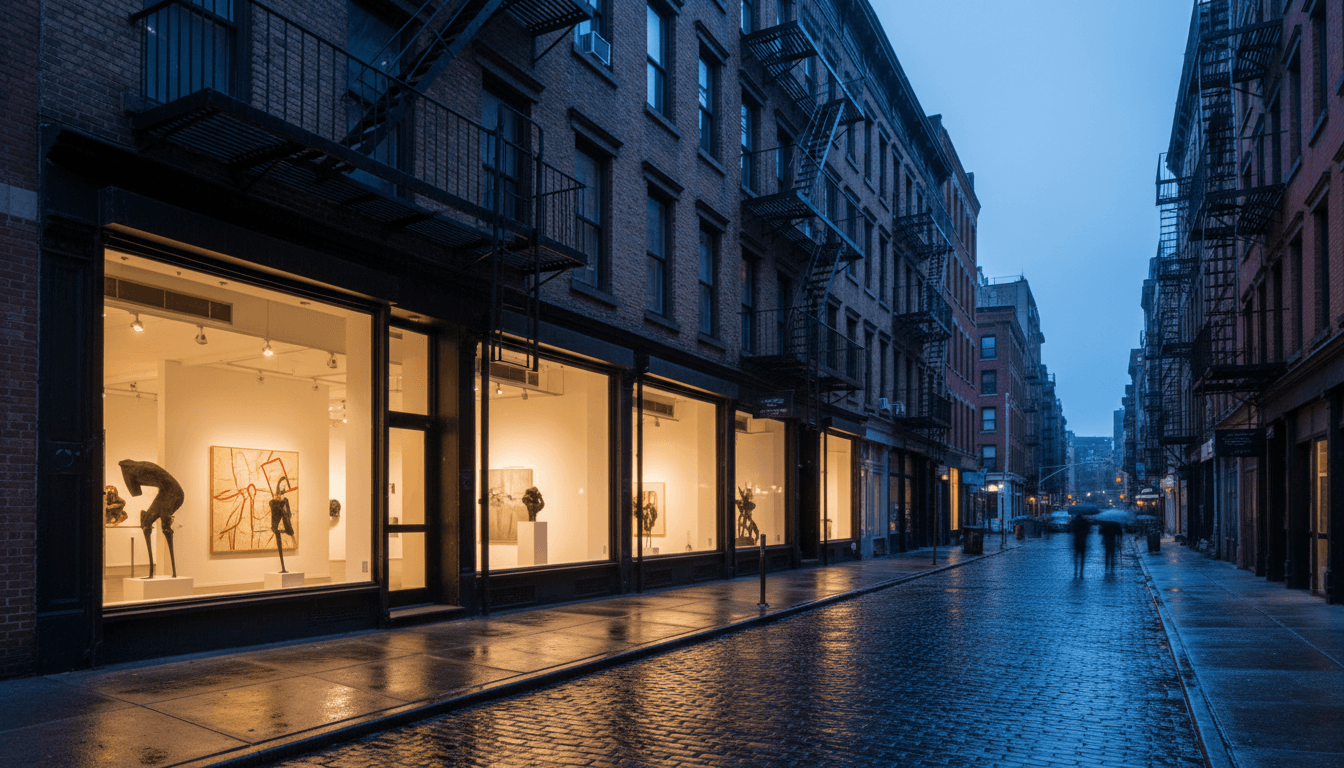
The Lower East Side absorbed the churn Chelsea could no longer host: emerging painters, dealers opening their first space, artist-run co-ops, all packed into a genuinely walkable grid between Orchard, Henry, Grand, and Canal streets. By the mid-2010s, critics were saying so directly — Artsy's Casey Lesser called it New York's most important art district, and the New York Times's Roberta Smith described the neighborhood as a petri dish showing every stage of a gallery's life cycle at once. The density is part of the point: a visitor can walk into a dozen ground-floor storefronts and fourth-floor walk-ups in a single afternoon, something Chelsea's spread-out warehouses never really allowed — and for an artist actually trying to get a foot in the door somewhere, that density means more real chances to be seen.
The bottom line
New York's gallery world hasn't stood still since Chelsea's heyday — it's done what it's always done, following cheap rent and foot traffic from SoHo to Chelsea to the Lower East Side, each move driven by the same economics that ended the last one. Chelsea is where the money is. The Lower East Side is where the next generation of it is being discovered.
FAQ
Is Chelsea still an important gallery district?
Yes — it's still home to major, well-capitalized galleries, but it's no longer the primary place new and emerging artists get their first shows.
When did the Lower East Side become NYC's main gallery district?
The shift is generally dated to the mid-2010s, though smaller galleries had been moving in since the early 2000s as SoHo and Chelsea both grew more expensive.
What was SoHo before it became a shopping district?
New York's first major contemporary gallery district, starting in the late 1960s, built around cheap loft space in vacant cast-iron industrial buildings.
What is the "SoHo Effect"?
A term describing the cycle where artists and galleries move into a cheap neighborhood, make it fashionable, and are then priced out by the retail rents their own presence helped create.
Where is the Lower East Side gallery district, exactly?
Roughly bounded by Orchard, Henry, Grand, and Canal streets — dense enough to visit a dozen galleries on foot in an afternoon.