Linseed vs. Walnut Oil: What Changes in Paint
The oil in your paint is not interchangeable. Learn how linseed and walnut differ in drying, yellowing, and handling, and when each one is the right choice.
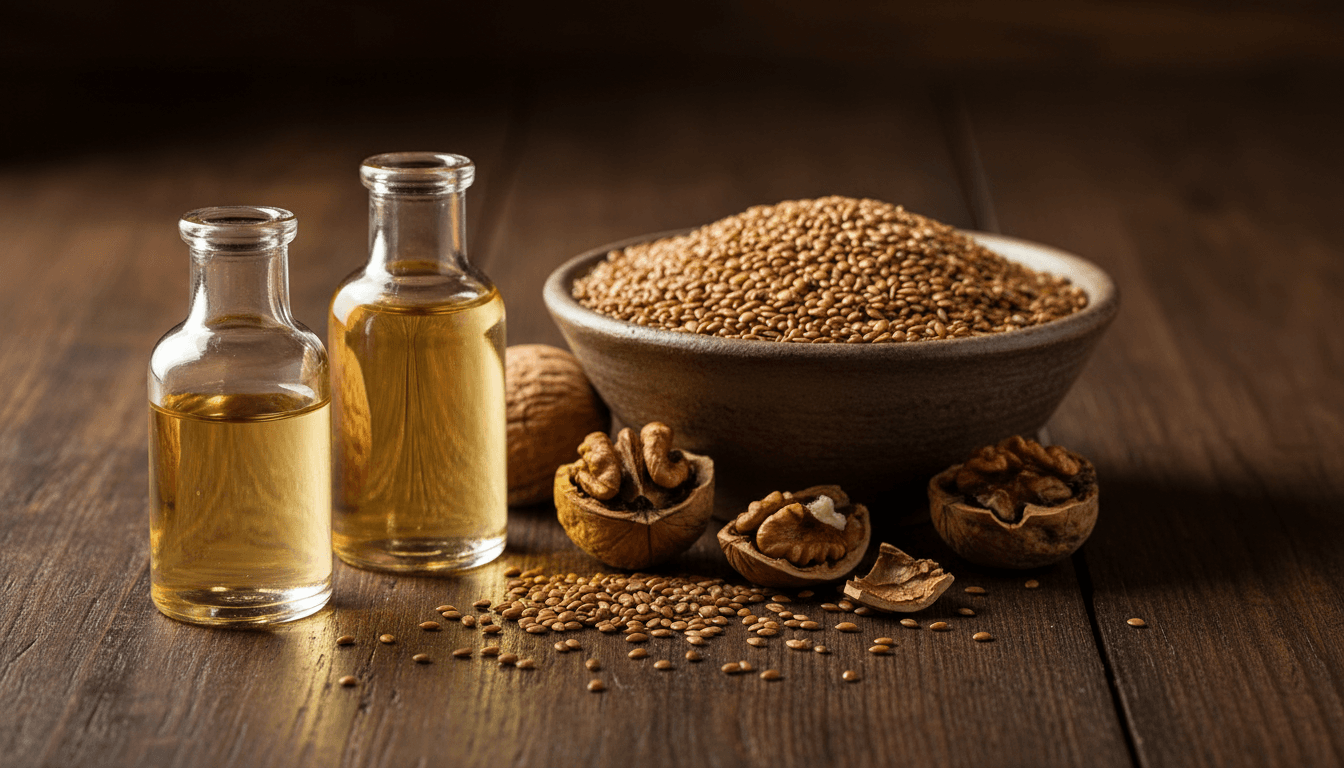
Two tubes of identical pigment, one bound in linseed oil and one in walnut, look nearly the same wet and behave like distant relatives once they're on the canvas. One sets within a day and yellows steadily over years. The other stays workable longer, stays clearer, and never quite hardens the same way. The pigment isn't the variable here. The oil is — and most painters choose it by habit rather than by understanding what it's actually doing.
At a glance
| Oil | Dries | Yellows | Film strength |
|---|---|---|---|
| Linseed | Fastest | Most | Toughest |
| Walnut | Slower | Less | Softer, supple |
| Poppy | Slower still | Least | Weaker |
| Safflower | Slowest | Least | Weakest |
Why the binder isn't just a carrier
Oil paint is pigment suspended in a drying oil, and the oil is doing three jobs at once: it holds the pigment to the surface, it forms the optical film that light passes through or bounces off, and it does the chemical work of curing — the same curing process, just tuned differently depending on the oil, that governs how any oil paint film actually dries in the first place. Change the oil and all three change with it — the optics, the drying chemistry, and the durability of the finished film. The drying oils used in painting differ mainly in how unsaturated their fatty acid chains are: more double bonds means faster oxidation and stronger cross-linking, producing a tougher but more yellowing film; fewer double bonds means a slower, weaker, but clearer one. Linseed sits at the reactive end of that range. Walnut sits well toward the slower, clearer end, with poppy and safflower further still.
What each oil actually gives up
Linseed dries relatively fast and cures into the toughest film of the group, which is exactly why it became the industry default and why conservators respect its aged structural integrity — the trade-off is that its high proportion of reactive fatty acid continues oxidizing for years, developing the amber tint known as yellowing. Walnut oxidizes more slowly and stays clearer, spreads smoothly, and produces a supple film, but the cured result is softer and less wear-resistant than linseed. Poppy and safflower push furthest toward clarity, which is why they're the default choice for whites and pale colors — a good titanium white in poppy oil stays white; the same pigment in linseed can drift warm over time, in much the same way acrylic's own curing chemistry decides how much a colour darkens as it dries, just through an entirely different mechanism.
Yellowing is partly reversible, and drying time is a real trade-off
The yellowing most painters notice first isn't entirely permanent — it develops in dim conditions and can visibly lessen once a painting sits in bright light for a while, part of why paintings are sometimes said to "bloom" back toward clarity in a well-lit gallery. Drying speed is the other lever: linseed sets fastest, which suits a painter working alla prima in a single sitting, while the slower oils keep paint open and blendable for a painter reworking passages over several days.
Advertisement
The hazard of mixing oils casually
These differences compound the moment you start blending mediums. Add a linseed-based medium to walnut-bound paint and you've reintroduced the faster, more reactive chemistry into a film that was meant to cure slowly and evenly — the result can be a painting with layers curing and shrinking at different rates, which is one of the more common origins of the kind of cracking that shows up years later. The fix is simple: know what your paint is actually bound in, and match any medium you add to that same oil rather than switching between them by whichever bottle is closest.
The bottom line
There's no universally superior drying oil — there's a better oil for a specific passage, dried at a specific rate, kept in specific light. Linseed is the durable workhorse for the heavier, darker layers where strength matters more than clarity; walnut, poppy, and safflower are the specialists for the pale and delicate ones where yellowing would actually show. The next time a white dries warmer than expected, or a glaze stays open longer than usual, the pigment is almost never the cause. The oil is, and once you know that, it stops being mysterious.
FAQ
What's the main difference between linseed and walnut oil in painting?
Linseed dries faster and forms a tougher film but yellows more; walnut dries slower, stays clearer, but produces a softer, less durable film.
Why do painters use poppy or safflower oil for whites?
Both yellow less than linseed, which keeps pale colors — especially white — from drifting warm as the painting ages.
Can yellowing from linseed oil be reversed?
Not fully, but it's partly reversible — the amber tint develops in dim conditions and can lessen visibly once the painting is exposed to bright light.
Is it safe to mix different drying oils in one painting?
Generally not recommended — combining oils with different drying speeds in adjoining layers can cause uneven curing and contribute to future cracking.
Which drying oil produces the strongest paint film?
Linseed, thanks to its high proportion of reactive fatty acids, which is why it remains the default binder for structural, heavier passages.