Does Acrylic Gouache Reactivate With Water? Why It's Not Really Gouache
No. Once it's dry, acrylic gouache is an acrylic film that water can't touch — which is why it isn't really gouache, whatever the tube says. The case for and against the name, and when the difference works in your favor.
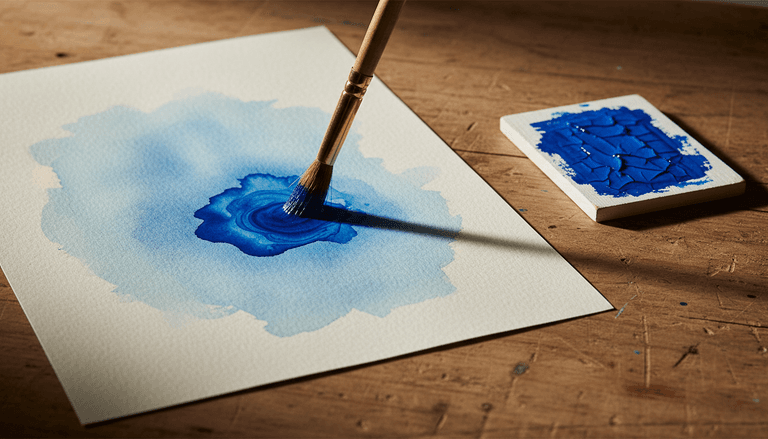
No. While it's wet, acrylic gouache thins and mixes with water like any water-based paint. Once it dries, it doesn't reactivate — not on the paper, not on the palette, not with a wet brush and patience. And that is the strongest reason to say plainly what the label won't: acrylic gouache isn't gouache. It's matte, opaque acrylic paint with a borrowed name, and the name hides the one property that defines gouache in the studio.
That's a stronger claim than it sounds, and there's a serious case against it. But start with what happens in the paint.
What the binder does when the water leaves
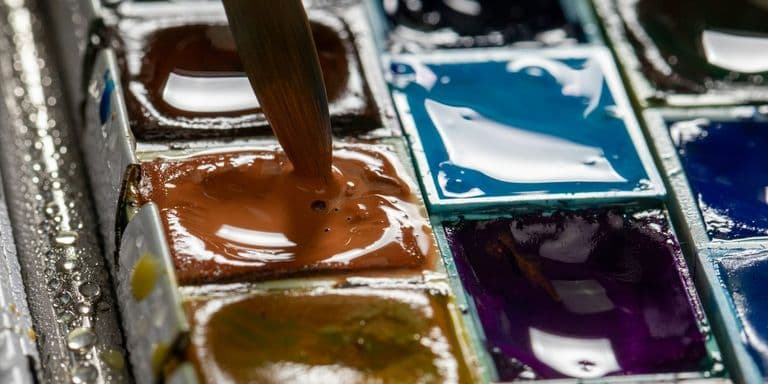
Traditional gouache is pigment, often with a little white or filler, bound in gum arabic — the same tree sap that binds watercolor. Gum arabic dries by losing water, and it can take water back. A dried stroke of gouache is still, chemically, the same soluble film, which is why a damp brush softens an edge, lifts a highlight or brings a dried puddle on the palette back to life. The mechanism is laid out in why gouache reactivates with water while acrylic doesn't.
Acrylic gouache swaps the gum arabic for an acrylic emulsion: microscopic beads of plastic polymer suspended in water. As the water evaporates, the beads crowd together and fuse into a continuous film. That fusing is a one-way process. Water got the beads into place; it can't pry them apart again. Holbein, which makes one of the best-known versions, describes its paint as water-resistant once dry, and Blick's guide is blunter: dry acrylic gouache on the palette can't be reactivated with water.
You can soften the film with solvents such as rubbing alcohol, but they don't stop at the top layer. Anything strong enough to reopen dried acrylic gouache reopens the layers beneath it too.
The case for calling it gouache
The best objection to this argument is historical. "Gouache" has never been a strictly chemical term. The word comes into French from the Italian guazzo, and for most of its life it described a look and a way of working: water-based paint made opaque, laid down flat and matte rather than in transparent washes. British painters called the same thing bodycolor. Recipes varied — gum arabic, with additions of honey, glycerin or dextrin to change how the paint flowed — and nobody stopped calling the result gouache.
By that standard, acrylic gouache qualifies. It's opaque. It dries to the velvety matte finish that separates gouache from shinier acrylics. Holbein says its version moves, blends and feels like traditional gum arabic gouache while you're painting, and anyone who has used both in a wet session would struggle to tell them apart from the brush alone. If gouache is a look plus a wet handling, acrylic gouache has both.
Advertisement
Why reactivation is the part that matters
The objection works for the first ten minutes of a painting. It fails for everything after that.
What gouache painters actually rely on — the thing that makes the medium forgiving — happens after the paint dries. You can soften an edge an hour later. You can lift a highlight back out of a dark. You can squeeze out a palette on Monday and rewet it on Thursday. Illustrators working in gum arabic gouache plan around that: a hard edge isn't final until the picture is.
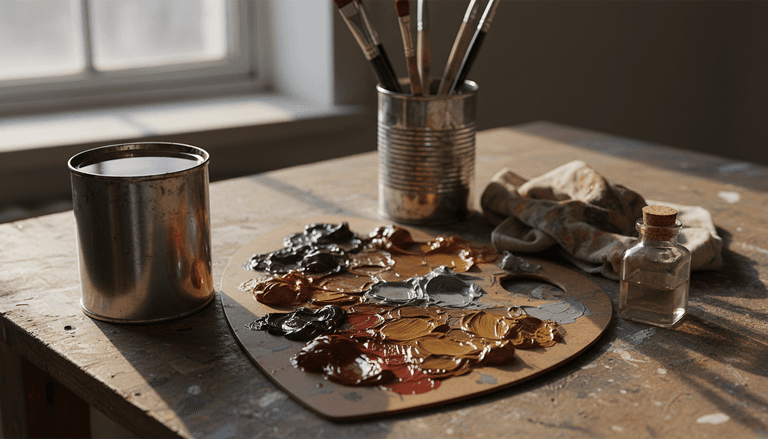
Acrylic gouache removes every one of those moves. A hard edge is final the moment it dries. A wrong value has to be painted over, not lifted. Paint left on the palette is waste. Brushes need the urgent cleaning acrylic demands, because dried acrylic in the heel of a brush stays there. Those aren't small differences in feel; they change how a picture has to be planned. A paint that behaves like gouache only while wet behaves like acrylic for the whole of the painting's remaining life.
The case against this argument, again
There's a second, more practical objection, and it's fair: for many painters, acrylic gouache's refusal to reactivate isn't a flaw. It's the reason they buy it.
Layering is the obvious case. In traditional gouache, every stroke over a dried layer risks dissolving it, so painters learn to lay a top color in one confident pass or accept a muddy lift. Acrylic gouache layers like acrylic: the dry layer below stays exactly where it is. Holbein also says its paint barely shifts in tone from wet to dry, where traditional gouache is notorious for drying lighter in the darks and darker in the lights. The finished surface is tougher, too — Holbein says it lacks the fragile surface of gum arabic gouache — and a painting you can varnish like an acrylic is easier to frame, ship and sell than one that smudges if a drop of water lands on it.
None of that makes acrylic gouache gouache. It makes it a very good matte acrylic.
The verdict
Call it what the binder says it is. Acrylic gouache is matte, opaque acrylic paint designed to look like gouache, and on the paper it does that beautifully. What it can't do is the thing that makes gouache gouache: come back to life with water. If you need to rework, soften, lift and rewet, buy gum arabic gouache and accept its fragility. If you want flat, opaque color that stays put under the next layer, acrylic gouache is the better tool — just treat it as acrylic from the first squeeze: a stay-wet palette, small amounts at a time, brushes washed before they dry.
For the wider family of water-based paints and how each binder behaves, see why watercolor lifts and acrylic doesn't and why acrylic paint dries darker.