Indian Yellow: The Pigment With a Dark Origin
Indian Yellow was a glowing, deep yellow that nineteenth-century painters loved. Its origin, if the standard account is true, involved starving cattle — and it is still disputed.
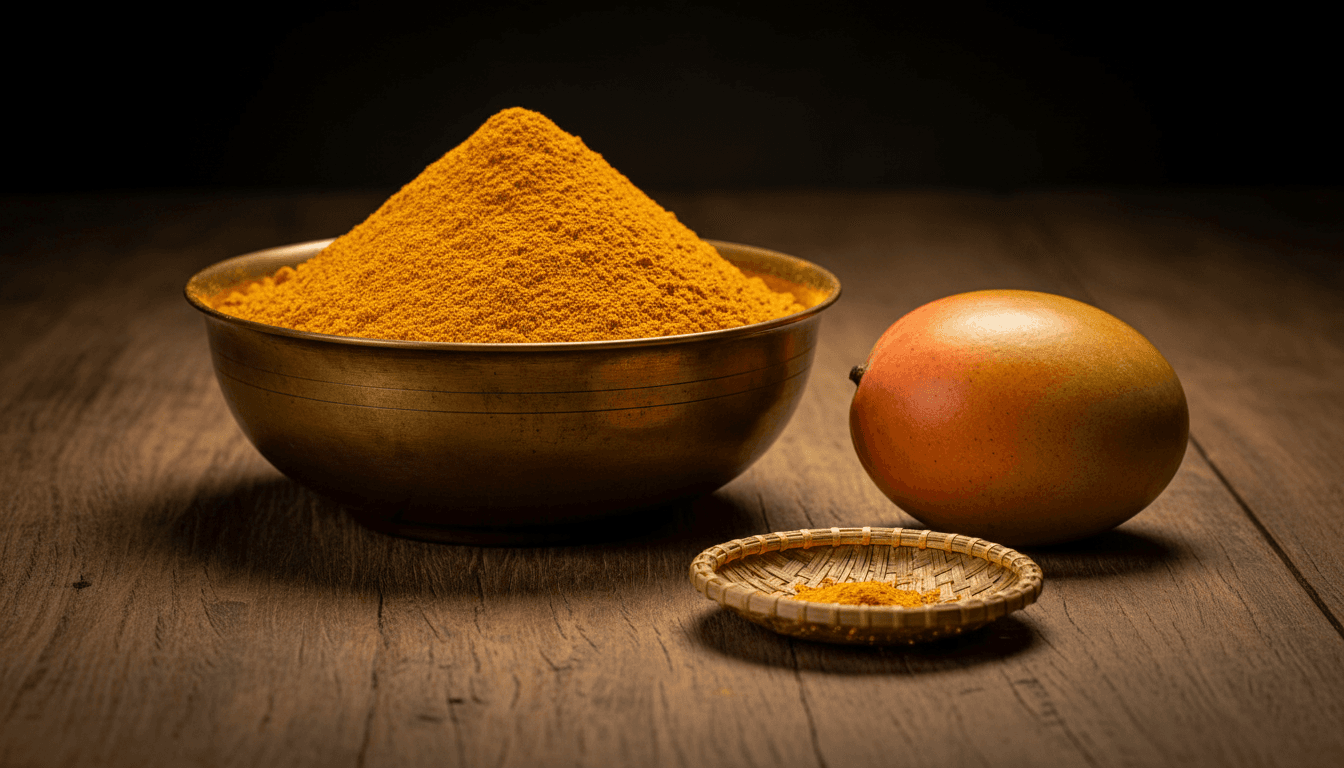
Was Indian Yellow really made from the urine of cattle starved onto a diet of nothing but mango leaves — or is that simply too vivid a horror story for anyone to have bothered checking? For over a century, the art world genuinely didn't know. The pigment itself is real: a warm, glowing, deeply transparent yellow that nineteenth-century watercolourists prized for exactly the reasons that made its supposed origin so uncomfortable to think about. What actually happened in the villages that made it stayed unresolved from the 1880s until, remarkably, 2018.
The claim, as first recorded
In January 1883, Sir Joseph Hooker — director of the Royal Botanic Gardens at Kew — wrote to India's Department of Revenue and Agriculture asking what, exactly, this pigment was made from. Nine months later he had an answer from Trailokyanath Mukharji, a civil servant and expert in Indian trade goods, who reported that he had personally travelled to Monghyr in Bihar and located a caste of milkmen, or gwalas, keeping herds of cows on a diet restricted almost entirely to mango leaves and water. The cows, he wrote, produced a small quantity of intensely yellow urine each day, which the milkmen collected in clay pots, concentrated over a fire, strained through cloth, and rolled into balls to dry — the same balls that were then traded onward to Calcutta and Europe as "purree" or "piuri," a colonial commodity chain with echoes of how cochineal moved from Mesoamerican farms to European palettes centuries earlier. Mukharji didn't just send a written report. He sent physical evidence: an earthenware collecting pot, a sample of the straining cloth, and several balls of the pigment itself, along with raw urine.
The case against Mukharji
That should have settled it. It didn't. Nearly 120 years later, journalist Victoria Finlay travelled to the region Mukharji named while researching a history of pigments, and found nothing — no legal record of the production being banned (a detail widely repeated in art reference books), no oral memory among locals of cows ever being fed mango leaves for a yellow dye, no trace of the trade at all. Some later writers speculated Mukharji might have been having some quiet fun at the expense of credulous British colonial administrators, inventing a shocking story that was simply too good to fact-check. It was a reasonable theory. It also turned out to be wrong.
The evidence nobody had tested — until 2016
Mukharji's original 1883 samples, sent along with his report, had been sitting in storage at Kew for well over a century. In 2016, researchers recovered most of them from Kew's Economic Botany Collection and finally subjected them to modern chemical analysis — mass spectrometry, Raman and infrared spectroscopy, ultraviolet fluorescence — and in a paper published in 2018 reported two things in the pigment that mattered enormously. The first was hippuric acid, a compound strongly associated with the urine of ungulates specifically. The second was euxanthic acid itself, the pigment's actual colourant, which is consistent with a metabolic byproduct of processing mango-leaf compounds. Both markers, together, in a sample collected by a man who said he'd watched the process happen — that's about as close to a confirmed account as pigment chemistry gets. The story that sounded too extreme to be real held up under a test nobody had thought to run for 133 years.
Advertisement
What's still not settled
The core claim now looks solid. What remains genuinely uncertain is everything built up around it. The widely repeated detail that the practice was formally outlawed in 1908 on animal-cruelty grounds appears nowhere in any surviving legal record — it may be true, or it may be a detail that got attached to the story later because it made for a tidier ending, the same way the exact circumstances around mummy brown going out of use have picked up more legend than documentation over time. The scale of production is also shakier than it sounds: contemporary estimates of 10,000 to 15,000 pounds of pigment a year circulated at the time, but even Mukharji himself thought that figure was too high. And an older alternative account, put forward by the Scottish chemist John Stenhouse in 1844 — four decades before Mukharji's report — proposed a plant-sap origin rather than an animal one, a theory the Kew chemistry doesn't fully rule out for every batch that ever reached Europe, even if it doesn't match what was in Mukharji's own samples.
Where the investigation stands
The central mystery — urine or not — is about as resolved as a 140-year-old pigment question gets: Mukharji's samples really did contain the chemical signature of mango-fed cattle urine, and the account that sounded like a colonial tall tale was, at its core, accurate. The mythology that grew up around that core fact — a specific ban, a specific tonnage, a specific end date — is a separate matter, and most of it still doesn't have documentation to back it. Indian Yellow's real story turned out to be the grim one. Exactly how big that grim story got, and how it officially ended, is still an open file.