The Technique With No Edges
"Blurry" undersells it. Sfumato is a precise, laborious technique built from dozens of glazes — and neuroscience has since shown exactly why it makes the Mona Lisa's smile seem to vanish when you look right at it.
Sfumato gets casually described as "the blurry Renaissance technique," as if Leonardo da Vinci simply softened his focus the way a photographer might. That's not what's happening. Sfumato is an exact, deliberate technique built from dozens of individually calculated layers, and modern vision science has since shown it does something far more specific to the eye than merely looking soft.
At a glance
- Term
- Sfumato, from the Italian sfumare, "to vanish like smoke"
- Associated with
- Leonardo da Vinci, late 15th–early 16th century
- Method
- Many extremely thin, translucent oil glazes blended with no visible edge
- One of
- The four canonical Renaissance painting modes, alongside chiaroscuro, cangiante, and unione
- Most famous example
- The Mona Lisa's mouth and eyes
What sfumato actually is
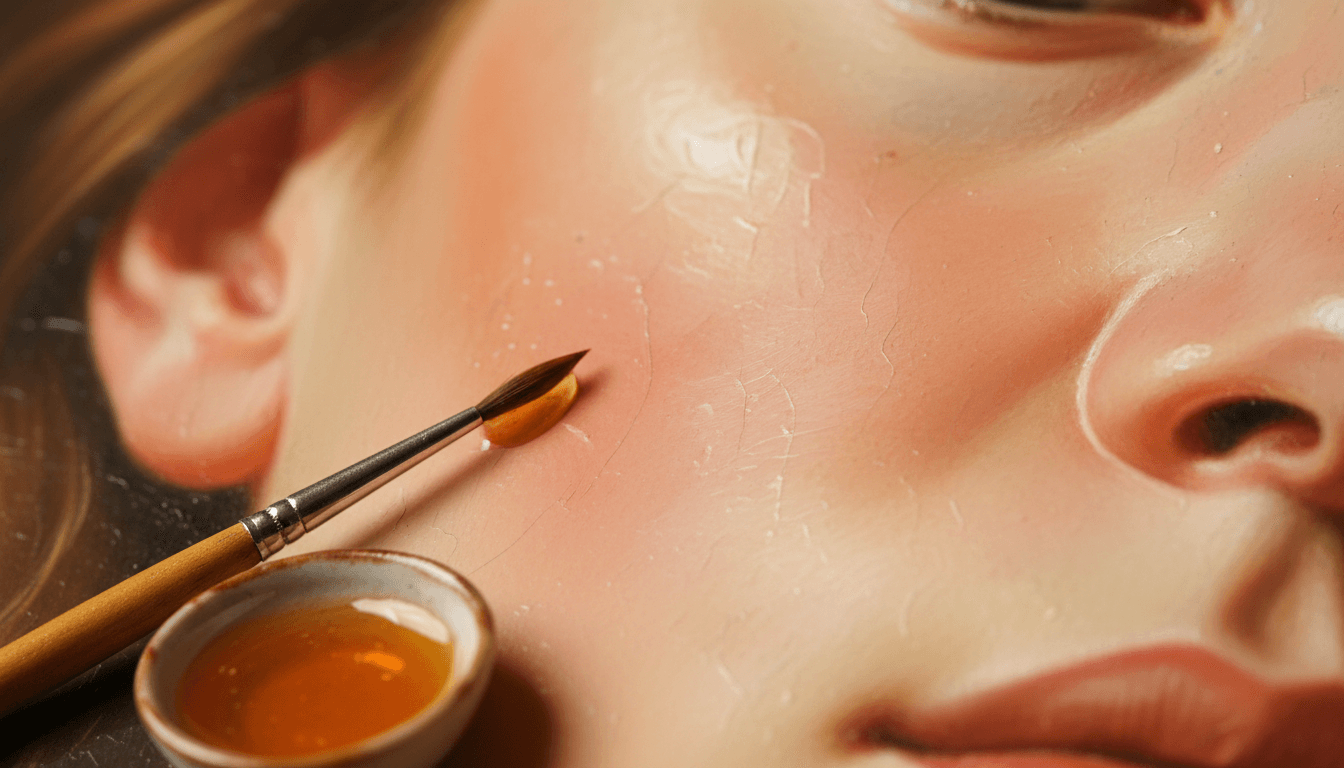
Sfumato eliminates hard contour lines between one tone and the next by building up form through a great many separate, extremely thin, translucent layers of oil paint, each one shifting the value or colour beneath it only very slightly. Where a harder-edged painter might model a cheekbone with a visible transition from light to shadow, sfumato removes the transition itself — there's no line to point to where light stops and shadow begins, only a continuous gradient built from accumulated glazes so fine that no single boundary is ever visible. It sits alongside chiaroscuro as one of the era's core tools for handling light, though the two solve different problems — chiaroscuro contrasts light and dark, sfumato erases the seam between them.
How it was actually built
Achieving that requires real patience rather than a soft touch: dozens of glazes, applied over long stretches of time, since oil paint's slow cure is exactly what makes this kind of layering possible in the first place — a fast-drying medium like tempera can't be worked this way at all, since it sets almost the instant it touches the panel. Leonardo's own notebooks describe using fingers rather than a brush for some of this blending, smoothing pigment directly with the hand to avoid leaving any visible stroke. Technical imaging of Leonardo's paintings has confirmed the layers really are there, built up with a precision that rewards close instrumental study rather than casual looking.
What it does to the eye, specifically
The clearest demonstration of sfumato's actual effect is the Mona Lisa's famously shifting smile, and neuroscientist Margaret Livingstone offered a specific, testable explanation for it in 2000: the human eye reads fine detail through the fovea, the central part of the retina, while peripheral vision handles only coarser, blurrier information — what vision science calls low spatial frequencies. Sfumato's soft, gradual shading around the mouth sits almost entirely in that low-frequency range, so peripheral vision reads it as an upturned, smiling curve. Look directly at the mouth, though, and the fovea's sharper resolution picks up the same soft shading with no such illusion attached — and the smile appears to flatten out or vanish. The switch, in other words, is happening in the viewer's eye, not in the paint.
Advertisement
A useful complication
The story isn't perfectly closed. A later study out of the University of Salzburg, published in 2013, argued that Livingstone's spatial-frequency explanation, while real, doesn't account for the whole effect on its own — there's more going on in how the face reads than one single mechanism can fully explain. Sfumato's optical effect on the eye is genuine and measurable. Exactly how much of the Mona Lisa's specific, centuries-old mystique it fully accounts for is still an open question among the researchers studying it.
The bottom line
Sfumato isn't blur for its own sake — it's a specific, laborious technique for removing the very idea of a hard edge from a painting, achievable only because oil paint's slow drying allows the patience the method demands. And it turns out to interact with human vision in a way Leonardo could never have measured but plainly understood by eye: a face built from graded shadow rather than drawn lines behaves differently depending on exactly where the viewer is looking, which is most of the reason one particular smile has kept people staring at it for five centuries.
FAQ
What does sfumato mean?
It comes from the Italian sfumare, "to vanish like smoke," describing a technique that eliminates hard outlines by blending tone gradually across many thin layers of paint.
Who is sfumato most associated with?
Leonardo da Vinci, whose paintings — especially the Mona Lisa — are the technique's best-known examples.
Why does the Mona Lisa's smile seem to change?
Research by neuroscientist Margaret Livingstone suggests the soft, low-contrast shading sfumato produces around the mouth reads as a smile to peripheral vision but flattens out when viewed directly, since the eye's central and peripheral vision process fine detail differently.
Can sfumato be done in mediums other than oil paint?
Not easily — the technique depends on slow drying times that allow extensive blending and layering, which is why it developed alongside oil paint rather than faster-drying media like tempera.
Is sfumato the same as chiaroscuro?
No — chiaroscuro refers to the use of light and dark contrast generally, while sfumato specifically describes eliminating hard edges through smoky, gradual blending; the two are related but distinct Renaissance techniques.