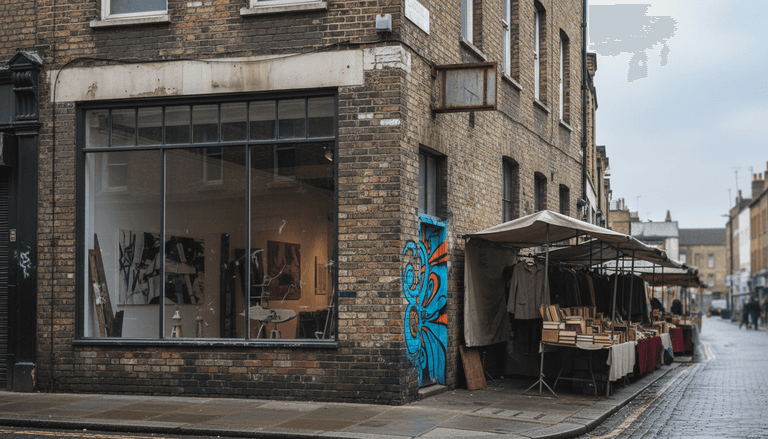
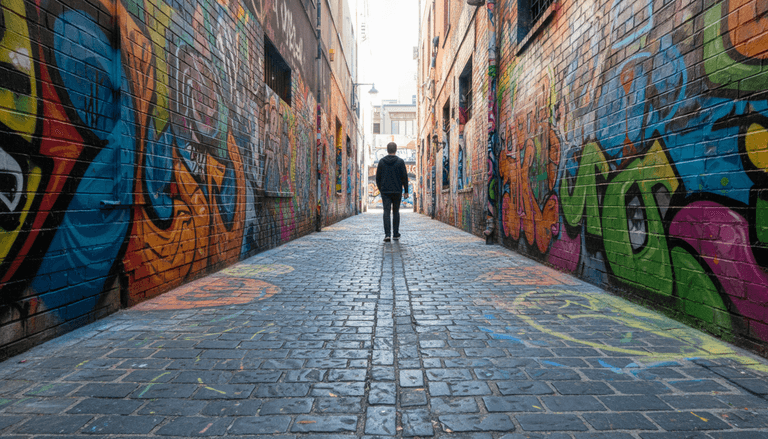
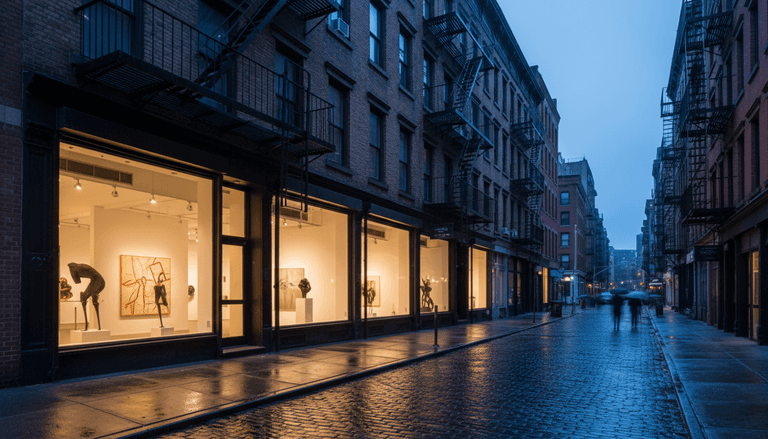
Flinders Lane: Australia's Densest Stretch of Art Galleries
A former rag-trade laneway a few minutes from Flinders Street Station now holds the densest concentration of commercial art galleries anywhere in Australia. Here's how to actually walk it.
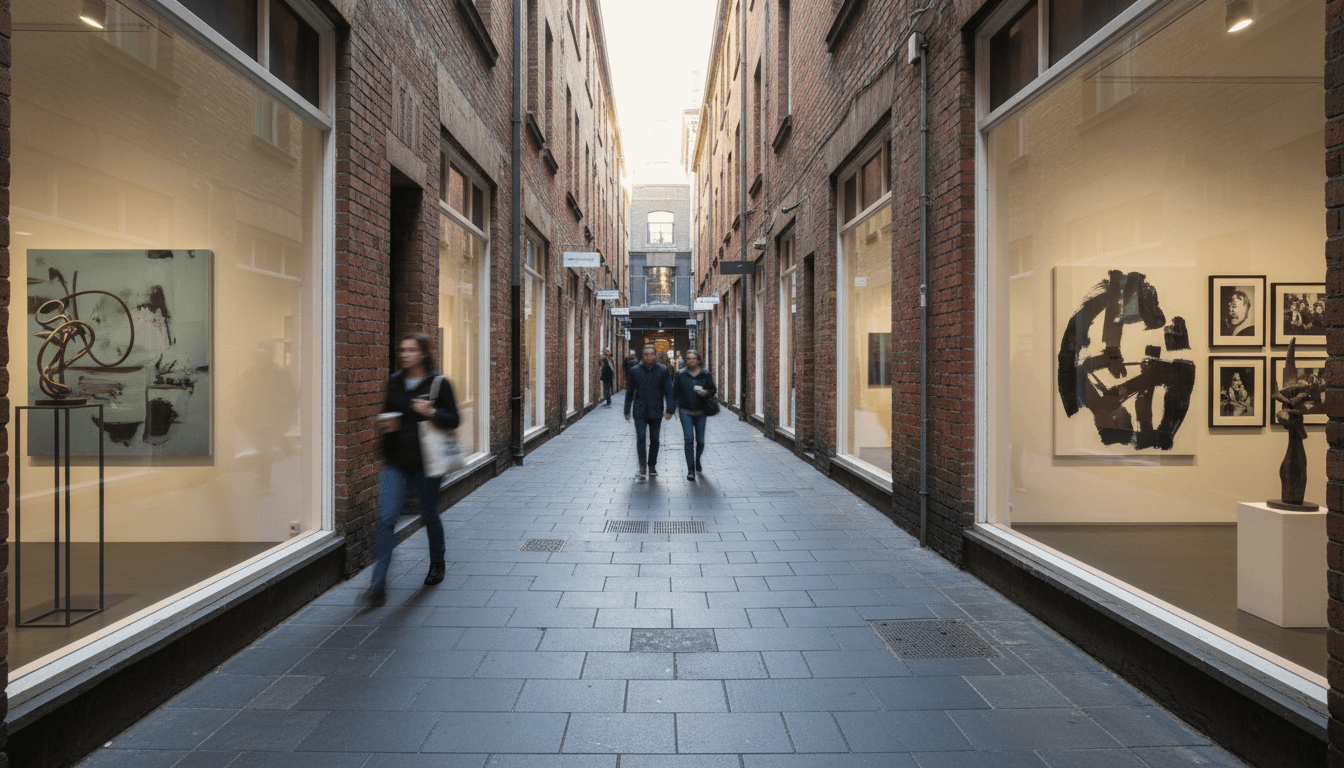
You've done the NGV, you've walked a couple of the street-art laneways, and you've got another hour or two before dinner — this is exactly the gap Flinders Lane is built to fill. It's a genuine working laneway, not a boulevard, and it holds the densest concentration of commercial art galleries anywhere in Australia, packed into a single narrow street a few minutes' walk from Flinders Street Station.
What Flinders Lane actually is
Flinders Lane runs parallel to Flinders Street through the centre of the CBD, and for much of the twentieth century it was the heart of Melbourne's rag trade — textile wholesalers, tailors, and garment showrooms working out of narrow, multi-storey commercial buildings. As the textile trade declined, those same upper floors and ground-level shopfronts turned out to be exactly what small commercial galleries needed: cheap, central, and already fitted with the kind of plain, functional interior a gallery can work with immediately.
Why it's worth visiting on foot, specifically
Because the galleries sit at street level and up narrow staircases along one continuous lane, Flinders Lane rewards walking it end to end rather than picking one destination — you'll pass gallery doorways you'd never find by searching individually, tucked between cafés and design studios in the same buildings. It's a fundamentally different experience from a museum visit: commercial galleries change their shows every few weeks, admission is free, and nobody expects you to buy anything just because you walked in — the same low-stakes browsing that works at any small gallery, wherever in the world you find one.
A few of the lane's long-standing anchors
| Gallery | Known for |
|---|---|
| Anna Schwartz Gallery | Multi-generational contemporary Australian and international artists |
| fortyfivedownstairs | Not-for-profit exhibitions and performance, a Melbourne institution |
| Craft (Craft Victoria) | Contemporary craft and design by local makers |
These are long-established names, but the lane's character comes from its churn as much as its anchors — smaller galleries open and close along the same stretch more often than these larger ones do, so treat any specific listing as a starting point rather than the full picture on the day you visit.
How to actually do it
- Start from Flinders Street Station and walk north to Flinders Lane — it's a five-minute walk from the CBD's main transport hub.
- Walk the lane in one direction, checking both sides of the street rather than crossing back and forth, since galleries sit on both.
- Go on a weekday if you want it quiet, or a Saturday if you want the lane at its liveliest — most commercial galleries keep Tuesday-to-Saturday hours, similar to Sydney and Melbourne's other gallery districts.
- Combine it with Federation Square and the NGV, both a short walk away — a single afternoon can realistically cover Flinders Lane, the free permanent collection at the NGV, and a laneway street-art detour without feeling rushed.
Advertisement
FAQ
Is Flinders Lane free to visit?
Yes — commercial galleries don't charge admission; you're free to walk in during open hours without an appointment at most spaces.
What are Flinders Lane's opening hours generally?
Most galleries keep Tuesday-to-Saturday hours, roughly late morning to early evening, with many closed Sunday and Monday.
Is Flinders Lane within walking distance of the NGV?
Yes — it's a short walk from both Federation Square and the broader Melbourne Arts Precinct, making it easy to combine with a gallery day built around the NGV.
Why is it called a "laneway" and not a street?
Flinders Lane is one of Melbourne's historic narrow inner-city laneways, originally built for service access behind the grander frontages on Flinders Street, which is part of why the buildings suit small galleries so well.
Do I need to book ahead to visit galleries on Flinders Lane?
No — nearly all are walk-in during posted hours, unlike private viewing rooms or by-appointment spaces elsewhere in the city.