Why Gallery Districts Keep Moving: A Guide to New York, London, and Melbourne
Every gallery district is a temporary deal between art and rent, and it always ends the same way: the people who made the neighbourhood interesting are the first it stops being able to afford. Here's the cycle in New York, London and Melbourne — and how to read it when you visit.
Every gallery district is a temporary deal between art and rent, and the deal always ends the same way: the people who made a neighbourhood interesting are the first ones it stops being able to afford. SoHo, Shoreditch and Flinders Lane were all built in buildings nobody else wanted at the time. In each, success raised the price of the very thing that made success possible.
The strongest objection is that plenty of galleries never leave. Chelsea has held New York's art money for a quarter of a century. Victoria Miro has been on Wharf Road, on the edge of Hoxton, since 2000. Flinders Lane's long-established galleries are still there. If gallery districts always move on, why are their biggest names still standing? The answer is the most useful thing to know about any art neighbourhood you visit: districts don't die so much as split, and the half that moves is the half most people go looking for.
The cycle, three times over
New York ran it first and most visibly. In 1968 the dealer Paula Cooper opened a gallery at 96 Prince Street, in the cast-iron lofts the garment trade had left nearly empty; Leo Castelli and others followed, and SoHo had roughly 85 galleries by 1975 and more than 100 by 1980. Then the sequence art historians call the SoHo Effect played out: cheap rent drew artists, artists drew galleries, galleries drew boutiques and restaurants, and retail money outbid the galleries for the same floor space. By the late 1990s most dealers had moved to Chelsea's warehouses, and by the mid-2010s the energy had moved again, to the dense storefront grid of the Lower East Side — the full sequence is in why the Lower East Side replaced Chelsea.
London's version began with a shop. In 1993 Tracey Emin and Sarah Lucas rented a nearly derelict storefront on Bethnal Green Road, a short walk from Brick Lane, because it was cheap and big enough to work in, and their peers followed them into the studios of Shoreditch and Hoxton. In April 2000 White Cube opened a large space on Hoxton Square; that November Victoria Miro left a 750-square-foot room on Cork Street in Mayfair for a former furniture factory ten times the size, after West End rents quadrupled. By the end of 2012 White Cube had left Hoxton Square too. The full story is in how a 1993 shop off Brick Lane turned Shoreditch into an art district, and the difference between Shoreditch, Hoxton and Spitalfields explains why the names blur together.
Advertisement
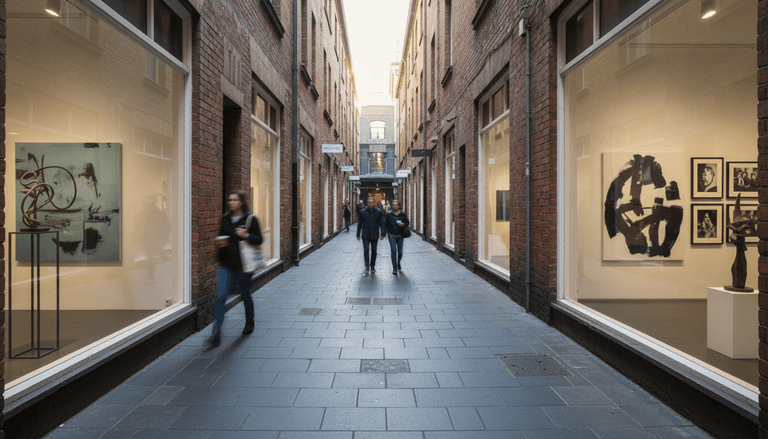
Melbourne's version is quieter and shows the first half of the cycle more clearly. For much of the twentieth century Flinders Lane was the heart of the city's rag trade; as textile wholesalers declined, their narrow upper floors and shopfronts became exactly what small galleries needed, and the lane now holds the densest stretch of commercial galleries in Australia. The pattern is the same in every case. Galleries don't create cheap space; they find space an older economy has abandoned, and they leave when a newer one wants it back.
The objection: the galleries that stay
The cycle doesn't move everyone, and that's the part the usual story leaves out. Chelsea never emptied after the Lower East Side took over; it became the place where well-capitalised galleries show expensive work, while first shows and artist-run spaces went elsewhere. Victoria Miro marked forty years in business in 2025, still on Wharf Road, while the bars and nightlife grew up around her. Flinders Lane keeps its long-standing names while smaller galleries open and close along the same stretch.
What the survivors share is money and time. A gallery with real capital, a long lease or its own building can ride out rising rents that would close a newcomer, and it can even benefit from the foot traffic the cycle brings. So the objection is right that districts don't simply empty — but it doesn't rescue the original district. What stays is a market. What leaves is the part that made the district worth visiting in the first place: the cheap room, the first show, the artist nobody has heard of yet, which is why small galleries matter more than museums to anyone trying to see what comes next.
Can policy stop it?
New York tried harder than anyone. In 1971 the city rezoned SoHo so that artists certified by the Department of Cultural Affairs could legally live in its manufacturing lofts, and that June the department certified its first 22 artists. Mayor John Lindsay said the new artists' district would "insure New York's position as the art capital of the nation." It didn't hold the district. Retail and residential money arrived anyway, the galleries left in the late 1990s, and certification dwindled until only 98 artists were certified in the decade before 2021. That December the city rezoned SoHo again, letting artist-only lofts convert to ordinary homes for a payment into an arts fund. Fifty years of protective zoning ended up as a conversion fee.
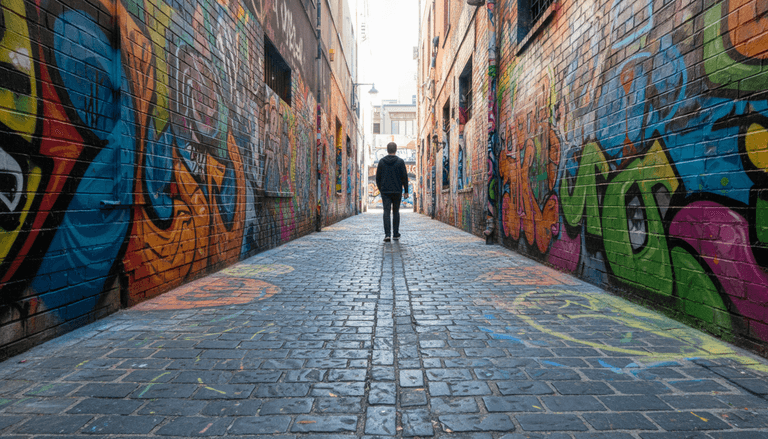
Melbourne shows what policy can protect instead. Hosier Lane's street art survives because the city made a deliberate exception to its own graffiti law — a rule about what's allowed on the walls, not about who can afford the buildings behind them. Street art has its own place in the cycle, often arriving early and then being used to sell the neighbourhood it decorated, as street art's awkward journey into galleries traces.
The fixed points in each city are public, not commercial. London's national museums have been free to enter since 2001, and the National Gallery of Victoria has never charged for its collection. In New York, the Met's pay-what-you-wish policy now survives only for New York residents and the region's students, and the reason it narrowed is a story about leases rather than art — was the Met ever actually free? Museums anchor a city's art life precisely because they don't pay market rent; galleries move because they do.
Who does what to a district
| Who | What they bring | What they do to the rent |
|---|---|---|
| Artists | Studios and first shows, in space nobody else wants | Little at first — then they make the area worth noticing |
| Artist-run spaces | Cheap, irregular exhibitions and a scene | Bring the first visitors and the first press |
| Dealers | Regular hours, openings and collectors | Raise the area's profile and the value of its ground floors |
| Bars, shops and visitors | Foot traffic and money | Push ground-floor rents past what most galleries can pay |
| Landlords and developers | Conversions, new leases and new uses | Turn the district's reputation into higher rents |
| Public museums | Collections that don't pay market rent | Stay put, anchoring the city's art life wherever the galleries go |
How to read a district when you visit
Every district you walk into is at some stage of the cycle, and the signs are easy to read once you know them.
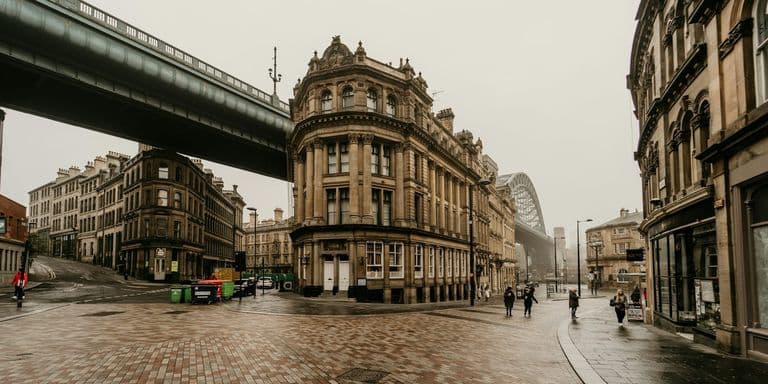
- Early: artist-run spaces and studios. Irregular opening hours, upstairs rooms, shows that open on a Friday night and close a fortnight later, landlords still renting to industry. Regional scenes are often here — Newcastle's artist-run spaces along the Quayside and Ouseburn, Glasgow's Southside, Manchester's Northern Quarter, Baltimore's Station North and Toronto's Junction Triangle.
- Peak: dealers arrive in numbers. Ground-floor galleries with regular hours, crowded openings, the first good restaurants. The Lower East Side sits here now, dense enough to walk a dozen galleries in an afternoon.
- Late: the money stays, the churn goes. Bigger spaces with bigger names, fewer first shows, and eventually shops that can outbid galleries for the ground floor — the end SoHo reached in the late 1990s. Chelsea is the clearest district holding at this stage, and SoHo, Chelsea and the Lower East Side now do different jobs for a visitor.
The stage tells you what kind of visit to plan. Go to a late-stage district to see established artists in good rooms; go to an early-stage one to see who those artists will be in ten years.
The cycle isn't a failure of any city's art scene. It's how the scene keeps finding room for new work in places where room is expensive, and the districts that look settled are only the ones where the deal is still running. Wherever the cheap space is now — a former rag-trade lane, a storefront city two hours from New York like Philadelphia, a francophone city working outside Montreal's shadow, or one of the regional American districts worth travelling for — that's where the next district is already starting.